


Ads are something that most people avoid. The practice has become so common that you will find many apps or browser extensions that block ads.
Whether you like it or not, most people find ads quite annoying. But what if there was a way to spice up your ads? Well, that’s possible thanks to the growing popularity of memes.
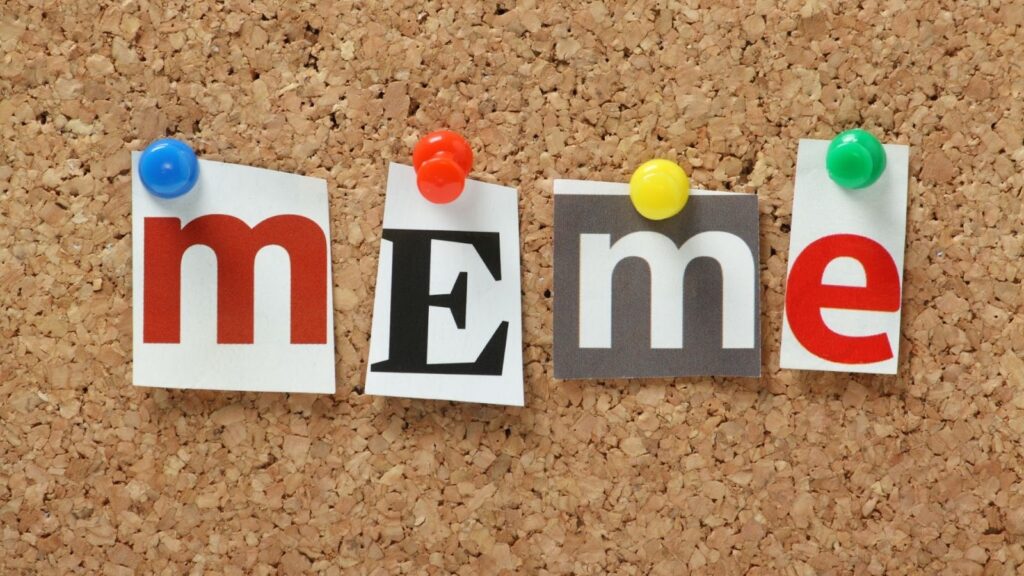
According to Hubspot findings, 90% of social media feeds are filled with memes. You can leverage the opportunity using meme marketing and gain the attention of a large segment of your social media users.
Moreover, recent studies on traditional digital marketing strategies on Facebook and Instagram yield about 5% engagement, whereas Meme Marketing far outweighs them by 60%. The average CTR for traditional digital marketing strategies is 6% on average, whereas for meme marketing, it can spur up to 14%.
If you consider including memes as a part of your marketing strategy, you can now create ads that your target audience will be willing to see. Plus, you can expect high engagement from your target audience.
The best part is there is a high chance that your memes will get a lot of shares. So, your meme ad campaigns will get free publicity. It’s a huge win-win.
If you do your research right and create memes that go viral, you can expect the traffic of those channels to skyrocket.
If you follow the right strategic approach, then meme marketing can immensely benefit your business, and your ad investments won’t go in vain. This article discusses how you can promote your business through meme ads.
5 Effective Strategies to Promote Your Business Through Meme Ads
1. Identify Your Target Audience’s Meme Preference
You need to create memes that your target audience can understand and relate to. The memes should be super enticing to create a consistent spiral of engagement.
To do so, you need to conduct extensive research on your customer psychology and their culture. You don’t want to create memes that offend a particular group within your target audience.
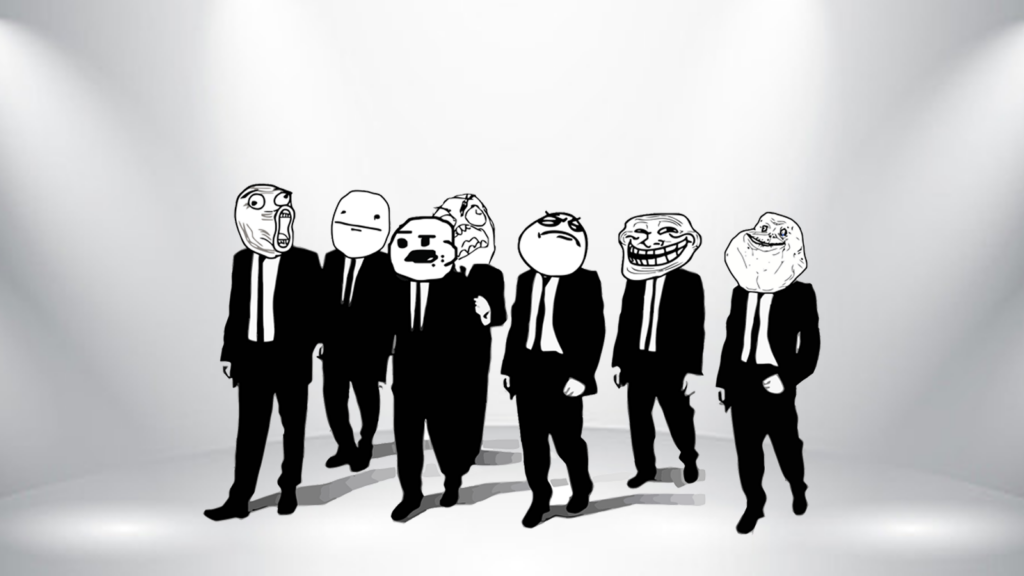
This can severely hamper your business’s reputation, and there’s a high chance you will lose tons of customers if you hurt their sentiment.
If you already have multiple buyer personas, you can use them to formulate your meme strategy. However, if you don’t have a buyer persona yet, it’s high time you create one.
It won’t only be necessary for just the meme marketing strategy, but it is also essential for your other digital marketing strategies.
If you don’t know how to create a buyer persona, these 5 easy steps should help you to craft one, that includes,
– Research Your Customer’s Personality that can include their preference, education, hobbies, buying habits, psychology, culture, religious views, political preference, etc.
– Segment the Buyer Persona based on their demographic factors such as age, gender, geographical location, etc. In this way, you will know what kind of memes will entertain your particular niche.
– Set Goals that will be followed up by multiple tailored strategies targeting particular memes for each sub-group in your niche.
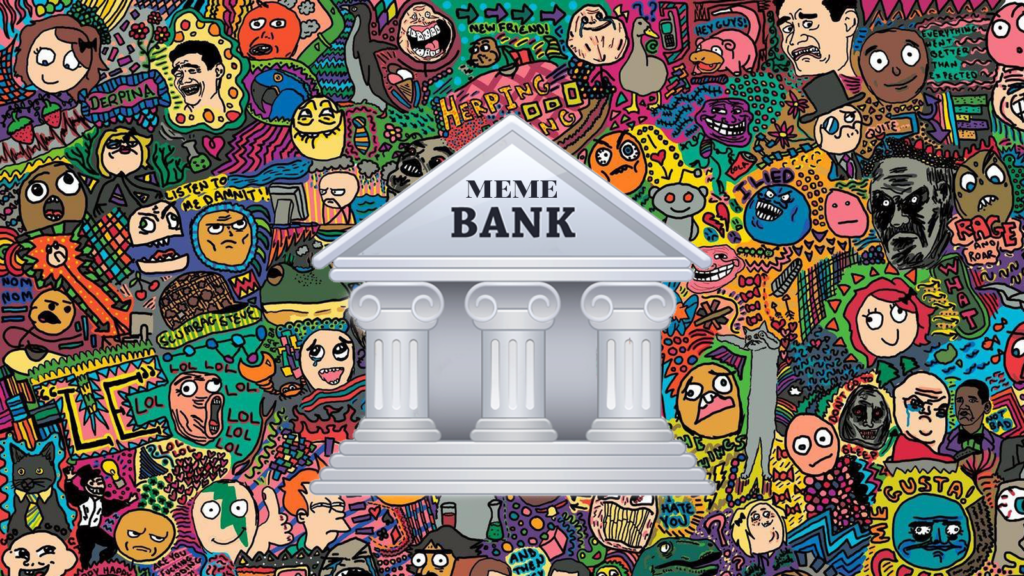
2. Create a Meme Bank
Memes are a new form of communication on social media. Today memes are so popular that they’re very diverse and versatile.
If you wander across social media and well-known meme sites, you will find memes in various genres, whether it’s about politics, sports, war, business, economics, or marketing.
Many people these days refer to memes to learn about recent events. Unlike old times, memes are not just for fun anymore. They serve a bigger purpose. They have become a source of all sorts of information.
So, if you are running a business in the era of memes, it’s high time you leverage the opportunity to showcase your brand.
Having a meme bank will go a long way, as you will be able to explore all the relevant genres of memes with a very specific centralized approach.
The biggest advantage here is, you will be able to track and brainstorm new ways to develop innovative ideas on how you can take your meme marketing to the next level.
Another plus point of having a meme bank is you don’t always need to create memes. You can even download copyright-free memes from many popular sites.
And you can edit them accordingly to create a higher customer appeal. The scope of diversifying your memes is almost infinite.
3. Create Memes That Go With Your Brand Tone
Don’t get carried away making your memes too versatile. Of course, it is important to post a diverse range of memes, but it should go with your brand tone.
Because at the end of the day, you want to establish higher brand awareness and attract more customers. Memes here are just tools that will help you establish your brand presence in different segments of your niche.
It is crucial to craft your memes in a way that they uniquely portray your brand. You need to make sure that whenever people see your memes, they instantly recall your brand.
If you manage to tactfully plan out your meme marketing strategies, and distribute the ads effectively to your target audience, you can gain rapid traction in the market.
4. Analyze the Meme Trend
You must consistently stay up to date with the latest trend and recent events to produce engaging memes. Memes are fueled by the popularity of trends.
After figuring out the recent trends within your industry you need to translate them into eye-catching interesting memes, that will not only entertain your target audience but also signal them to multiple conversions.
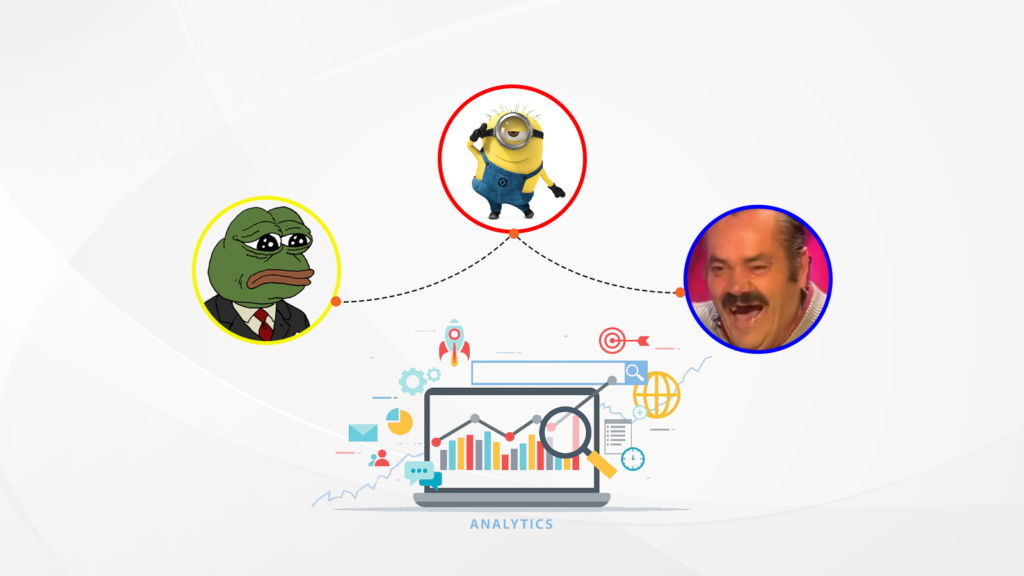
The ultimate goal here is to persuade your customers to buy your products and create higher brand awareness and engagement.
So, if you can handpick memes that have the highest potential to become viral and run ads on them, it might make your business go viral as well.
If everyone’s talking about your business. So, if your meme ads create a series of word-of-mouth marketing with engagement and shares on social media, it will bring your business into the spotlight.
If you want to gain the fast traction of your target audience, then posting trendy memes can spark high demand for your business.
5. Focus on Humor
Customers love a brand that exhibits more humane behavior. Businesses that are more interactive and express their messages with emotions.
Psychologically, humor is one of the most appealing ways to invoke positive emotions. And people like to feel emotionally uplifted.
So, you should prioritize making funny memes. Remember, the goal is to iterate your target audience to engage in your meme ads.
This will boost traffic across your online channels and make your content more engaging and shareable. While meme marketing is highly effective for increasing awareness and engagement, it delivers the best results when it’s part of a broader Content Marketing Service that aligns every piece of content with your overall business and marketing goals.
In the long run, it can have a tremendous impact on your SEO metrics. If your memes are going viral and if people come across your memes, search engines are more likely to rank your sites on top.
12 Meme Marketing Examples From Real Brands
1. Nutter Butter’s Surrealist TikTok Strategy
Brand: Nutter Butter (Mondelez)
Platform: TikTok and Instagram
Format: Deep-fried, intentionally low-quality, absurdist content
Followers: 1.6 million TikTok / 287,000 Instagram (and growing)
Nutter Butter does not post normal food content. The brand posts surreal, psychedelic, dream-logic content. A rubber chicken eating with text overlays. Eyes floating over rolling hills. Masked men dancing through forests. Peanut butter crime scenes.
It looks unhinged. It is working.
The strategy underneath: Nutter Butter responds to user comments by building entire posts around them. A stray comment about wanting to buy Nutter Butters became a post featuring a cash register full of cookies slathered in peanut butter. Every absurd post creates lore that committed followers track. Casual scrollers stop because they have never seen anything like it. Committed followers stay because they recognize references from previous posts.
The result: Household penetration among Gen Z and Gen Y for the brand was up 15% year over year according to Nielsen data from April 2025.
Why it works: The chaos is engineered. Each piece of content does two jobs simultaneously – it stops the scroll for new viewers and rewards committed followers with continuity. Most brands cannot do this because they are too afraid of looking unprofessional. Nutter Butter leans into looking unprofessional and treats it as the entire strategy.
2. Steak-umm’s Philosophical Twitter
Brand: Steak-umm (frozen meat brand)
Platform: X (formerly Twitter)
Format: Long philosophical threads, then memes, then more philosophy
Notable for: Being the OG of brand meme strategy
Steak-umm is a frozen meat company that has been on Twitter since 2017 doing something nobody else does. They post serious commentary about media literacy, mental health, and culture – mixed with memes about frozen meat.
In one moment they are posting a 12-tweet thread about misinformation in journalism. In the next moment they are posting a meme telling followers to print it out and share Steak-umm products with their neighbors.
The strategy underneath: Steak-umm proved that B2C food brands can have a soul on social media. They built one of the most engaged Twitter audiences in CPG by treating their account as a publication, not an ad channel. The memes work because the philosophy gives them weight. The philosophy works because the memes prevent it from being pretentious.
Why this matters for other brands: Most brand social accounts try to be funny or try to be serious. Steak-umm does both, and the contrast is the whole point. Your brand voice does not have to be one note.
3. Slim Jim’s #LongBoiGang Community
Brand: Slim Jim (meat snacks)
Platform: Instagram primarily
Format: Meme account with branded community hashtags
Notable for: Turning a product feature into a movement
Slim Jim’s Instagram is not a brand account. It is a meme account that happens to be operated by Slim Jim. The brand created the unofficial slogan “Long Boi Gang” (referring to the long, thin shape of the snack itself) and built an entire community around it.
The strategy underneath: Instead of pushing product features in ads, Slim Jim made the product’s physical shape into an in-joke. Followers identify as Long Boi Gang members. The hashtag is used across thousands of user-generated posts. Slim Jim’s account actively comments on other meme pages, building presence outside its own followers.
The result: A snack brand most people would not follow without a reason now has hundreds of thousands of dedicated followers who share their content unprompted.
Why it works: Communities are stickier than audiences. An audience watches your content. A community sees your content as part of their identity. Most brands try to build audiences. Slim Jim built a community.
4. Sour Patch Kids’ Comment-Driven Engagement
Brand: Sour Patch Kids
Platform: TikTok, Instagram
Format: Memes that drive massive comment volume
Notable metric: 3.5 million views on a single recent post
Sour Patch Kids’ content drives genuine conversation, not just likes. A recent post hit 3.5 million views and surfaced comments from adults sharing childhood memories of the candy.
The strategy underneath: Sour Patch Kids creates memes that trigger nostalgia and identity-based commenting. The format prompts people to share something about themselves – which is why the comment count consistently outperforms the like count. High comment volume is a major ranking factor for TikTok and Instagram algorithms.
Why this works for other brands: Comments-per-view is the most underrated engagement metric in 2026. A post with 100,000 views and 5,000 comments outperforms a post with 500,000 views and 200 comments in algorithmic distribution. Design memes that ask people to share something, not just react.
5. Aldi UK’s #SaveCuthbert Campaign
Brand: Aldi UK
Platform: X (Twitter)
Format: Meme-driven defense of a product
Notable for: Turning a lawsuit into viral marketing
When Marks & Spencer sued Aldi for trademark infringement over their Cuthbert the Caterpillar cake (a knockoff of M&S’s Colin the Caterpillar), Aldi did not respond with corporate legal statements. They responded with memes.
Aldi launched the #FreeCuthbert hashtag, posted memes treating Cuthbert as a wrongly-imprisoned victim, and turned a legal threat into a viral PR win. The campaign generated over 60,000 mentions in days and dominated UK marketing conversation for weeks.
Why it worked: Aldi made themselves the underdog. They turned a legal disadvantage into a brand advantage. The memes were entertaining enough that people shared them regardless of whether they cared about the underlying products.
The lesson: Crisis moments are meme opportunities. The brand that responds with a meme often wins more than the brand that responds with a press release.
6. HubSpot’s B2B Marketing Pain Memes
Brand: HubSpot
Platform: LinkedIn, Twitter
Format: B2B marketing pain-point memes
Why nobody writes about this: B2B meme marketing was supposed to be impossible
HubSpot regularly posts memes about the daily struggles of marketing professionals – failed campaigns, broken attribution, the gap between what executives want and what is actually achievable.
The memes work because they are not selling. They are commiserating. A marketing professional sees the meme, sends it to their colleague, and the colleague sees HubSpot’s logo at the bottom corner.
The result: HubSpot has become the default brand for marketing pain memes. Other companies in the space (Salesforce, Marketo, ActiveCampaign) cannot match this voice because they were built around corporate-formal communication.
Why this works for B2B: B2B buyers are humans first. The mistake most B2B brands make is assuming their audience wants formal content because the purchase is professional. The audience wants relief from the formal content they read all day.
7. Shopify’s “Waiting for Your First Sale” Meme
Brand: Shopify
Platform: X (Twitter)
Format: Single meme tweets timed to peak relevance
Strategy: Brand-relatable founder humor
When Shopify tweeted “Waiting for your first sale” with a meme image, it pulled engagement from a specific audience that no other meme could reach – merchants who had set up a store and were waiting for their first conversion.
Why it works: Shopify identified a specific emotional moment unique to their customer journey and made a meme about it. The meme is only fully understood by people inside Shopify’s audience. That specificity is the entire reason it works.
The principle: Hyper-specific memes outperform generic-funny memes. A meme that only your customers fully understand creates an “I’m part of this club” feeling.
8. Surreal Cereal’s Influencer Meme Inversion
Brand: Surreal (UK protein cereal startup)
Platform: Out-of-home billboards and Instagram
Format: Fake celebrity endorsements as memes
Notable for: Doing meme marketing in physical advertising
Surreal launched a campaign featuring billboards with quotes like “Surreal is my favorite cereal” attributed to “Serena (not Williams), Dwayne (not The Rock), and Michael (not Jordan).” Each was a real customer with the same first name as a celebrity.
The campaign worked because the joke is right there. The brand could not afford real celebrity endorsements, so it manufactured legally bulletproof fake ones. The meme format was so distinct it went viral organically.
Why this matters: Meme marketing does not have to live on social media. The format of meme humor – irony, self-awareness, breaking the fourth wall – can work in any medium.
9. Liquid Death’s Heavy Metal Water Memes
Brand: Liquid Death (canned water)
Platform: Across all platforms
Format: Heavy metal aesthetic memes for an absurd product (water in a can)
Valuation: $1.4 billion as of 2024
Liquid Death sells water. But every piece of marketing the brand creates looks like a heavy metal album cover or a horror movie poster. The contrast between “deadly serious aesthetic” and “literally just water” is the meme.
The brand built memes about murdering thirst, executing plastic bottles, and treating hydration like a metal show. The strategy turned a commodity product (water) into a cultural object.
Why it works: Liquid Death proved that a meme can be a brand identity, not just a marketing tactic. Every product decision – the packaging, the messaging, the merchandise – reinforces the meme. Most brands use memes as decoration on top of corporate identity. Liquid Death made the meme the identity itself.
10. Innocent Drinks’ Conversational Meme Voice
Brand: Innocent Drinks (UK smoothies)
Platform: X (Twitter)
Format: Self-deprecating, casual conversational tweets
Notable for: Pioneering brand voice that influenced an entire generation of marketing
Before Wendy’s, before Duolingo, there was Innocent Drinks. The brand built a Twitter following by tweeting like a friend who happened to make smoothies. Self-deprecating jokes about being a brand on Twitter. Asking followers what they should tweet about. Acknowledging mistakes with humor instead of corporate apologies.
Innocent’s voice influenced every brand on this list. It was the first major example of a brand that sounded human, and it built an entire UK CPG category around that voice.
Why this matters in 2026: The brands that adopted Innocent’s voice early built lasting communities. The brands that adopted it after it became standard (around 2020) got diminishing returns. First-mover advantage matters in voice positioning.
11. Cluely’s Anti-Meeting Productivity Memes
Brand: Cluely (productivity SaaS, founded 2024)
Platform: X (Twitter), LinkedIn, TikTok
Format: Memes mocking corporate meeting culture
Notable for: Going from zero to millions in funding partly on meme strategy
Cluely launched in 2024 and went viral by posting memes about how every meeting could have been an email and every email could have been a Slack message. The brand’s identity is essentially “we make software so you have fewer meetings, and we will not stop talking about how stupid meetings are.”
The meme content built so much organic awareness that Cluely raised significant venture funding partly on the strength of their social distribution.
Why it works: Cluely identified a deeply shared frustration (meeting overload) and made themselves the brand most associated with mocking it. When their target customer thinks about the meeting problem, they think about Cluely.
12. The Patreon Tweet That Broke Marketing Twitter
Brand: Patreon
Platform: X (Twitter)
Format: Single self-aware brand tweet
Notable: One tweet outperformed entire marketing campaigns
In early 2025, Patreon’s official account tweeted something self-aware about creator economy struggles that generated more engagement than a six-figure paid campaign would have generated.
The specific tweet acknowledged that running a Patreon page is harder than it looks, and that most creators are not making sustainable income. Coming from the platform itself, the honesty was disarming.
Why this works: Brands that publicly acknowledge their product’s limitations build more trust than brands that only post wins. Patreon could have stuck to success stories. They posted honest acknowledgment of struggle and the audience rewarded them with massive distribution.
Final Thoughts on Meme Marketing Ads
If you can effectively implement the strategies we’ve recommended, you can expect fast results from your meme ads.
It can get you an insane boost in your social media traffic. Plus, it can immensely contribute to your branding efforts.
The best part is you can leverage higher ROI from your ads. Perhaps it’s high time to consider prioritizing more on meme ads rather than the boring and obvious traditional digital marketing ads.
People don’t like cliche content. You need to create content that will awe your target audience every time!
If you have any queries or need help creating and executing the right meme ad strategies, you can book a Free Digital Marketing Consultation today. Our experts will get in touch with you shortly and help you out.