


Are you clueless about how to navigate owning an e-commerce site? Are you looking for ways to improve your e-commerce marketing? Or are you trying to transition from a physical store to owning an online store?
As an e-commerce business, you aim to create a unified strategy that puts your business at the forefront of your consumers’ minds and becomes ingrained in their subconscious. This allows them to think of your business as a go-to brand for their needs in a specific niche.
This guide contains 5 e-commerce marketing strategies to help you achieve this.
What is E-commerce Marketing?
E-commerce marketing is the set of strategies used to attract visitors to an online store, convert them into paying customers, and bring them back for repeat purchases. It sits on top of e-commerce itself, buying and selling goods or services online, and covers everything from search visibility to email to the on-site experience that turns a visitor into a sale.
Ecommerce marketing spans a few core relationship types. Business-to-business (B2B) covers direct sales between companies. Business-to-consumer (B2C) is the most familiar model, a business selling directly to individual shoppers. Consumer-to-consumer (C2C) enables individuals to transact with each other, typically through a third-party platform. Consumer-to-business (C2B) lets individuals sell to businesses, with freelance and creator marketplaces being a common example.
Done well, e-commerce marketing does more than drive a single sale. It builds the kind of repeat engagement that turns a first-time buyer into a customer who comes back without needing to be re-acquired every time, which is the actual foundation the 5 strategies below are built on.
1. Build a Foundation Worth Marketing
E-commerce content marketing may generate significantly more awareness, engagement, and long-term conversions than any other marketing strategy. Investing in a professional content marketing service helps you develop and promote original content that keeps your audience informed while supporting sustainable business growth.
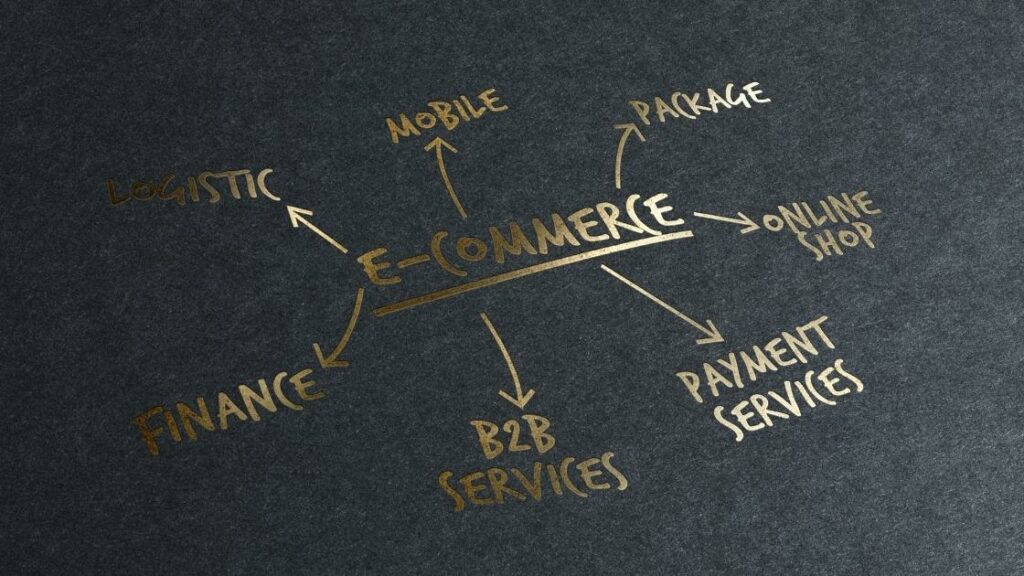
There are four major marketing segments in e-commerce:
- Business to Business (B2B): It involves the direct sale of goods and services between businesses.
- Business to Consumer (B2C): It involves the sale of goods and services from businesses to consumers.
- Consumer to Consumer (C2C): This enables individuals to transact with one another, typically via a third-party website.
- Consumer to Business (C2B): It lets individuals sell to businesses.
Here are several benefits of e-commerce marketing:
- Promotes your e-commerce site by directing traffic there
- Provides exposure
- Provides easy access for people searching for products you sell to find your website
- Increases the number of new customers for your website
- Creating a program that engages people who have previously visited your website to get them back to your site
- Improves customer satisfaction and loyalty by enhancing the post-purchase experience
- Offers customers well-timed, relevant offers and information so they can continue shopping with you
- Increases the frequency of and size of orders
2. Earn Visibility Through SEO and Content
Search engine optimization and content marketing are the lowest-cost, most durable ways to get found by people already looking for what you sell. Unlike paid channels, the visibility you earn here keeps working after you’ve stopped actively promoting a specific piece of content.
SEO strategy: A well-optimized e-commerce site is updated regularly, delivers a genuinely good user experience, and stays as technically clean as possible. Search engines reward sites that answer real search intent clearly, so naturally incorporating the terms your customers actually search for, rather than stuffing them in, is what actually moves rankings.
For a fuller breakdown of what this looks like specifically for an online store, see our guide on how e-commerce business consultants help you scale faster.
Content marketing: Content marketing is distinct from your core site content (homepage, category pages, product pages) in that it’s built to inform and engage before or beyond the direct sale such as buying guides, comparison content, and genuinely useful how-tos that keep a reader on your site and build trust before they’ve even considered buying.
A professional content marketing service can build and promote this kind of content consistently, which is usually the part that stalls when it’s left to whoever has spare time internally.
3. Reach Buyers Directly Through Owned Channels
Email, SMS, and social media let you reach a customer directly, without paying a platform for every impression. These channels compound differently than paid ads do, since a growing list or following becomes a genuine owned asset over time, not a cost that resets every month.
Email marketing: Make emails genuinely useful, not just promotional. Personalize where you can, share meaningful offers, and keep customers informed about new products or company updates in a way that earns an open, not just a send. Track whether your emails are actually being opened and read, not just delivered, since delivery and engagement are very different numbers.
SMS marketing: Text messages get read faster and more consistently than email, which makes SMS a strong channel for time-sensitive updates: order confirmations, shipping notifications, and short-window promotions. Keep the volume low and the value high, since SMS tolerates far less noise than email before someone opts out entirely.
Social media marketing: Social platforms let you communicate directly with your audience, build engagement, and drive traffic back to your store. Diversifying across the channels where your specific audience actually spends time, rather than trying to maintain a presence everywhere at once, extends your reach without spreading your team too thin to do any of it well.
4. Turn First-Party Data Into Real Personalization
As third-party tracking keeps getting phased out, the stores winning in 2026 are building marketing around data customers hand over directly, not data quietly collected behind the scenes. This is one of the more significant shifts in e-commerce marketing recently, and it’s worth treating as its own strategy rather than a footnote under “website design.”
Zero-party data, information a customer actively chooses to share through a quiz, a preference center, or a post-purchase survey, combined with first-party behavioral data you already own (browsing history, past purchases), lets you personalize meaningfully instead of guessing.
A skincare brand asking a new visitor about their skin type and concerns, then tailoring recommendations and email content around the answer, is a very different experience than generic “Hi [First Name]” personalization, and customers can tell the difference.
AI tools are accelerating what’s possible here too, particularly for stores with large catalogs. Generating keyword-optimized product descriptions at scale, something that used to take a content team weeks for a large catalog, is now realistic to do in a fraction of the time, freeing that team to focus on the content that actually needs a human’s judgment.
5. Grow Revenue From Customers You Already Have
Retention costs less than acquisition, and it compounds in a way a single sale never does. Most of the tactics covered above are about earning a customer’s first purchase. This strategy is about what happens after that, which is where a meaningful share of long-term e-commerce revenue actually lives.
Upselling and cross-selling. Upselling offers a customer an upgraded or premium version of what they’re already buying, a classic example being free access to a tool with paid premium features layered on top. Cross-selling recommends genuinely related products, the “frequently bought together” prompt being the most familiar version.
Both work well delivered through push notifications or email, timed close to the original purchase decision while the customer’s still in a buying mindset.
Loyalty and repeat engagement. A program that rewards repeat purchases, whether through points, early access, or member-only pricing, gives a customer a reason to come back to you specifically instead of comparison shopping again next time.
This is also where the personalization from strategy 4 pays off directly, a well-timed, relevant offer to an existing customer converts at a very different rate than a generic blast to your whole list.
Bringing the 5 Strategies Together
No single strategy above carries an e-commerce business on its own. A strong foundation without visibility means nobody finds you. Visibility without owned channels means you’re renting every customer relationship instead of building one.
Owned channels without real personalization blend into the noise. And any of the above without retention means you’re paying full acquisition cost for every single sale, indefinitely.
Most stores don’t need all 5 running at full intensity from day one. Start with the foundation and one visibility channel, then layer in owned channels, personalization, and retention as the store grows into needing them.
Types of E-commerce Marketing Strategy
SEO Strategy
Ensuring that an e-commerce website is optimized for search engines is one of the most significant and time-consuming manual techniques for optimizing an e-commerce website.
For a website to achieve optimal search engine optimization (SEO), it should be updated regularly with valuable information, promote a positive user experience (UX), and be as error-free as possible.
Whenever you incorporate keywords into your content naturally, search engines will also recognize that your site is a good fit when searching for a particular topic. Optimizing your website for search engines is one of the cheapest and most effective ways to market your e-commerce business.
Relatable read: How E-commerce Business Consultants Help You Scale Faster?
Social Media Marketing
Social media marketing for e-commerce is a highly effective tool. It enables you to communicate with your target audience.
You can increase engagement and interaction, increase traffic to your website, and grow your customer base through social media.
Your organization will also expand its capabilities and diversify its efforts using different social media channels. This will allow you to serve your clients better and expand your business in the long run.
Email Marketing
Email marketing is one of the most efficient communication methods with your consumer base.
To ensure that your emails are as effective as possible, include helpful material. Personalize them as much as possible, offer important promotions, and take advantage of the opportunity to socialize.
Inform your customers and partners about your company’s activities, upcoming events, and new products and features. By being personal, you ensure that they are interested in your brand and are inclined to open and read your emails.
Regardless of the countless benefits of email marketing, it is crucial to know whether the recipient has opened the email.
Discover robust online tools and learn effective methods of tracking the delivery and read status of your emails in this comprehensive guide.
Content Marketing
The main page, category pages, product pages, and so on are all examples of website content. On the other hand, content marketing focuses on creating and promoting material that mainly targets customers.
Ecommerce content marketing may generate significantly more awareness, engagement, and long-term conversions than any other marketing strategy. Investing in a professional content marketing service helps you develop and promote original content that keeps your audience informed while supporting sustainable business growth.
Optimize Your Website for Mobile
Your website must be mobile-friendly and adaptable to the device used to access it. E-commerce sites must meet the demands of mobile customers to maintain a positive user experience (UX) for everyone.
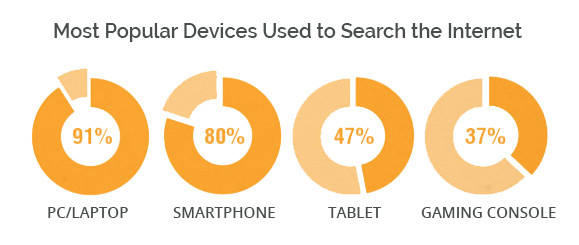
Therefore, ensure that you deliver on their expectations and invest in enhancing your website’s responsiveness. You can do this by enhancing your UX techniques.
How to Create An Effective E-commerce Marketing Strategy?
Find Your Niche
The first step to your e-commerce strategy is to niche down. Conduct research on the type of online store you want to have; look into competitors in the niche, the questions consumers are asking, and what your business intends to solve; and determine how to make a difference there.
Why should you find a niche? To become an expert in that field. You cannot expect to be like the big eCommerce sites or compete with them. What you can do is carve out a niche and dominate that industry.
Develop a Killer Unique Selling Proposition
When crafting your business’s USP, ask yourself, ‘Why should people buy from you?’
You answer this question by putting your consumer’s pain points, needs, and wants at the forefront of your business.
Determine and communicate your brand’s unique value proposition to potential customers. The value proposition addresses a critical question that every e-commerce customer has: ‘What makes you different from your competitors?’
It explains how you help customers make their lives better by giving them value. It can talk about how your product is good for the environment, cost-effective, and how your delivery process is efficient.
Create a Fantastic User Experience
User experience (UX) design creates products that provide meaningful and relevant experiences to users. When it relates to e-commerce, it is the experience a consumer has with your e-commerce website, from product search to purchasing and delivery. Here are some factors to consider when designing your user experience:
Website design
You should focus on creating a user-friendly and responsive website. This will significantly impact your consumer’s experience. According to Designers, 88% of users are less likely to return to a site after a bad experience. In comparison, mobile users are five times more likely to abandon a site that isn’t optimized for mobile.
These statistics should show you how important a responsive website is, both to your consumers and your business, as slow-loading websites cost retailers $2 billion in lost sales each year.
An unresponsive website can lead to a decrease in traffic, sales, and organic visits and rankings. Building or redesigning your website can be a struggle; therefore, outsourcing by getting professional help.
Product Page
Once a consumer has gotten through a responsive website, the next thing they look out for is the product page design. This would cover intuitive navigation, usability, accessibility, and desirability.
The efficiency of your website’s navigation and the user-friendly product page is the number of purchases your consumers can make without encountering any hassles, from inception to completion.
Your product page design should be concise and straightforward. Don’t make your pages overloaded with information that gets overwhelming for your consumer.
Product Package
How do your consumers get your products after purchase? Is the packaging well thought out through the lens of your buyer persona research? Is the design consistent with your visual branding? Does it speak to your brand’s unique selling proposition?
These are things to consider when designing your product packaging. It has to be enticing to your consumer to create a seamless transition from buying to receiving the products. Do ask yourself: Can a consumer identify your brand just by your packaging?
Product Delivery
Once you have gotten your product packaging right, your next step is to determine your delivery. How swift is your delivery? Is your packaging durable enough to withstand the delivery process of being tossed through logistics?
Do you offer free deliveries on first orders? How would your consumer feel when they get their package vs. how do you want your consumer to feel when they receive their package?
Answering these questions will clarify how to proceed with your product delivery design and strategy.
Pick your Traffic Source
Now, decide on the traffic source you’ll be using to promote your product and business in general. How do you intend to drive traffic to your e-commerce site? Through organic or paid traffic? Or a combination of both?
There are various ways to generate traffic to your e-commerce site, but Facebook Ads and Google AdWords are some of the best and most common. It is effortless and smooth to promote your site using Facebook, as all the necessary things are built into the Facebook App.
Upsell and Downsell
Upselling is a sales technique that involves selling a customer an upgraded or premium version of what they have purchased to get them to spend more money. The customer should compare the features and price of the two options to decide which is best for them.
An example of Upselling is: Customers can use a tool or resource for free but must pay a fee to unlock premium features.
Alternatively, cross-selling involves recommending closely related products or services to a customer. An example of cross-selling is frequently bought together prompts on e-commerce sites.
You can implement both methods through push notifications or email.
Final Thoughts on E-commerce Marketing Strategies
Other marketing strategies can significantly boost your e-commerce website and help you drive traffic, but the ones mentioned above are the most efficient to implement.
The world of e-commerce has altered dramatically during the last several years. Online shopping has exploded in popularity as a result of a global epidemic. You have to stay updated with industry trends and be proactive in implementing them.
The key question here is: Are your e-commerce marketing methods up to date? Are you stuck trying to get your strategies updated? Get a Free Digital Marketing Consultation with our experts.
Frequently Asked Questions
An e-commerce marketing strategy is a business’s overall plan for attracting visitors to an online store, converting them into customers, and retaining them for repeat purchases. It typically combines a clear brand foundation with visibility tactics like SEO and content, owned channels like email and social, and retention work like loyalty programs.
A complete strategy covers 5 core areas: a clear niche and strong buying experience, organic visibility through SEO and content, direct reach through owned channels like email and SMS, data-driven personalization, and retention tactics that turn one-time buyers into repeat customers.
SEO and content marketing remain the most cost-effective long-term strategies, since the visibility they earn keeps working without ongoing spend. First-party data and AI-assisted personalization are the fastest-growing strategies heading into 2026, as third-party tracking becomes less reliable and customers increasingly expect relevant, not generic, communication.
E-commerce marketing is built entirely around the online buying journey, from the moment someone discovers a product to post-purchase retention, and relies heavily on digital-specific channels like SEO, email, and social rather than traditional offline advertising. It also allows for a level of tracking and personalization that traditional marketing generally can’t match.