


Enterprise SEO budgets get big fast.
One tool alone can run you $1,500 a month. Here, most teams end up stacking three or four. So the question isn’t “can we afford this?” It’s “does this actually earn its spot in the stack?”
That question gets harder to answer once a site gets big. You need real data and software built for scale. One small mistake on a massive site can be costly.
Free or cheap tools usually can’t keep up. They fall apart under that much data and complexity.
The right tools do the opposite. They catch problems early, surface real opportunities, and make it easy to show a client exactly what their money bought.
Here are the 12 tools worth paying for, and the 5 you can skip.
Ready to build a smarter stack of enterprise SEO tools? We’re here to help.
Comparison Table: Worth the Budget
| Tool | Category | Pricing |
| Ahrefs | Backlinks & keyword data | $129 > $1,499/mo Enterprise (annual commitment) |
| Semrush | All-in-one + AI visibility | $139 > $549/mo > custom Enterprise |
| BrightEdge | Enterprise platform | Custom quote only |
| Conductor | SEO + AEO platform | Custom quote only |
| seoClarity | Enterprise platform | $2,500-$4,500/mo by module, custom above |
| Botify | Technical SEO at scale | Custom quote only |
| Lumar | Technical monitoring | Custom quote only |
| Screaming Frog (paid) | Technical crawler | $279/year per user |
| STAT Search Analytics | Rank tracking | Custom quote only |
| AccuRanker | Rank tracking | $224-849/mo; Custom quote |
| Similarweb | Market intelligence | $125 > $15K-200K+/year enterprise |
| Clearscope | Content optimization | $129-399/mo; Custom (~$1,000+/mo) |
12 Enterprise SEO Tools Worth the Budget
1. Ahrefs
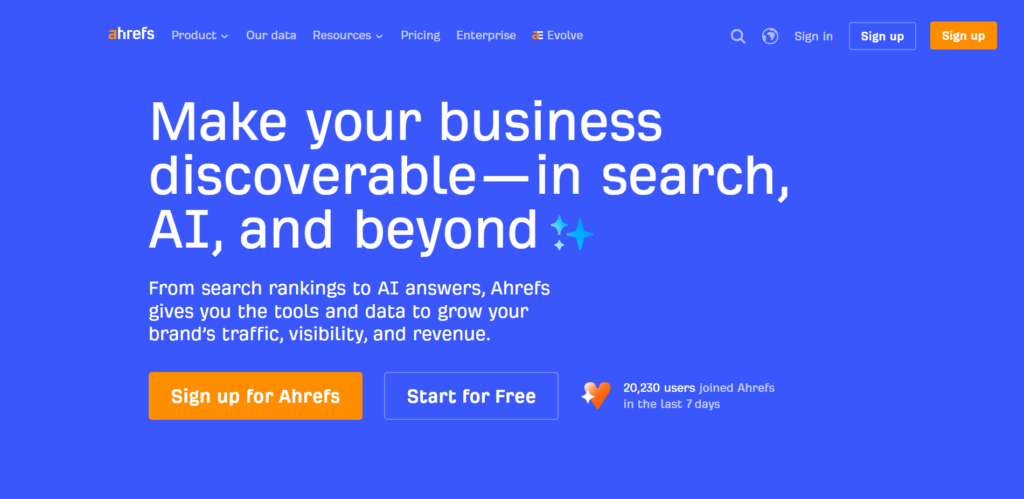
Ahrefs still has the widest, freshest backlink index in the game.
Crawl updates happen close to real time. For an enterprise, this speed is essential. You can see what’s happening with your links as it happens.
But that’s not really why enterprise teams pay $1,499 a month. At that top tier, you get uncapped API access, Single Sign-On, audit logs, unlimited historical data, and larger exports.
That means you can feed Ahrefs data straight into a client’s internal dashboard. And it’ll actually pass a security review.
For serious link research and competitor tracking, Ahrefs gives enterprises plenty of room to grow. It helps agencies manage large client programs.
Pricing: Starts at $129/mo. Enterprise is $1,499/mo (annual commitment)
2. Semrush
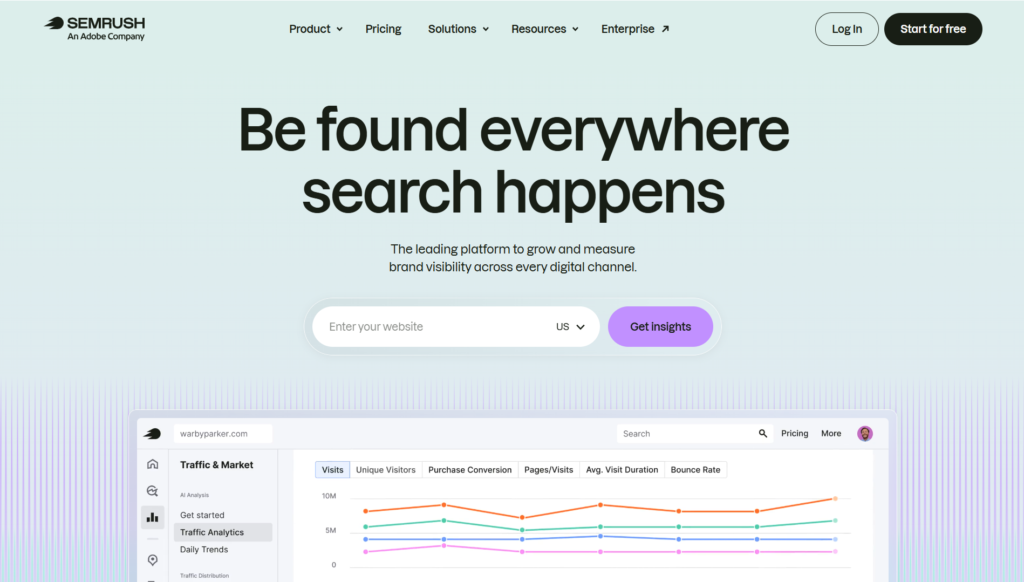
Semrush has reinvented itself in 2026 for the AI age.
They’ve built AI-search visibility into every tier above their base plan. This lets you track your rankings on Google. Plus, you can see how your brand shows up in ChatGPT, Perplexity, and AI Overviews.
The platform also covers SEO, competitor research, site audits, rankings, and content. So you don’t have to buy separate tools for the job.
It runs $139 to $549 a month, with custom enterprise pricing above that. You get multi-million-page crawling, APIs, SSO, governance, and dedicated support.
The tool is worth the spend when your client runs SEO and PPC from the same team.
Pricing: From $139/mo to $549/mo, then custom Enterprise pricing.
3. BrightEdge
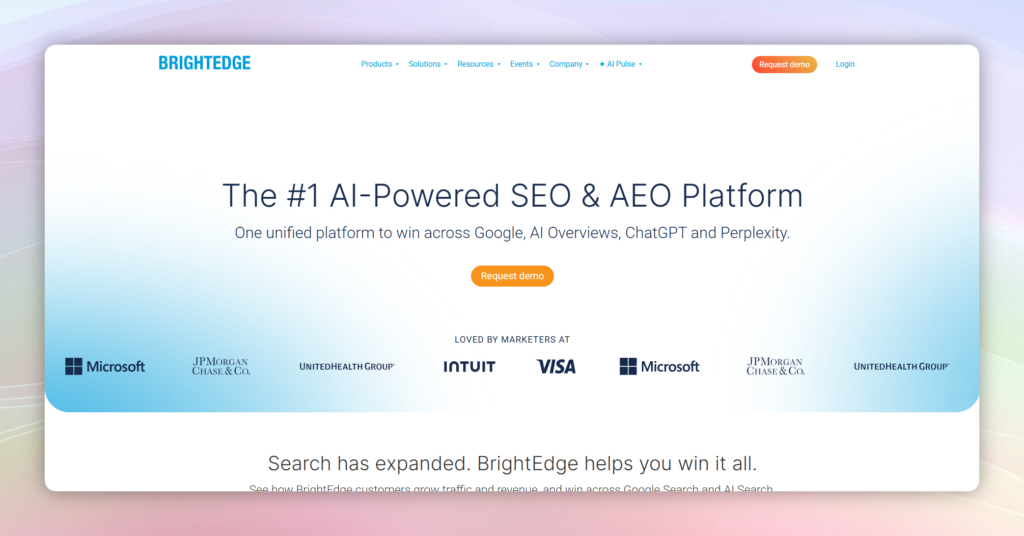
Purpose-built for enterprise from day one.
BrightEdge covers keyword research, rankings, audits, content recommendations, competitors, and AI search visibility. Its ContentIQ crawler can handle millions of pages. This makes it suitable for large websites.
There’s no fixed pricing here. It’s a custom quote based on your needs. However, some sources put the range at $1,000 to $6,000+, depending on certain factors.
What makes it worth the opaque pricing? Its revenue attribution layer. BrightEdge forecasts the actual business impact of your SEO work, tying organic performance to real revenue.
If you’re fighting for SEO budget against other marketing spend, this platform’s built for that.
Pricing: $1,000 to $6,000+. Custom quote only.
4. Conductor
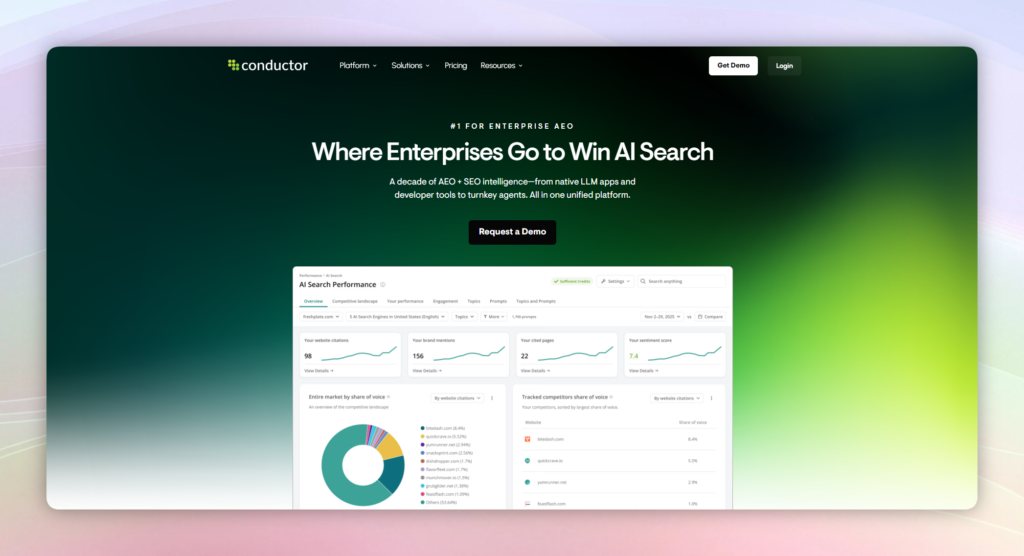
Conductor is another enterprise platform with custom pricing.
Some sources cite a $2,000 to $5,000 range. But that varies based on factors like website size, tracking volume, and AI usage caps.
Its edge is Answer Engine Optimization (AEO). Conductor tracks how a brand and its executives get cited inside AI Overviews, Gemini, and Perplexity.
The best part? That data feeds straight into the content workflow, not a separate dashboard. For SaaS and B2B clients, this GEO/AEO work is becoming standard practice.
Enterprise packages support 60,000+ tracked keywords and 125,000+ analyzed pages, with custom limits available.
Pricing: $2,000 to $5,000. Custom quote only.
5. seoClarity
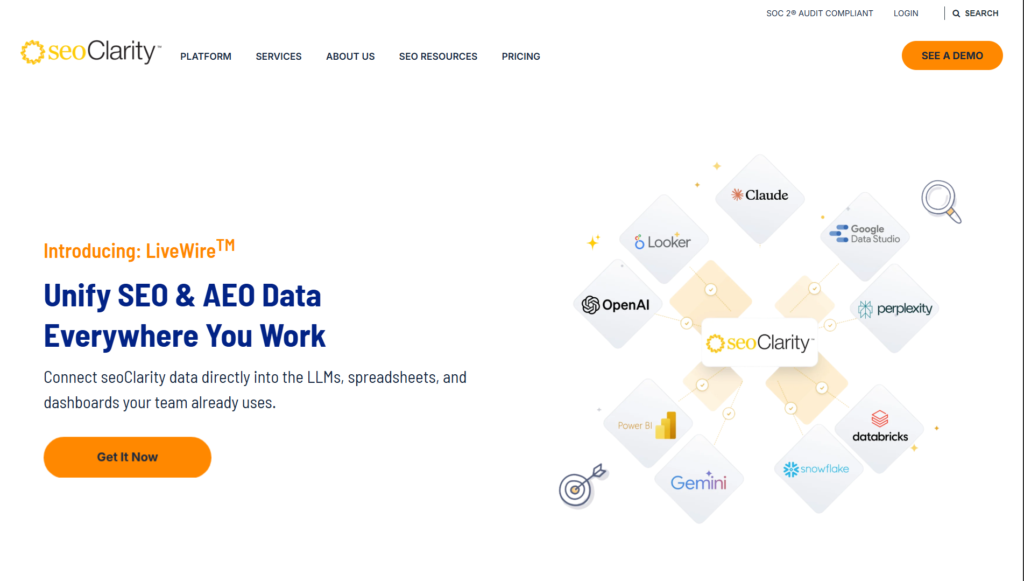
seoClarity is a true agency-tier spend.
It runs roughly $2,500 to $4,500 a month by module, and more above that.
But what makes it stand out? It’s one of the few enterprise platforms that shows real starting prices. That alone makes budgeting less painful.
The best part? On higher packages, you get unlimited users with global teams and 5,000+ tracked keyword queries. This is a huge deal when your SEO, content, and dev teams all need access, without per-seat fees piling up.
For very large programs, its automation can replace manual work and custom scripts.
Pricing: $2,500 to $4,500/mo by module, custom above.
6. Botify
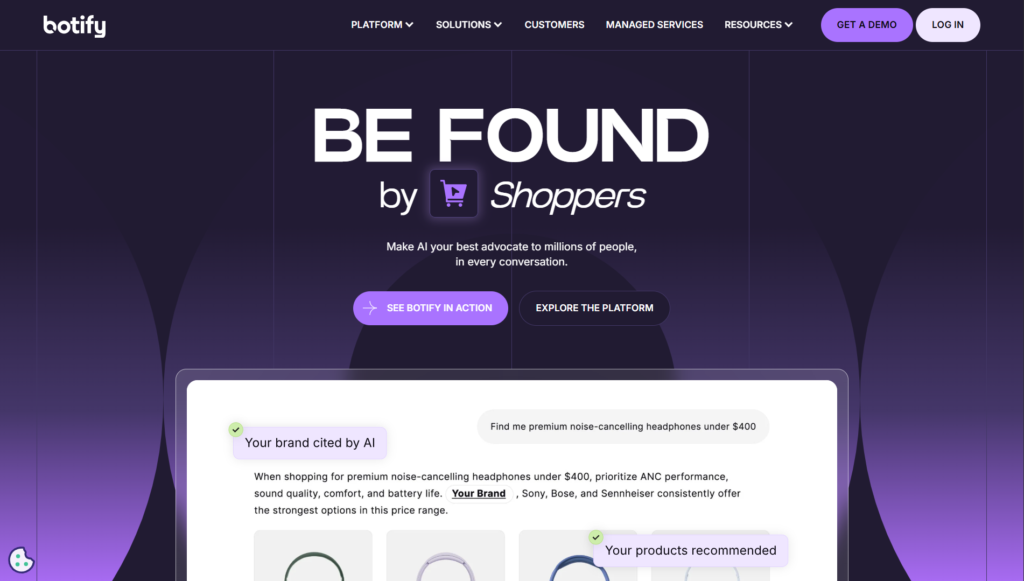
Botify solves one expensive problem.
Wasted crawl budget on massive sites. If a site has hundreds of thousands, or millions, of URLs, this plays a key role.
Botify doesn’t publish pricing. It’s custom. However, most sources put it between $2,500 and $10,000+, depending on setup and data volume.
Its LogAnalyzer tool shows exactly where Googlebot spends its time. It also shows which important pages get ignored. Rank trackers like Ahrefs or Semrush only show rankings. But Botify shows bot behavior.
For huge ecommerce catalogs or publishers, indexing speed drives revenue. This tool pays for itself in recovered crawl efficiency.
Pricing: $2,500 to $10,500+. Custom quote only.
7. Lumar
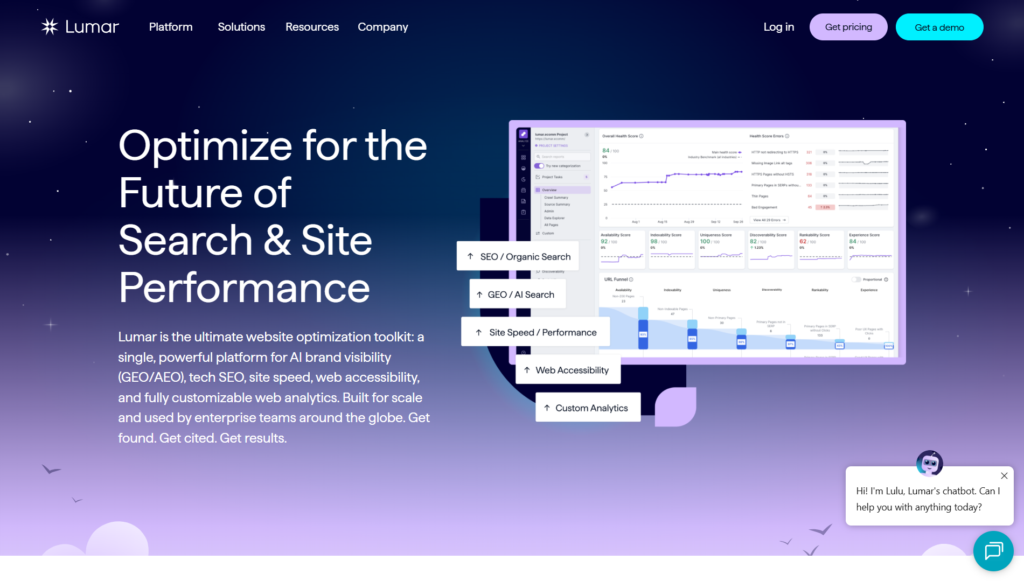
Lumar focuses on technical SEO and website monitoring.
But the standout feature is SOC 2 Type II compliance. Finance and healthcare clients often need this for security reviews. They can’t give open crawl access without clearing strict checks. Lumar’s trust center clears that bar quickly.
The tool also checks large sites for broken links, indexation issues, redirects, and metadata problems. Teams catch changes between formal audits.
The custom quote works best for regulated industries or teams managing multiple sites. The value comes from ongoing protection, not one-off audits.
Pricing: Custom quote only.
8. Screaming Frog SEO Spider
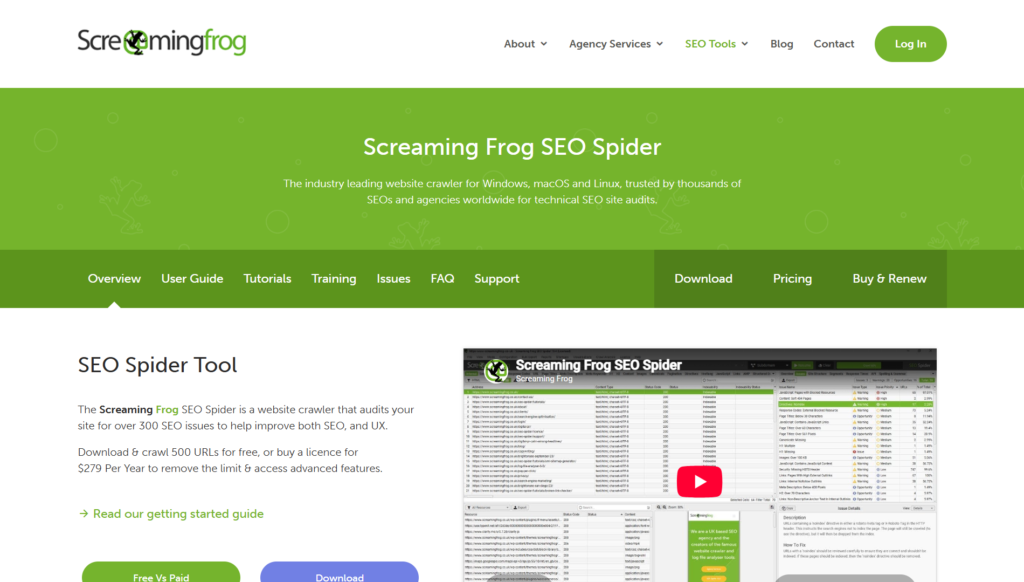
Screaming Frog is the budget surprise on this list.
Arguably the highest ROI-per-dollar. The paid version for enterprises costs $279 per year per user, with bulk discounts for 5+ licenses.
At that price, you get unlimited crawls, JavaScript rendering, and GSC/GA integration. It removes the 500-URL limit and adds advanced features.
This includes custom extraction and structured data checks. Scheduled comparison crawls are a lifesaver. They show you exactly what changed between audits.
No enterprise stack should skip this to save money. Most technical SEOs reach for it first when something breaks on a client site at 9 AM.
Pricing: $279/year per user.
9. STAT Search Analytics
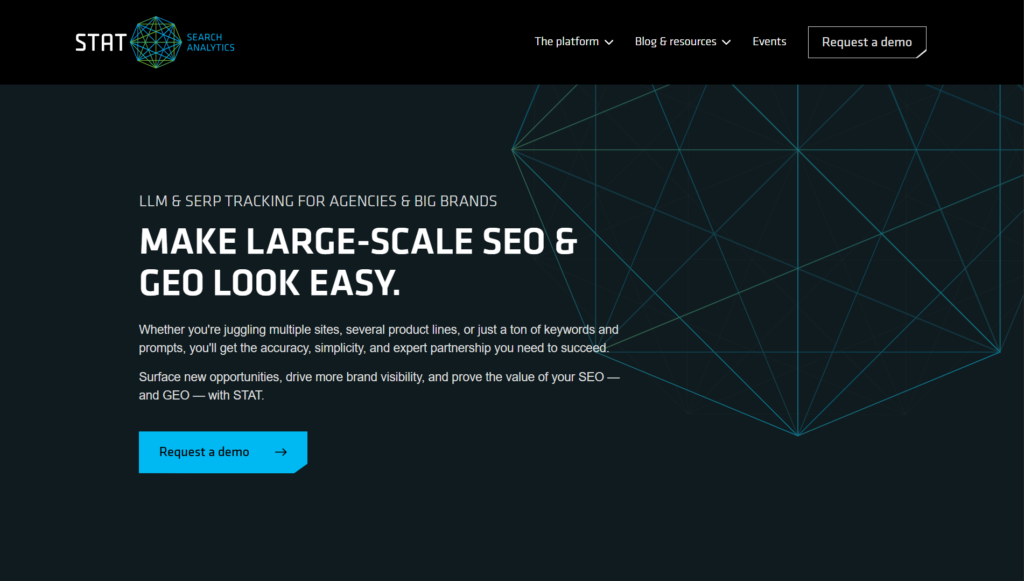
STAT does one job well.
That is tracking tens of thousands of keywords daily. Across multiple markets. With zero sampling.
Several generic rank trackers often sample large keyword sets to save compute power. That means your reported numbers might not be accurate.
STAT skips that shortcut entirely. It tracks local results and SERP features at scale. This suits global brands and multi-location businesses.
For them, local-pack and hyper-local visibility need to be provably accurate. This tool gives you that.
Pricing is custom. So teams can build a package around their tracking needs.
Pricing: Custom quote only.
10. AccuRanker
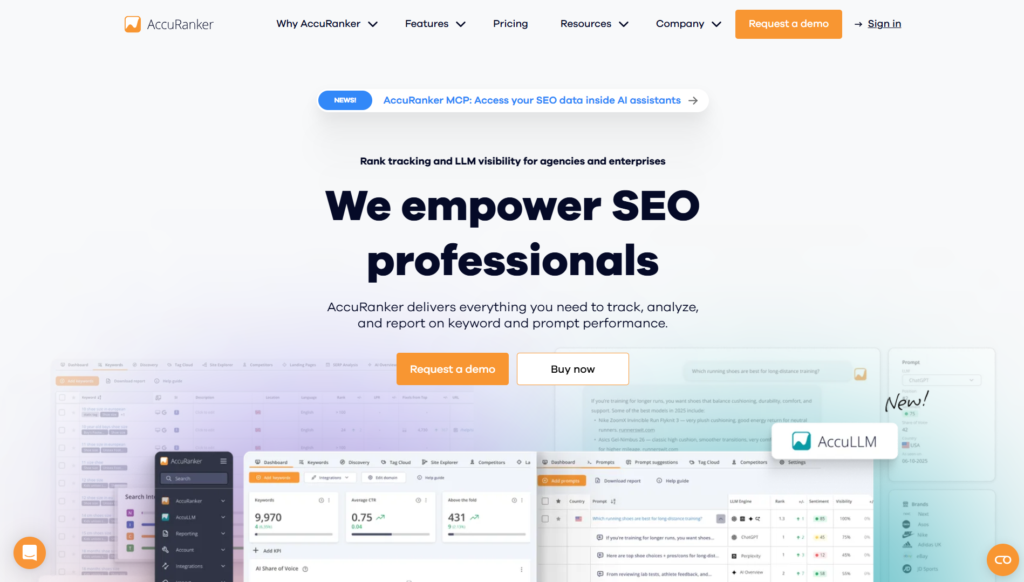
AccuRanker is a specialist rank tracker.
The platform is built around fast and accurate rank tracking. It supports location-based tracking, competitor monitoring, SERP features, reporting, and frequent ranking updates.
Pricing has climbed recently. So budget accordingly. Plans start at $200-ish for 2,000 keywords, scaling to up to $849/mo for 10,000 keywords, with custom pricing for larger volumes.
You’re paying the premium for pixel-level SERP accuracy and on-demand refresh speed. Most all-in-one tools give weekly or daily updates. AccuRanker gives you speed instead.
Teams can request fresh data instantly. This helps during launches, major campaigns, or algorithm changes.]
Pricing: $224-$249/mo (2K kw); $579-$849/mo (10K kw). Custom beyond that.
11. Similarweb
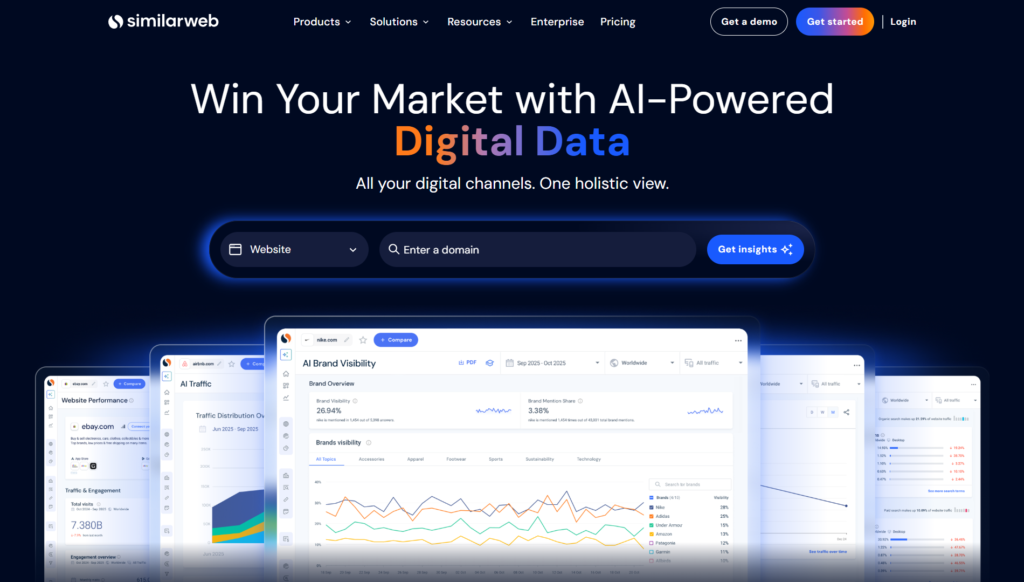
Similarweb shows what happens beyond your website.
It shows you competitor traffic sources, audience overlap, and category-level demand. This outside-in view adds context that standard keyword tools can’t provide.
You can compare competitors’ paid and organic traffic. You can also spot if a market is growing or shrinking. That helps teams connect SEO with wider business decisions.
Pricing ranges from $125-$199/month for entry plans, $333-$649 for self-serve, and $15,000-$200,000+ annually for enterprise. Costs depend on products and data needs.
That’s worth the budget when SEO strategy needs market intelligence. Similarweb helps decide where a brand should compete, not only what pages need fixing.
Pricing: $125-199/mo entry; $333-649/mo self-serve; $15K-200K+/year enterprise.
12. Clearscope
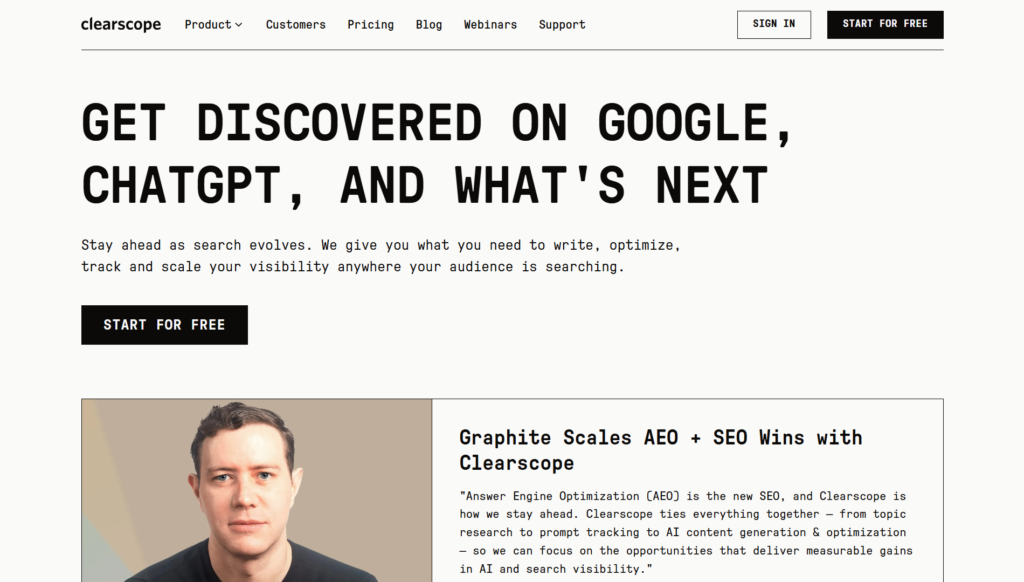
Clearscope helps teams write better SEO content.
Its A+ to F grading compares content against current top-ranking pages. That way, writers can improve topic coverage without stuffing articles with keywords.
Plans cost $129-$399/month, with custom enterprise pricing around $1,000+ monthly. That spend makes sense for large content teams producing articles at scale.
Editors can apply consistent standards across writers and markets. This reduces inconsistent quality across large publishing programs.
The platform also helps balance search performance with readable content. That makes it useful for brand-sensitive companies.
Pricing: $129/mo; $399/mo; custom Enterprise (about $1,000+/mo typical).
Comparison Table: Skip at Enterprise Scale
| Skip This | Entry Price | Use Instead |
| Can I Rank | $49-299/mo | BrightEdge or seoClarity |
| KeySearch | $24-48/mo | SE Ranking or Ahrefs Starter |
| Keywords Everywhere | $84-480/year | Ahrefs/Semrush built-in research |
| AnswerThePublic | $11-199/mo | Ahrefs/Semrush question clustering |
| LowFruits | $249/year | Ahrefs Keywords Explorer |
5 Enterprise SEO Tools That Aren’t Worth The Budget
1. Can I Rank
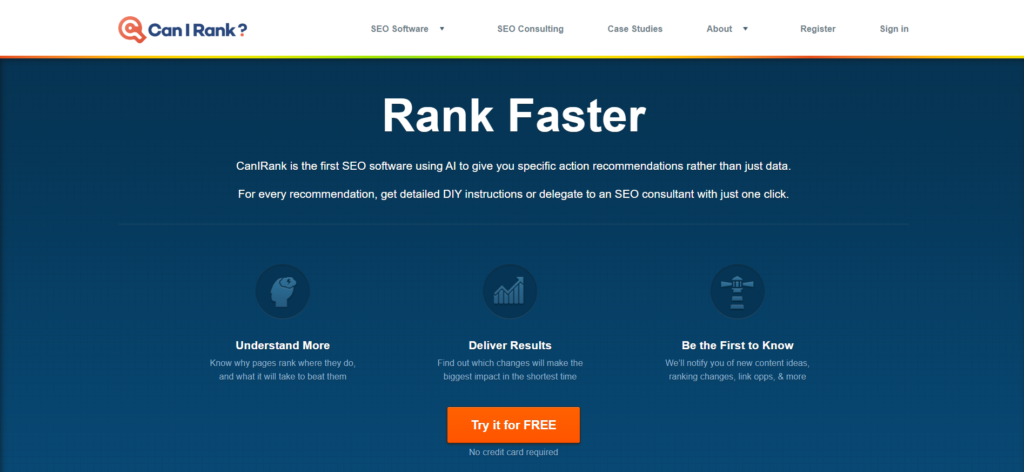
Can I Rank leans on AI to turn SEO data into specific action steps.
It offers keyword research, rank tracking, competitor analysis, and optimization recommendations. These are what you get for $49 to $299 a month, with the top plan covering 25 websites.
However, that website cap can be a real issue for enterprise teams managing larger portfolios.
The platform also focuses mainly on small businesses and startups. So larger SEO teams may find its controls, integrations, and scalability limited.
BrightEdge or seoClarity offer that same guided approach, just built for enterprise scale.
- Pricing: $49-299/mo.
- Alternative Tool: BrightEdge or seoClarity.
2. KeySearch
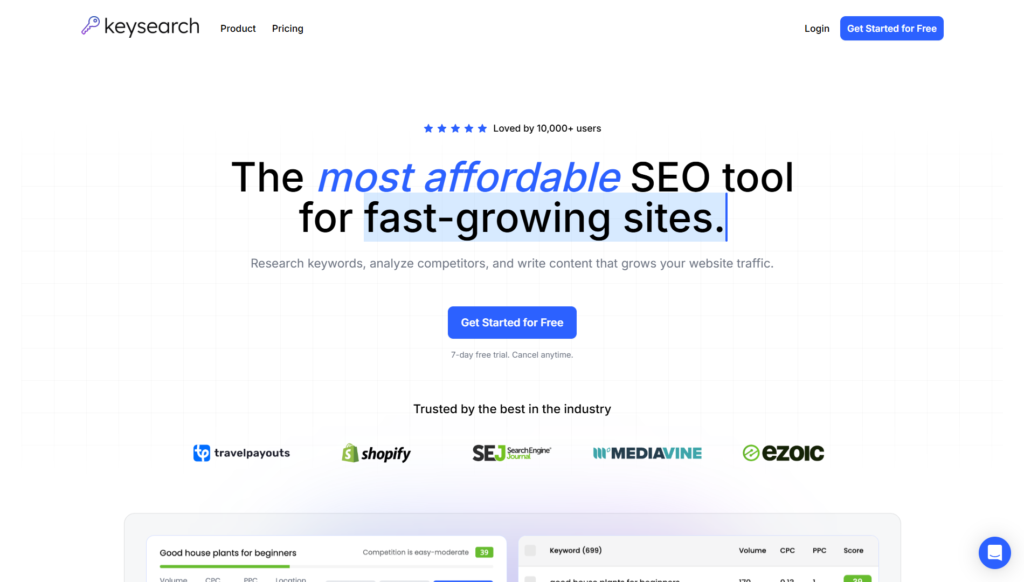
KeySearch is a genuinely good tool.
But the platform is built for solo bloggers and small freelance shops. It’s not for enterprise teams needing SSO, governance, or deep API access.
At $24 to $48 a month, it looks cheap. That price is appealing for bloggers and small teams. As an enterprise, you’ll feel like you’ve outgrown it within weeks of real enterprise use.
Paying for it can also create another small tool inside an already crowded stack. For enterprise teams, SE Ranking or Ahrefs Starter covers the same ground with room to scale.
- Pricing: $24-48/mo.
- Alternative Tool: SE Ranking or Ahrefs Starter.
3. Keywords Everywhere
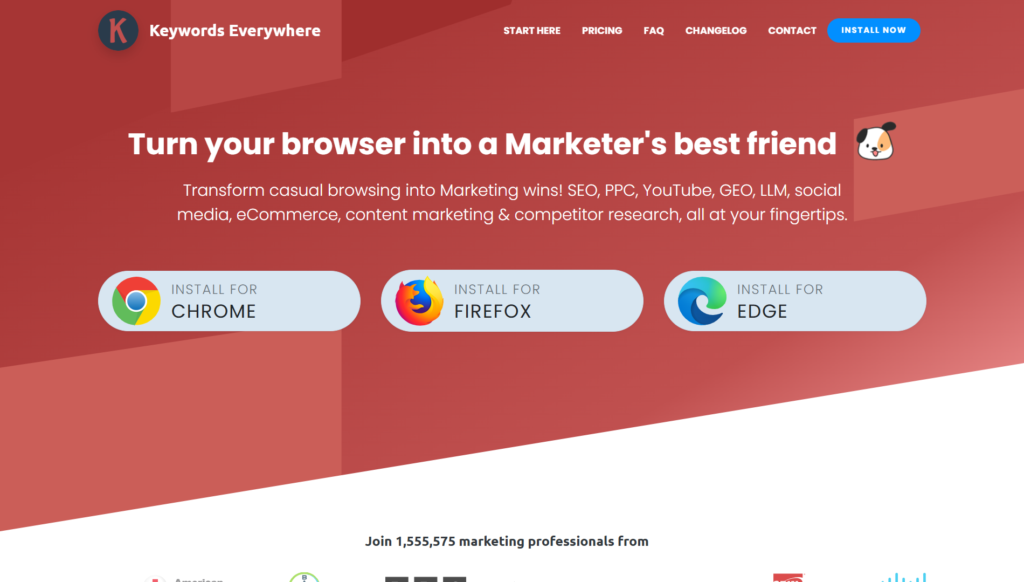
Keywords Everywhere is a browser extension on a credit system.
The tool is handy for a quick lookup while already in a SERP. You get to check search volume, CPC, and related terms while browsing.
It runs on a credit system, priced around $84 to $480 a year. But there’s no way for a whole team to govern or report from it.
Enterprise teams need stronger reporting and shared controls. It doesn’t replace a central SEO platform. Plus, it can’t manage large campaigns or teams.
Rather, it’s more of a personal habit than a line item. If the company already pays for Ahrefs or Semrush, much of the research overlaps.
- Pricing: $84-480/year.
- Alternative Tool: Ahrefs or Semrush’s built-in research.
4. AnswerThePublic
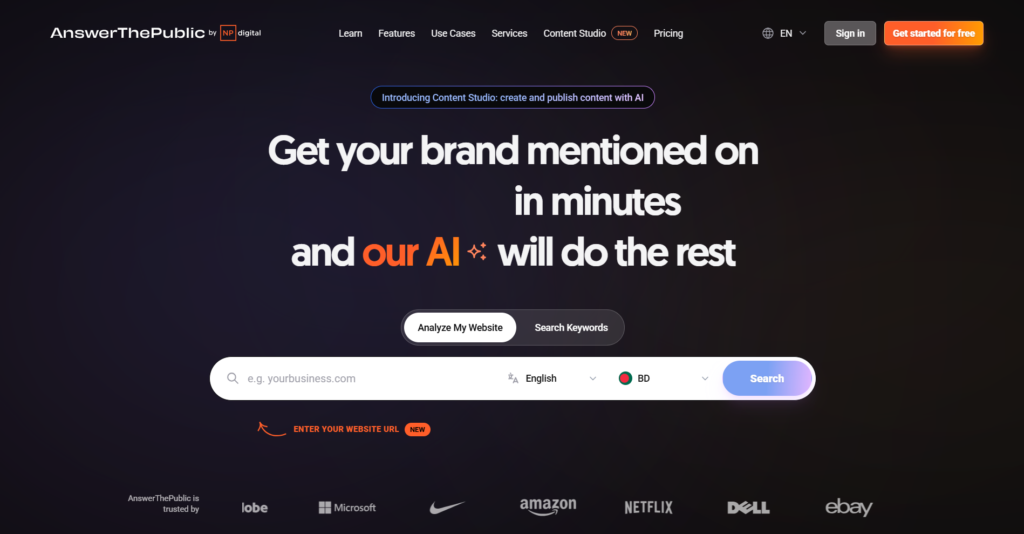
AnswerThePublic is great for content ideation.
It helps you find what questions people are asking. That can be handy when a writer needs quick topic inspiration.
However, it becomes redundant the moment you’re already paying enterprise rates for Ahrefs or Semrush.
Both of those tools include question-mining and clustering features built right in. Paying $11 to $199 a month separately is just duplicate spend for something you already own.
The tool can still help during early brainstorming. But it’s not a strong reason to expand an enterprise SEO stack.
- Pricing: $11-199/mo.
- Alternative Tool: Ahrefs or Semrush question clustering.
5. LowFruits
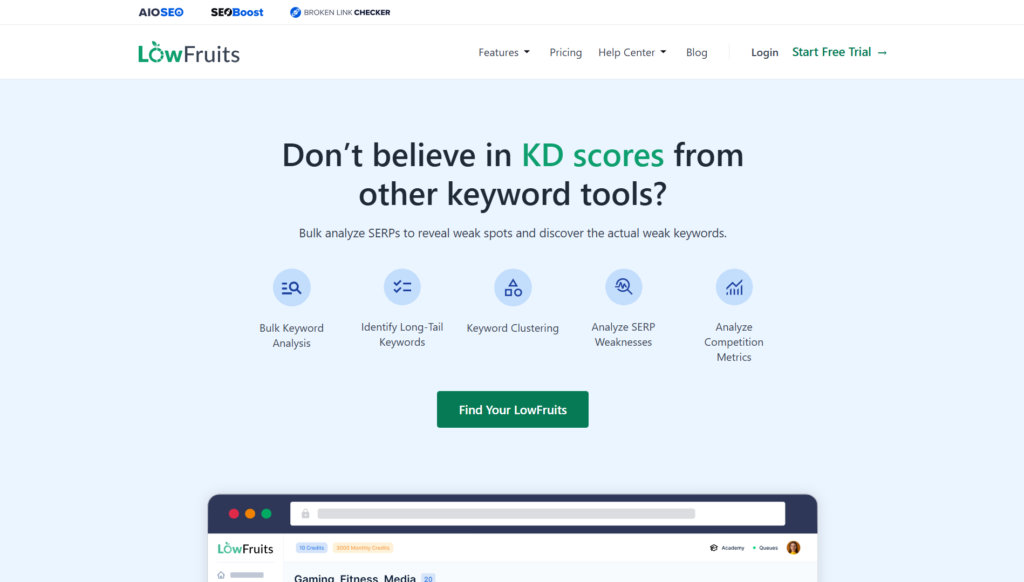
LowFruits tool is built and marketed for niche-site builders.
These are people chasing low-competition keywords. It’s a completely different game from enterprise SEO.
Enterprise SEO isn’t about chasing low competition. In fact, large brands typically chase market share and high-value terms in categories where competition is the whole point.
This is the wrong tool for the job. It doesn’t have the scale or the features to handle big sites. It’s a waste of time.
- Pricing: $249/year.
- Alternative Tool: Ahrefs Keywords Explorer.

Frequently Asked Questions (FAQs)
Usually yes. Most stacks pair one all-in-one platform, like Semrush, with a technical crawler like Botify and a content tool like Clearscope.
Pricing depends on site size, keyword volume, and user count. Vendors like BrightEdge and Botify prefer custom quotes matched to that workload.
Yes. Screaming Frog costs about $279 a year and still outperforms pricier tools for technical crawls and quick fixes.
Paying for overlap. Teams often keep tools like AnswerThePublic even after Semrush or Ahrefs already covers that same feature.