



Let three platforms walk the fashion e-commerce runway today.
Fashion brands are growing fast currently. New collections drop every week. Shoppers want fresh styles before anyone else. So, you need a platform to keep pace.
Without the right setup, things get messy. Orders pile up. Sizes sell out wrong. Customers leave unhappy.
That’s where the right platform steps in. It handles your catalogue, your inventory, and your growth without breaking a sweat.
Particularly, Shopify, Centra, and Salesforce. All do this well. They promise a working store and a smooth checkout.
But there are multiple factors that set them apart. Pricing, architecture, catalogue depth, and B2B support: all shift the fit. Let’s focus on 7 of those factors today.
Quick Comparison | Shopify vs. Centra vs. Salesforce
| Factor | Shopify | Centra | Salesforce |
| Pricing | Flat tiers, from $29/month | Custom, usage-based | GMV-based, 1-3% of sales |
| AI tools | Shopify Magic, Sidekick | Lighter, relies on apps | Einstein, Agentforce |
| Best for | Startups to large D2C brands | Fast-scaling fashion brands | Large, complex retailers |
| Architecture | Themed, headless on Plus | Headless by default | Cartridge, shifting to composable |
| Catalogue | Capped at 100 variants | Built-in PIM, handles complexity | Handles huge SKU counts |
| B2B support | Add-on via Plus | Native alongside D2C | Deepest, built for scale |
| Omnichannel | Shopify POS, add-on | Native, built-in | Connects via Retail Cloud |
1. Shopify
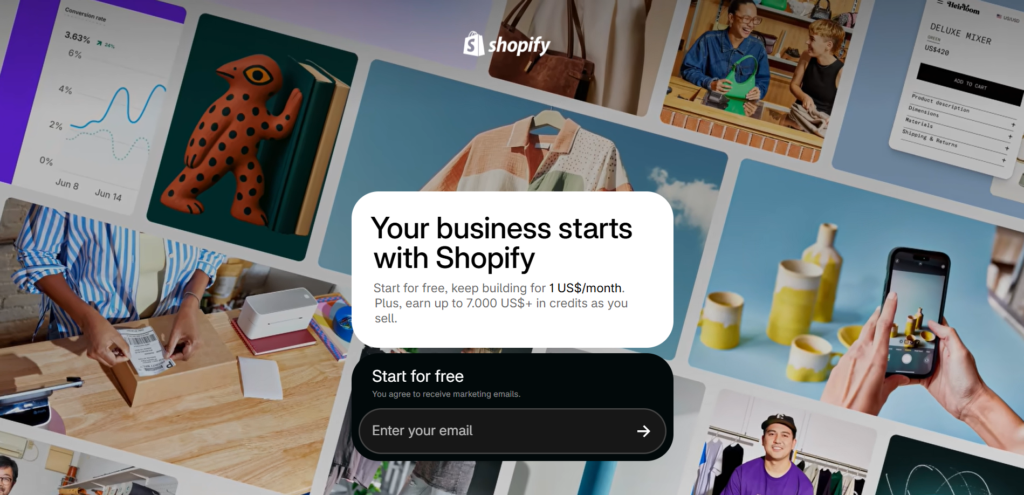
The platform most fashion brands start on.
Shopify launched in 2006. It’s still where most new fashion brands set up shop first. Fashion brands get a ready-made store, themes, payments, analytics, and marketing tools from the platform.
Setup takes days, not months. Its app store carries 8,000+ apps for almost anything you need.
The biggest strength is speed. Brands can launch quickly without building a large technical team.
Besides, Shop Pay streamlines checkout, which makes repeat purchases just one click away. That keeps conversion rates high.
With Shopify Plus, you get more automation, B2B tools, and custom headless experiences through Hydrogen.
Big names like Allbirds and SKIMS run on Plus today.
Pros
- Launches fast, often within days
- Huge app store with 8,000+ options
- Shop Pay checkout converts well
- Plus tier adds B2B and automation tools
- Strong support and documentation
Cons
- Caps products at 100 variants and 3 options. Brands with big size-color grids may outgrow this fast. Solution: pair Shopify with a PIM app, or move to Plus for custom variant workarounds.
- Design flexibility feels tight on lower tiers. Solution: use Plus with Hydrogen for a fully custom, headless storefront.
2. Centra
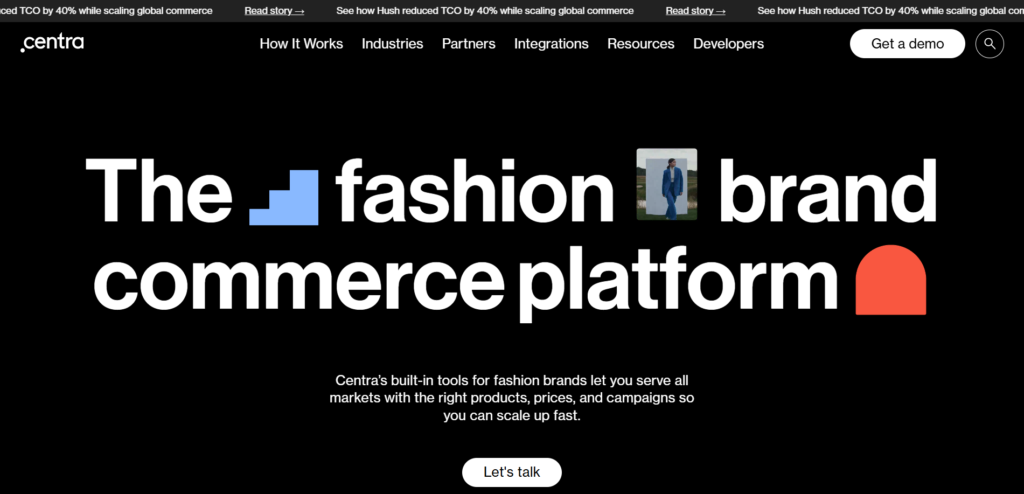
Built for fashion, not fitted to it.
Centra launched in 2015. It was made specifically for fashion and lifestyle brands.
It’s API-first and headless by design. Fashion brands can create custom storefronts while keeping commerce operations separate. That means they get flexible commerce experiences, seamless integrations, and scalable global storefronts across channels.
Product data gets special attention. The platform includes a built-in PIM for complex fashion products. This gives you one view of every customer.
Native support covers click-and-collect, ship-from-store, and buy-online-return-in-store. This helps fashion brands offer flexible shopping and returns to improve customer convenience. Few platforms handle all three out of the box.
Brands like Björn Borg and Nudie Jeans use it to scale. They never needed to switch to a bigger platform later.
Pros
- Built for fashion catalogues from day one
- Headless architecture gives full design freedom
- Strong omnichannel and fulfilment tools
- Single customer view across every channel
- Scales without forcing a platform switch
Cons
- AI and personalization tools stay lighter than rivals. Solution: connect a third-party AI app for recommendations.
- Custom pricing makes budgeting less predictable upfront. Solution: request a detailed quote early and lock in scope.
3. Salesforce
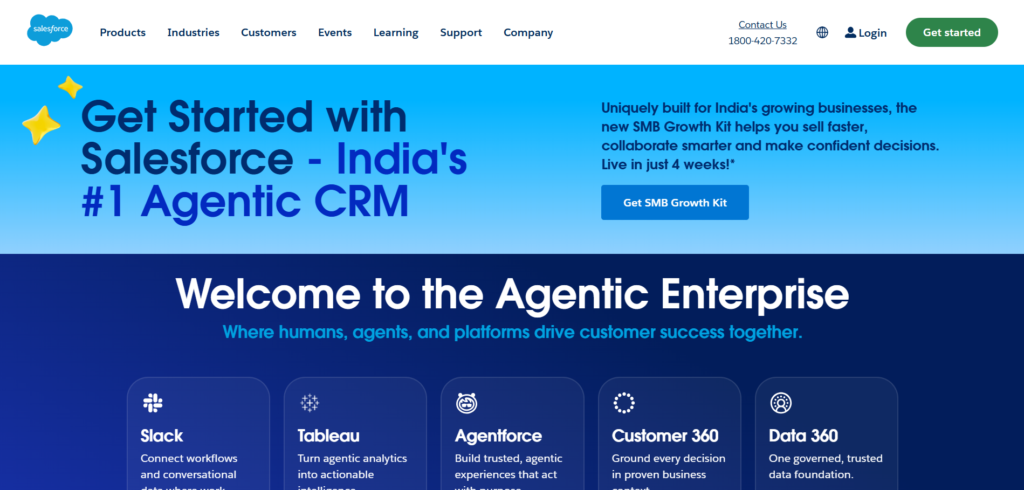
Enterprise power, enterprise weight.
Salesforce Commerce Cloud started as Demandware. Salesforce bought it in 2016 and rebuilt it for scale.
Recently, Salesforce rebranded it as “Agentforce Commerce” to reflect a broader corporate shift toward AI agents.
The platform targets bigger operations. It’s for retailers running complex B2B and B2C together.
Its biggest strength comes from native Salesforce integration. That includes CRM, Marketing Cloud, and AI tools like Einstein and Agentforce. They let brands connect customer data, personalize shopping experiences, and automate marketing. This helps you drive more sales across channels.
Large fashion retailers get more control. They can manage complex markets, catalogues, customer groups, and selling channels.
Giants like Puma, Lacoste, and ASICS run on it with dedicated dev teams.
Pros
- Deep Salesforce CRM and Marketing Cloud integration
- Handles massive SKU counts with ease
- Leading AI tools through Einstein and Agentforce
- Built for complex B2B and B2C together
- Strong track record with global fashion brands
Cons
- Implementation can stretch into months and cost heavily. Solution: bring in a specialist implementation partner from day one.
- GMV pricing gets expensive fast. Solution: model costs at your projected revenue before signing.
Learn More: SEO for Clothing Brands
Fashion Ecommerce Platform: 7 Factors That Set Shopify, Centra, and Salesforce Apart
1. Pricing Model
| Platform | Pricing Model |
| Shopify | Flat tiers, $29–$39/month; Plus from $2,300/month |
| Centra | Custom, tied to transaction volume |
| Salesforce | GMV-based, roughly 1-3% of sales |
Money talks loudest.
Shopify runs flat subscription tiers. Your bill barely moves as you grow. That makes budgeting simple for smaller fashion e-commerce teams.
Centra takes a different route. It uses custom pricing tied to transaction volume and the features you actually pick. This is good for those who want to avoid paying for features or scale they don’t need.
Salesforce goes a third way. It charges based on gross merchandise value. That bill climbs right alongside your sales. This suits enterprise-level fashion brands that want costs to scale with revenue.
So the “cheapest” platform really depends on where your brand stands today.
2. AI and Personalization
| Platform | AI Tools | Fashion Use |
| Shopify | Shopify Magic and Sidekick | Store tasks and content |
| Centra | APIs and connected tools | Flexible third-party setup |
| Salesforce | Einstein and Agentforce | Personalization and guided shopping |
AI is changing fashion shopping.
Customers now expect faster product discovery and more useful recommendations. So, it’s necessary to have automated tools in the platforms.
Salesforce leads with shopper-focused AI. Einstein handles product recommendations and personalization. Agentforce goes further with AI agents for merchandising and customer service. This helps large fashion retailers automate more shopping and service tasks.
Shopify takes a team-focused approach. Shopify Magic and Sidekick help teams manage store tasks and create content faster. They reduce manual work for ecommerce teams. That said, they focus less on personalizing the shopper journey.
Centra takes a flexible approach. Its own AI and personalization tools are more basic. But brands can connect third-party tools through its APIs. This gives them more freedom to build their preferred AI setup.
3. Ideal Brand Size
| Platform | Brands Fit |
| Shopify | Startups through large D2C brands |
| Centra | Fast-scaling fashion brands |
| Salesforce | Large, multi-brand retailers |
Not every brand fits every stage.
Shopify covers the widest range, and that’s part of its appeal. Startups launch on Basic and move toward higher stages later. Big e-commerce brands scale up on Plus without needing to switch platforms.
Centra sits in a narrower lane. The platform supports global DTC, wholesale, and multiple markets from one system. So, it suits fast-scaling fashion brands that don’t want to outgrow their platform and migrate later.
Salesforce sits at the other end. It fits large, complex retailers with bigger ecommerce operations. These brands often already use the platform for sales, service, or customer data. So, Salesforce Commerce Cloud can fit into their existing technology setup. That way, teams can manage more complex operations from one system.
In short, your current size and growth plans determine whether Shopify, Centra, or Salesforce fits best.
4. Platform Architecture
| Platform | Architecture | Fashion Use |
| Shopify | Themed by default, headless via Hydrogen on Plus | Fast branded stores |
| Centra | API-first and headless from day one | Custom global experiences |
| Salesforce | Cartridge-based, shifting toward composable | Complex digital ecosystems |
Your storefront sets the creative limits.
Fashion brands often need more freedom than standard stores provide. Here, platform architecture can either enable or constrain that freedom.
For e-commerce platforms, you’ll find two approaches to building the storefront. A themed setup gives you a storefront to customize, while headless gives you more freedom to build your own.
Shopify uses its Liquid theme system by default, and that keeps things simple for most brands. If you want headless, its Hydrogen unlocks a fully custom build on the Plus tier.
Centra starts headless. The APIs support custom websites, apps, and digital experiences. It lets you build unique shopping experiences without platform limits. This makes headless design the whole foundation.
Salesforce sits somewhere in between. It traditionally runs on a cartridge system. Its newer Storefront Next update pushes it closer to a modern, Composable Setup. This will make it easier to create unique fashion storefronts.
5. Catalogue Complexity
| Platform | Catalogue Handling | Complexity |
| Shopify | Capped at 100 variants, 3 options | Simple to moderate |
| Centra | Built-in PIM | Complex fashion catalogues |
| Salesforce | Handles huge SKU counts natively | Large enterprise catalogues |
Fashion catalogues can get messy fast.
One product can have several sizes, colors, materials, and regional versions.
Shopify has a clear limit. It caps products at 100 variants and 3 options. And that works fine for simple lines. The trouble starts with denim or footwear ranges packed with dozens of colorways and sizes. So, it’s suitable for brands with simple product ranges and fewer product variations.
Centra was built with that mess in mind. Its native PIM handles large, complex fashion catalogues without needing extra apps. That makes it well suited to brands with broad assortments, rich product attributes, and multiple size/color combinations.
Salesforce holds up well here, too. It manages big SKU counts natively, which gives larger brands the flexibility to scale their assortments. That’s one reason brands with huge catalogues opt for it.
So, the size and spread of your product range say a lot about which platform fits.
6. B2B Capabilities
| Platform | B2B Support | Wholesale Features | Native or Add-On |
| Shopify | Plus tier only | Basic wholesale tools | Add-on |
| Centra | Native | Full wholesale + D2C | Built-in |
| Salesforce | Enterprise-grade | Complex quoting | Native |
One platform, two business models.
Fashion brands often sell through stores, distributors, and direct customers. So, keeping wholesale and retail orders in one place saves time and prevents stock mistakes.
Shopify was built for D2C first. Wholesale came later as an add-on. You only get those wholesale tools on the Plus tier, which costs more. So, you’re paying extra for features that feel tacked on, not built in. It works fine, but it’s not as smooth as a platform made for both. If wholesale is a small part of your business, that’s okay.
Centra approaches this differently. It was built for fashion brands selling both D2C and wholesale. Both channels get the same level of tools from day one. So, you don’t have to pay extra for a weaker wholesale setup. Fashion brands with retail and wholesale arms are exactly who it’s for.
Salesforce goes furthest here. It offers complex pricing rules, quoting, and account hierarchies. These are built for large-scale B2B operations. In short, it handles the messy parts of selling to big buyers. If wholesale is a big part of your revenue, this one’s worth a close look.
7. Omnichannel Capabilities
| Platform | Omnichannel Tools | Fashion use |
| Shopify | Shopify POS and connected channels | DTC plus stores |
| Centra | Native click-and-collect, ship-from-store | Global fashion retail |
| Salesforce | Connects to Retail Cloud and POS | Large retail networks |
Shoppers move between channels fast.
They browse on phones, buy in stores, and return online. Fashion ecommerce needs omnichannel tools to keep up with this behavior.
Centra stands out here. Click-and-collect, ship-from-store, and buy-online-return-in-store all come built in. Shared inventory across global sites also comes standard. This helps fashion brands manage changing sizes and stock across locations. Shoppers can check stores when their size is unavailable online.
Salesforce takes a similar approach. It connects to Retail Cloud and POS for a unified setup. However, it mainly suits large retail chains because of its complex setup, extensive features, and higher costs.
Shopify keeps things simpler. Shopify POS covers basic in-store selling, but it works as an add-on. Deep omnichannel flows need extra apps. This increases the setup effort and adds to ongoing costs as brands grow.
Ready to grow your fashion brand? Look into our Fashion SEO Services and turn more searches into customers.
Frequently Asked Questions (FAQs)
A migration can affect rankings if URLs change without proper redirects. Set up 301 redirects and keep your content structure intact. Rankings usually recover within a few weeks.
Yes, all three support multi-currency and multi-language storefronts. Shopify Markets, Centra’s native localization, and Salesforce’s Global Commerce tools each handle currency conversion and regional pricing differently.
Shopify and Salesforce both auto-scale during peak traffic, like Black Friday. Centra also scales well, though brands often add a CDN layer for extra speed during major drops.
Yes, but migration complexity varies. Shopify offers built-in import tools for smaller catalogues. Centra and Salesforce usually need a development partner to migrate large, complex fashion catalogues safely.