



Clients don’t shop around the country for a divorce attorney.
They open Google, search their own city, and call whoever answers first. That single habit decides which law firms grow and which ones struggle for cases.
SEO has quietly become a serious budget line for family lawyers because of it. Data shows that firms typically spend $3,000 to $10,000 a month on SEO. That’s the going rate in a competitive market.
The reason? Divorce Lawyer SEO helps your firm appear when such searches happen. It connects your services with people already looking for legal help. With strong strategies, you can improve rankings, calls, consultations, and qualified leads. Let’s look at 7 of them here.
Why Should Divorce Lawyers Invest In Search Engine Optimization?
1. Builds Local Market Visibility
Divorce lawyers live by local visibility.
People don’t search for lawyers nationwide. They search by city, neighborhood, or service area. Someone facing a split wants an attorney who knows their state’s laws and local courts.
That’s where local SEO steps in. It improves visibility by putting a firm’s name, address, and services in front of nearby searchers exactly when they need help.
The numbers back this up. 87% of people still turn to Google to decide which law firm to hire. When someone searches “divorce lawyer near me,” strong local signals can help your firm appear. And better visibility means more website visits and calls.
2. Establishes Trust & Credibility
Trust decides who gets the phone call in family law.
Divorce is personal, emotional, and often hard to discuss with a stranger. People want proof a lawyer has helped others through the same situation before they reach out.
SEO builds that proof. It pushes reviews, case results, and credentials onto page one. Good feedback and ratings build trust. Divorce clients see you as reliable and consider picking you.
Reviews carry real weight in this process. Almost 90% of consumers trust online reviews as much as a friend’s recommendation. They can strongly shape hiring decisions for law firms.
3. Attracts High-Intent, Sustainable Clients
Not every visitor is ready to hire a lawyer.
Someone typing “divorce lawyer in Dallas” already knows what help they need. SEO puts your firm in front of people during that decision stage. It aligns website content with local, high-urgency search behavior.
This creates a sustainable flow of high-intent leads without relying only on paid ads.
The numbers make it clear. SEO now brings in roughly 44% of all clients for law firms nationwide. Organic visitors can also convert strongly, with a 7.1% visitor-to-lead rate reported for legal searches.
A well-built divorce SEO strategy helps keep attracting potential clients long after individual pages go live.
4. Enhances Client Experience
Good SEO isn’t only about rankings.
It also shapes how clients feel about a firm. Divorce clients may search privately from their phones while dealing with stressful situations. They need quicker page load times, clear answers, simple navigation, and easy ways to contact a firm.
Technical SEO ensures all of these.
It helps pages load smoothly and work properly across mobile devices. Keeping load times under 2.5 seconds can improve both user experience and search performance.
Response speed can also influence hiring decisions. 74% of prospects hire the first law firm to respond. So, faster pages and easy contact options can help turn searches into consultations.
Also Check Out: Law Firm SEO: Best SEO Services for Lawyers
Divorce Lawyer SEO Strategies For Family Law Firms
1. Target Local Keywords
Keywords form the foundation of every local search strategy.
Divorce lawyers need to think like their own clients when choosing search terms. To reach people actively seeking nearby legal help, use terms like
- “Divorce lawyer in [city], [state], or [county]”
- “Family lawyer near me”
These phrases match what people actually type when searching for help in specific areas.
Then build keyword groups around services, locations, and common client questions. A person searching “child custody lawyer in Austin” has different needs from someone searching “divorce attorney near me.” Your pages should reflect those differences.
This should help attract relevant local visitors.
2. Optimize Google Business

A Google Business Profile often gets seen before a website does.
- Start with accurate details, including your firm name, address, phone number, website, and service areas.
- Choose relevant categories and describe your services clearly.
- Add professional photos and keep your profile active with suitable updates.
- Reviews should also receive regular attention.
A complete Google Business Profile helps firms appear in local results and Google Maps searches. It can also help potential clients decide whether to visit your website or call.
For divorce lawyers, this optimization can be especially useful for specific searches. Small profile details can influence how easily people find your firm.
3. Build City Pages
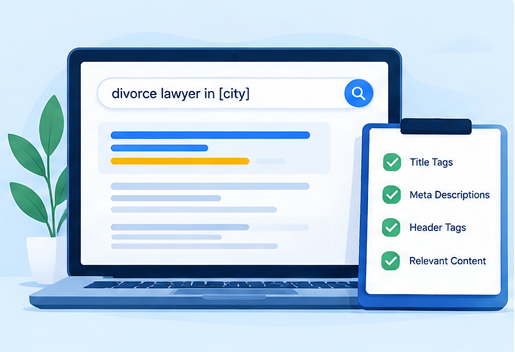
One website page can’t serve every city a firm covers.
Create dedicated pages for each service area to rank for divorce-related searches in specific cities and neighborhoods.
Each page should speak directly to that region’s courts, laws, and community. It can also discuss local divorce services, common questions, and ways the firm helps clients there. Ensure it doesn’t read like a copy-paste template. Search engines notice pages built with real local detail, and so do readers.
City pages give your firm a dedicated place to target local divorce searches. Visitors find useful local information there. They also help search engines connect your divorce services with specific locations.
4. Earn Local Links
Backlinks still tell Google a firm is trustworthy.
Look for relevant opportunities through legal directories, local organizations, community groups, and regional websites. This can be a mention from a bar association or local news outlet.
Sponsor a local event or join a legal aid group. They can also help you naturally earn these links.
Backlinks strengthen local authority and improve search visibility. They indicate that a firm is a real, active part of its community. Plus, they can also introduce your firm to people who may need legal services later.
5. Create Helpful Content

People search for information long before they search for a lawyer.
Answer common local divorce questions in plain language. This can be-
- “How much does a divorce cost in [state]?”
- “What is the divorce process in [county]?”
- “How is child custody determined in [state]?”
- “Can I get spousal support if we were married less than 10 years?”
- “How will our property, assets, and debts be divided?”
- “What happens to the marital home?”
- “How long does a divorce take?”
Include winning keywords, direct answers, and internal-external links. These work to make the divorce-related content SEO-friendly.
Informative content helps you attract relevant searches and build trust. Plus, it also shows that your firm understands common concerns.
6. Generate Client Reviews
Reviews can influence decisions faster on a law firm’s website.
They give potential clients a quick look at other people’s experiences with your firm. Positive feedback can improve local rankings while giving people more confidence when choosing a divorce attorney.
So, encourage satisfied clients to leave honest reviews without asking for specific ratings or comments. Respond to reviews professionally while protecting client privacy.
A steady stream of recent, honest feedback tells both Google and readers that a firm delivers results. This builds trust.
7. Strengthen Local Citations
Consistency online builds confidence offline.
Local citations are online listings that mention your firm’s basic business information. These details usually include your name, address, and phone number.
Search engines cross-check this information across the web to confirm a business is real and accurately located.
Keep them consistent across directories. This helps reinforce location signals and prevent search confusion.
Review major legal directories, local listings, and business platforms for accuracy.
Clean up old listings, duplicate profiles, and outdated addresses. This will remove confusion for both search engines and potential clients.
Relatable Read: Attorney Website SEO: On-Page Fixes That Move Rankings
Measuring Divorce Lawyer SEO Performance
Traffic alone doesn’t tell you whether SEO is bringing better clients. Divorce firms should track several practical numbers. The metrics you should monitor are-
1. Local Rankings
Shows where your firm appears for important city-based searches.
It helps you see whether your local SEO efforts are improving visibility. It also shows which locations and services need more attention.
2. Google Business Profile Actions
Tracks calls, website visits, directions, and other listing activity.
These actions show how often people engage with your firm directly from search. Monitoring them helps measure the value of your local listing.
3. Organic Traffic
Shows how many people reach your website through unpaid search.
Tracking this metric shows whether your website is attracting more searchers over time. It can also reveal which pages bring the most visitors.
4. Calls
Reveals whether search visibility turns into real conversations.
Calls are especially important for divorce firms because many potential clients prefer speaking directly with an attorney. Tracking them connects SEO efforts with actual inquiries.
5. Consultation Requests
Shows how many visitors take the next step.
Monitoring this one shows whether your website turns search traffic into potential clients. It can also highlight pages that encourage more conversions.
6. Qualified Leads
Tells you whether those inquiries match your services and locations.
This helps separate valuable prospects from irrelevant inquiries. Tracking this indicator lets you understand whether SEO is attracting the right clients.
MonsterClaw reports on all of these monthly! So firms always know exactly where their marketing budget is going.
| Mistakes | Consequences | Solutions |
| Inconsistent NAP details | Lower local rankings, confused clients | Audit and standardize listings everywhere |
| Thin or generic city pages | Poor rankings for local searches | Write unique, detailed pages per city |
| Ignoring reviews | Lost trust, fewer conversions | Request and respond to reviews weekly |
| Slow mobile website | Higher bounce rates, lost leads | Improve load speed and mobile design |
| No content strategy | Missed traffic from common questions | Publish helpful, plain-language articles |
Frequently Asked Questions (FAQs)
Most firms see noticeable movement in local rankings within 3 to 6 months. Full results, including steady lead flow, often take 6 to 12 months. Results depend on competition, website condition, local authority, content quality, and how consistently the strategy is implemented.
Yes. Separate pages can target specific services like uncontested divorce, child custody, property division, and spousal support. Each page can match a different search and client need.
Yes. Smaller firms can compete by targeting specific cities, neighborhoods, services, and detailed questions. Focused local content can help smaller practices reach searches larger firms overlook.
MonsterClaw is a strong choice for divorce lawyers. We combine local SEO, content, technical improvements, and lead-focused strategies designed around how potential clients search.
Yes. “Near me” searches often show strong local intent. Optimize your Google Business Profile, location pages, reviews, and consistent business details. This helps improve visibility for these searches.