



Most SaaS teams chase high search volume.
Unfortunately, that doesn’t always fill a pipeline. A keyword with 10,000 searches a month can bring zero signups. A keyword with 200 searches can bring 5 demo bookings.
See the difference? It comes down to buyer intent.
Buyer-intent keywords reach people who are closer to making a decision. They search for solutions, pricing, comparisons, and specific software features.
That makes these keywords valuable for SaaS brands. They can bring more focused traffic and stronger conversion chances.
But to relish the benefits, keyword research is a must. You need to look beyond search volume and study what each search really means.
7-Step Guide to SaaS Keyword Research
Step 1: Define Your Buyer

Start here before touching any tool.
You need to know who buys your product. Build a simple profile of your ideal customer. Note their job title, team size, and daily pain points.
Think about the words they’d use to describe a problem. A marketing manager and a developer describe the same issue differently. List the use cases your product solves for each buyer type.
This step keeps your research focused. It also prevents broad keywords from taking over your list. A clear buyer profile makes every next step faster and sharper.
Step 2: Collect Real Language
Buyers don’t always search the way marketers write.
They already use words that can shape your keyword list. Find those words before opening an SEO tool.
Pull real phrases from sales calls, customer emails, and support tickets. Read through product reviews for exact wording. Check Reddit threads where people ask for tool recommendations.
Look for repeated phrases around problems, features, costs, competitors, and desired results. A prospect may say “spreadsheet is a mess” rather than “need a CRM.” These raw phrases often become strong keyword ideas.
They also make your content sound like something a person wrote. Collect this language first. It makes your research more buyer-focused.
Step 3: Build Seed Keywords
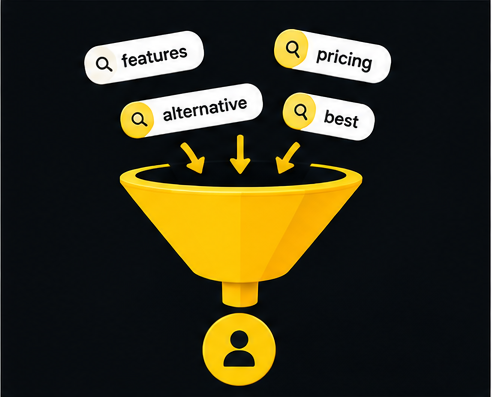
Turn the pain points into short and simple keyword starters.
Start with your product category, main features, customer problems, industries, and competitors. For instance, a project management SaaS may create seeds such as:
- Project management software
- Project management for agencies
- Asana alternatives
Turn specific pain points into searchable seed phrases that reflect real solutions. For example, “too many spreadsheets” could become “CRM alternative to spreadsheets.” Do this for every pain point on your list.
Group these seeds by product feature, use case, and buyer type. This gives you a small, focused starting list. Keep it within 15 to 20 strong seeds.
These seeds can become the base for deeper SaaS keyword research. Quality here saves time in every step after.
Step 4: Expand With Tools
Now take your seed list into a proper research tool.
Ahrefs, Semrush, and Google Search Console. All can uncover related searches and ranking data.
Search each seed keyword inside your chosen tool. Review related terms, keyword variations, questions, and competitor keywords.
Watch for comparison, alternative, and pricing terms in the results. Focus on terms like best, pricing, alternative, software, platform, and for [industry]. These keywords often signal strong buyer intent.
Search Console can also reveal queries where your site already gets impressions. Those terms can expose quick content opportunities.
But don’t copy every suggestion into your list. Check whether each keyword fits your product, customer, and buying journey.
Then, finally, export everything into one sheet for review. Don’t stop at the first page of suggestions. The best buyer-intent terms often sit a few pages deep.
Step 5: Check Search Results
Before you pick a KW, search it yourself.
Look at what already ranks on page one. Note the content type: blog post, comparison page, or landing page. This tells you what Google expects for that search.
If every result is a comparison table, write a comparison page. If results are all beginner guides, that keyword sits earlier in the funnel.
The right format counts as much as the right keyword. Search results tell you exactly what to build.
Step 6: Group Related Terms
Several keywords mean nearly the same thing to a searcher.
Group terms that share the same search intent. For instance, “CRM pricing” is similar to “CRM cost”. With several related phrases, you can build one strong page.
Look for overlapping words and similar buyer questions. Cluster them under a single main topic. Build one page that fully answers that cluster.
Keyword grouping helps reduce thin content. It also helps your site build stronger topic coverage without publishing dozens of similar pages.
Besides, it keeps your site organized and makes it easier for Google to read.
Step 7: Score And Prioritize
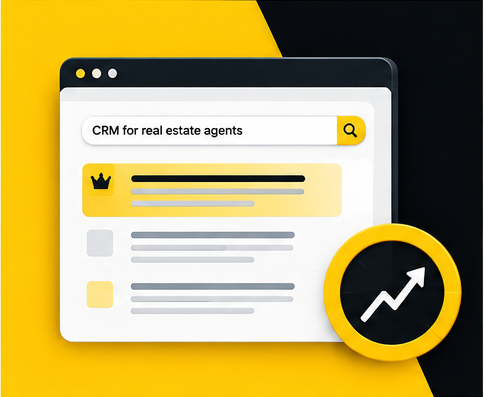
Not every keyword deserves a page right away.
Give each keyword a simple score based on buyer fit, intent, and ranking chance.
A keyword can have strong intent but tough competition. Weigh that against your SaaS site’s current authority.
Start with 3 questions-
- Does the keyword match your ideal customer?
- Does the search show buying interest?
- Can your site realistically compete for it?
Prioritize lower-competition terms with clear buyer intent. These bring faster wins while bigger targets stay in progress. Rank your list from highest priority to lowest.
Assign realistic timelines based on your team’s content output. This step turns a long keyword list into a real plan. It keeps your team focused on pages that’ll perform and create stronger business results.
How To Find Buyer-Intent Keywords
Step 1: Search Comparison Terms
Buyers comparing tools show strong intent.
Search your product category on Google. Check the autocomplete suggestions that appear.
Look for phrases like “X vs Y” or “X alternatives.” These come straight from real buyer searches. Add these terms to your keyword list.
Step 2: Mine Community Forums
Reddit and G2 hold raw buyer language.
Search your industry name inside these platforms. Read threads where people ask for tool recommendations.
Note the exact words they use to describe needs. These phrases often turn into strong keyword ideas. They also reveal problems your content hasn’t covered yet.
Step 3: Study Competitor Rankings
Competitors already rank for multiple buyer-intent terms.
Enter their domain into Ahrefs or Semrush. Check their top-performing pages by traffic.
Note which keywords bring them the most visitors. This shows gaps you can target with better content.
Build a stronger version of their best-ranking page.
Step 4: Use Autocomplete & “People Also Ask”
Google gives away buyer questions for free.
Type a seed keyword into the search bar. Read the autocomplete list that drops down.
Scroll to the “People Also Ask” box below. These questions reflect real buyer concerns. Turn each one into a keyword or FAQ section.
Match Keywords to Funnel Stage
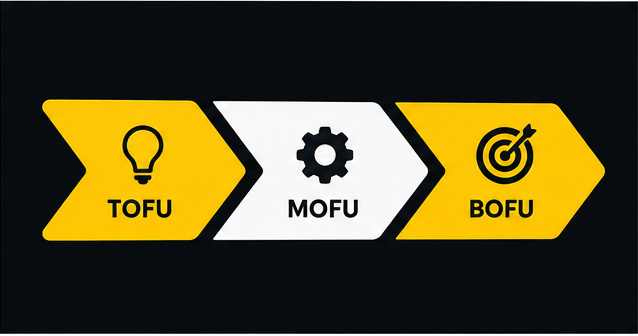
TOFU
Top-of-funnel keywords show early-stage curiosity.
Buyers here search to learn. Not to buy yet. Common phrases include “how to” and “what is.” These searches signal a problem someone just noticed.
Blog guides and educational articles fit this stage best.
Examples
- “how to reduce customer churn”
- “what is a CRM”
- “why is my email open rate low”
MOFU
Middle-of-funnel keywords show active research.
Buyers know their problem and now compare solutions. Phrases like “software for” and “tools for” indicate this stage.
They want a fit for their exact situation. Use case pages and feature comparisons work well here.
Examples
- “CRM for real estate agents”
- “project management tools for agencies”
- “email marketing software for startups”
BOFU
Bottom-of-funnel keywords show buying intent close to a decision.
Here, buyers are ready to shortlist or purchase soon. Words like “best,” “pricing,” “vs,” and “alternatives” appear here.
Comparison pages and pricing pages fit this stage.
Examples
- “best CRM software 2026”
- “HubSpot pricing”
- “Salesforce alternatives for small teams”
TOFU vs. MOFU vs. BOFU
| Stage | Keyword Signal | Example | Content Type |
| Top | how to, what is | “how to reduce churn” | Blog guide |
| Middle | software for, tools for | “CRM for agencies” | Use case page |
| Bottom | best, pricing, vs, alternatives | “best CRM software” | Comparison page |
Bottom-funnel keywords deserve the most priority. But top-funnel content should still link toward them.
Relatable Read: SEO Funnel: What It Is and How to Build It from Scratch?
Significance Of Buyer-Intent Keywords

1. Drive Real Conversions
Some searches mean business.
A buyer who searches a specific phrase already knows what they need. Here, buyer-intent keywords connect your SaaS with prospects already looking for a solution. This makes them more likely to click, sign up, or request a demo.
But not all kinds of keywords work. Long-tail keywords bring in buyers with a clear problem in mind. That focus explains why they convert roughly 2.5 times better than short-tail terms.
Search terms with strong buying intent perform even better. They convert at rates between 4.85% and 7.5%+. That makes them useful for SaaS landing pages, pricing pages, and comparison content.
The higher the conversion, the more ROI your SaaS business will see.
2. Increases Search Visibility
Ranking isn’t always guaranteed.
Search results have grown more crowded for broad, generic terms. AI Overviews now appear for about 21% of all searches. That pushes regular website links further down the page. So fewer people ever click through.
New pages also face steep odds against older, established content. Only 1.74% of newly published pages reach the top 10 results for at least one keyword. This happens because broad keywords already have strong, long-standing competitors.
Buyer-intent keywords face less of this competition. They attract people ready to explore solutions. This relevance helps your SaaS rank faster in the SERP. Higher rankings lead to more qualified visibility.
3. Boosts Clicks & Traffics
Keywords can be click-magnets.
A specific search often indicates a specific need. That’s why longer, more detailed queries earn more attention in the results. And they get all the clicks. Specifically, queries with 10-15 words get about 1.76 times more clicks than shorter ones.
The same pattern shows up in titles. A title that answers a direct question mirrors how the searcher is already thinking. Hence, question-based titles reach a click-through rate near 15.5%.
Buyer-intent keywords help bring more targeted traffic to SaaS websites. These users often search specific queries. Long-tail and question-based keywords help your content match those searches. This can bring more relevant traffic and increase clicks.
4. Shapes Content Strategy
Content needs a direction.
Every piece of content needs a reason to exist. Buyer-intent keywords give that reason by showing exactly what a buyer wants to know. They reveal the real problems people search for.
For this, keyword research matters. It shapes the direction of an entire SaaS-related content plan. Almost 75.5% of marketers treat it as a top priority when planning content. That focus keeps a team from publishing irrelevant pages.
Buyer-intent keywords sharpen this process further. Each keyword points to a specific stage a buyer is in. That clarity can turn a content calendar into a plan built around real demand. Eventually, it helps you create content that can rank and convert.
5 Types of Buyer-Intent Keywords
| Type | Example | What It Shows |
| Comparison | “HubSpot vs Salesforce” | The buyer is comparing two SaaS products before making a choice |
| Alternative | “HubSpot alternatives” | The buyer wants another SaaS tool because their current option may not fit |
| Pricing | “CRM software pricing” | The buyer is checking costs and deciding whether the product fits their budget |
| Use Case | “CRM for real estate teams” | The buyer wants software that fits a specific industry or business need |
| Best/Category | “best project management software” | The buyer is researching several options and building a shortlist |
These keywords deserve close attention during SaaS keyword research. They often signal a stronger connection between search and purchase.
6 Common Mistakes to Avoid
| Mistake | Consequence | Solution |
| Chasing volume over fit | High traffic, few signups | Pick keywords tied to buyer intent, not just search volume |
| Skipping low-volume keywords with strong intent | Missed high-converting searches | Target small, specific keywords with clear buyer signals |
| Ignoring words your buyers actually use | Content that sounds off to real readers | Pull language from sales calls, reviews, and support tickets |
| Treating every keyword as its own page | Thin pages that compete against each other | Group similar keywords into one solid page |
| Publishing content with no link to a demo or signup page | Traffic with no path to conversion | Add a clear next step on every page |
When Should You Hire a SaaS Keyword Research Agency?
Some SaaS teams handle keyword research well on their own. And some hit a point where the workload gets too heavy to manage alone. These signs usually mean it’s time to bring in outside help.
- Organic traffic has stayed flat for several months in a row
- Your team can’t keep up with content demand and keyword tracking
- Competitors keep outranking you for buyer-intent terms in your niche
- Keyword research eats time better spent on product or sales work
- You’re not sure which keywords actually drive trial signups or demos
- Content gets published regularly, but rankings never seem to follow
- Your team lacks the tools or technical SEO experience needed
- You want a strategy built around your specific SaaS buyer
Frequently Asked Questions (FAQs)
Most SaaS sites start seeing keyword-driven traffic within 3 to 6 months. Buyer-intent keywords with lower competition often rank faster than broad, competitive terms. However, it depends on domain authority, competition, content quality, and publishing frequency.
Most SaaS blogs do well targeting 10 to 20 keywords a month. This depends on team size, content output, and current site authority.
Yes, keyword research needs review every 3 to 6 months. Search trends shift, competitors change, and new buyer language appears as products evolve.
MonsterClaw is a strong choice for SaaS keyword research. Our team connects keywords with search intent, competition, content opportunities, and SaaS business goals.