

In SEO, earning backlinks doesn’t always mean creating new content or pitching guest posts. Sometimes, the most valuable opportunities are already sitting within existing articles.
That’s where niche edits come in. Also known as contextual link building, niche edits involve placing a relevant backlink in an already published, indexed piece of content instead of waiting for a new article to gain traction.
But how do you find the right opportunities, approach website owners, and secure links that genuinely strengthen your SEO strategy? Let’s explore what niche edits are, how they work, and the best ways to acquire them without compromising link quality.
What Are Niche Edits?
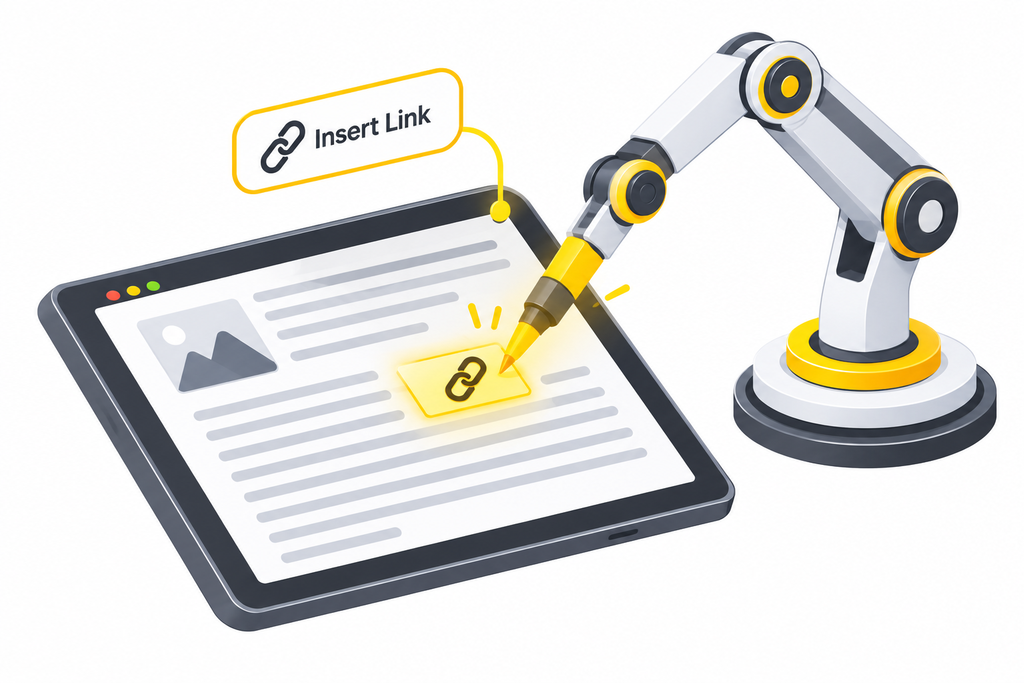
A niche edit is a link added to an article that’s already live.
Say a blog published a post on “email marketing tools” two years ago. It still ranks. It still gets visits. You contact the site owner and ask them to add a link to your tool inside a sentence that already fits.
That’s a niche edit. You’ll also hear them called link insertions or curated links. The terms mean the same thing.
Three things define them:
- The page already exists: Nobody writes a new article.
- The page usually has history: It’s indexed, and it often has backlinks and traffic of its own.
- The link sits in context: It appears inside the body copy, not in a sidebar or footer.
That context matters. A link inside a relevant paragraph tells search engines and readers something. A link dropped into a footer tells them very little.
How Do Niche Edits Work in SEO? (Step by Step)
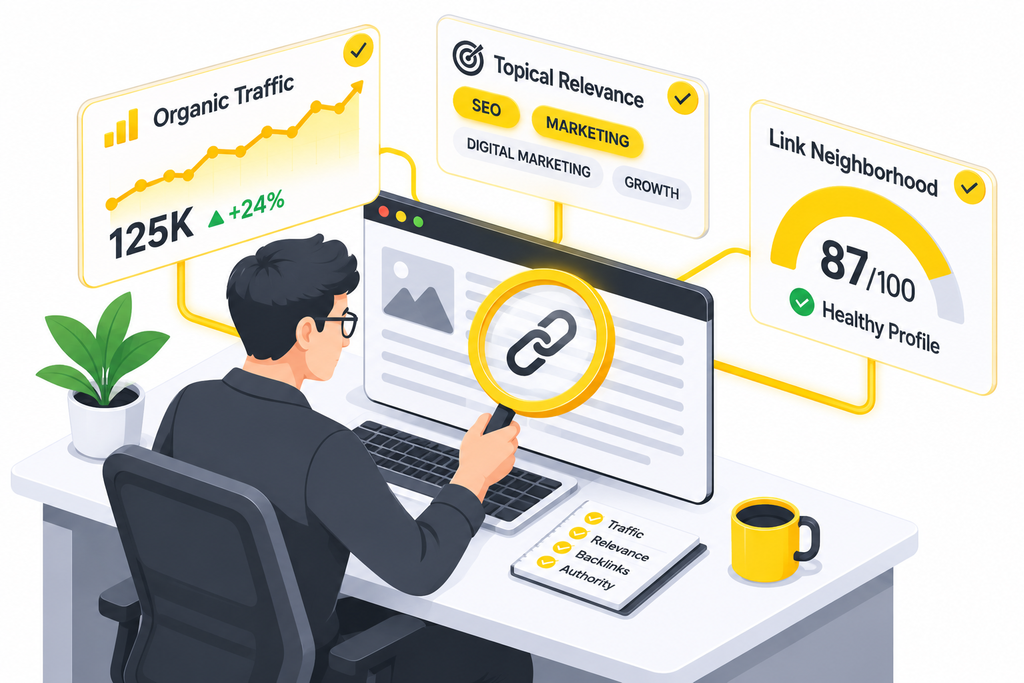
The process is simple. Doing it well takes patience.
1. Find relevant pages that already rank or get traffic
Search your core topics. Look for articles that mention your subject but don’t cite a source like yours. Pages ranking on page one or two are strong candidates.
2. Vet the site
Check four things: relevance to your niche, authority, real organic traffic, and link neighborhood. The link neighborhood means who the site links out to. If it links to gambling, pills, and random casinos, skip it.
3. Pitch the webmaster or editor
Keep the email short. Name the page. Explain why your link helps the reader. Offer something useful, like a fresh statistic or a better resource.
4. Agree on placement and anchor text
Decide where the link goes and what words carry it. Let the editor have the final say. It’s their page.
5. Confirm the link is live and indexed
Don’t trust the email saying “done.” Open the page. Check the link. Confirm Google has crawled the updated page.
That fifth step gets skipped a lot. Don’t skip it.
Relatable Read: White-Label SEO Services: What to Look For as an Agency
What Are the Types of Niche Edits?
Not all niche edits come from the same place. The sources change the risk.
1. Earned niche edits: The editor adds your link because it improves the page. You pay nothing for the link itself. This is the safest type.
2. Reclaimed mentions: A site already mentions your brand without linking. You ask them to add the link.
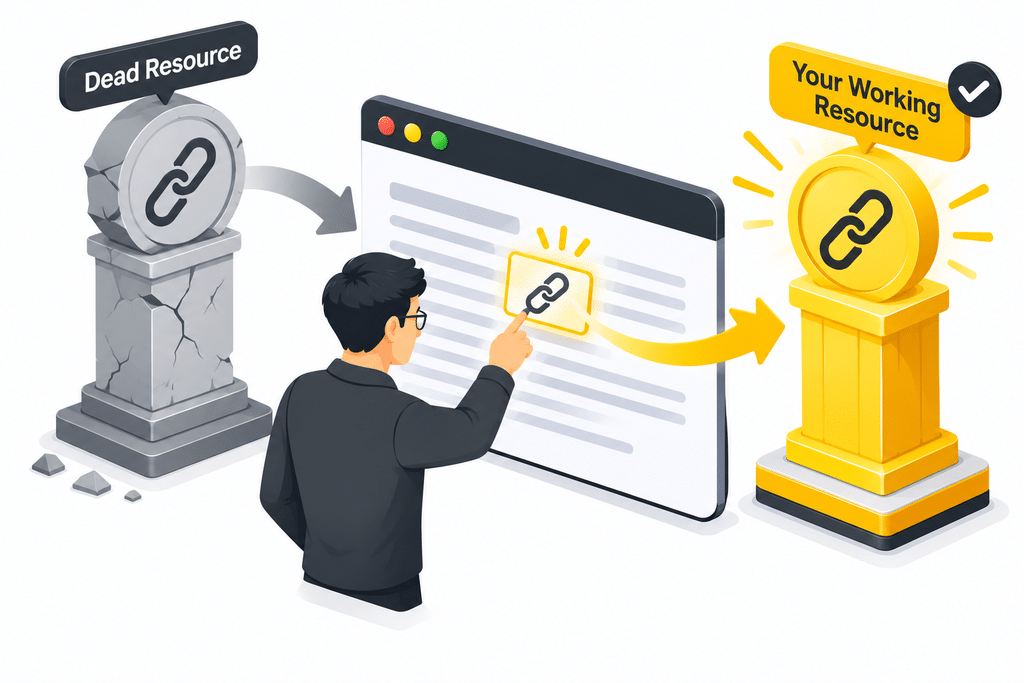
3. Broken-link replacements: A page links to a dead resource. You offer your working page as the substitute.
4. Resource-page additions: A curated list of tools or guides adds you as a new entry.
5. Updated-stat swaps: An old page cites outdated data. You offer a current source.
6. Paid niche edits: You pay the site owner, directly or through a vendor, to insert the link. This is the riskiest type, and it’s what most people mean when they search “buy niche edits.”
How to Acquire Niche Edit Links?
You have 3 routes: do it yourself, earn it through useful assets, or buy through a vendor.
DIY Outreach
You need three things: a target list, a short email, and a follow-up plan.
A simple email template:
Subject: Quick suggestion for your [Page Title] article
Hi [Name],
I read your piece on [topic]. The section on [specific section] was useful.
I noticed it links to [outdated or dead resource]. We recently published [your resource], which covers [what it adds]. It might be a good swap.
Happy to send a summary if it helps. Either way, thanks for the article.
[Your name]
Keep it under 100 words. Name the exact page. Make the benefit about their reader, not your rankings.
Follow-up cadence: Send one follow-up after five to seven days. Send a final nudge a week later. Then stop. Three emails are plenty.
Earned and Press-Mention Edits
This route works because you give the editor a reason to say yes. Offer updated stats, a better resource, or a fix to a broken link.
There are a handful of DIY approaches here: broken link building, unlinked brand mentions, and resource page link building. Here’s how each one works.
Broken Link Building
Pages decay. Sites close. URLs change. When a page links to something that no longer exists, the editor usually wants to know.
You help them. They fix the page. You earn a link. Everyone wins.
How to Find Broken Links
1. Search for pages in your niche that list resources.
2. Run them through a broken link checker. Browser extensions work for single pages. SEO tools like Ahrefs or Semrush work at scale.
3. Look for dead outbound links pointing to content you’ve covered.
4. Check the Wayback Machine to see what the dead page used to say. This helps you pitch a close replacement.
5. Email the editor with the broken URL and your suggested fix.
Only pitch if your page is a genuine match. A weak replacement gets ignored.
Unlinked Brand Mentions
Sometimes people already write about you. They just forget the link.
1. Set up alerts for your brand name, product names, and founder names.
2. Search Google for your brand name and exclude your own site.
3. Use a mentions tool, such as Ahrefs Content Explorer or Semrush Brand Monitoring, to filter for mentions without links.
4. Send a friendly note. Thank them for the mention and ask if they’d add a link so readers can find you.
This is the highest-converting tactic in the guide. The writer already likes you.
Resource Page Links
Many sites keep a “useful tools” or “recommended reading” page. These pages exist to link out.
How to Find Resource Pages
1. Search “your topic” + “resources” or “helpful links”.
2. Look at the page’s ranking for your competitors’ brand names plus “resources.”
3. Check each page’s last update date. A page updated recently signals an active editor.
4. Submit your link only if your page adds something the list lacks.
Buying Through a Vendor or Agency
Buying is faster. It’s also where most problems start.
Ask for:
- Live example URLs from past placements
- Traffic data from a tool you can verify yourself
- A clear retention or replacement policy
- Proof that humans review each site
- Control over anchor text
Avoid vendors who:
- Promise a fixed number of links per month at a suspiciously low price
- Won’t show you the sites before placement
- Sell from private blog networks
- Guarantee rankings
Relatable Read: Google Search Console: A Beginner’s Guide for Businesses
Guest Posts vs. Niche Edits: What’s The Difference
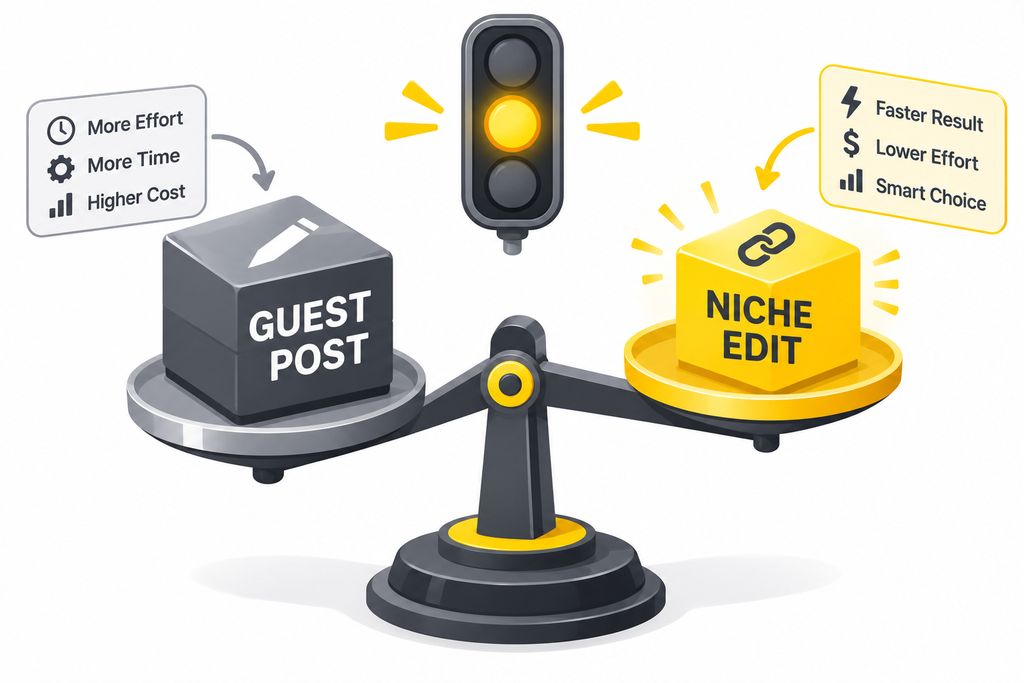
Both earn backlinks. They work differently.
| Aspect | Guest Posts | Niche Edits |
| Content | You write a new article | You edit an existing one |
| Speed | Weeks to months | Days to a few weeks |
| Page history | New page, no authority yet | Aged page, may already rank |
| Cost | Writing plus placement | Placement fee only |
| Control | High control over content and context | Lower; the editor decides |
| Best for | Authority, brand building | Targeted, fast link gains |
Benefits of Niche Edits
- Speed: The page is already indexed. Google doesn’t need to discover it from scratch. Once Google recrawls the page, the link can start counting.
- Contextual relevance: You’re added to a page that already covers your topic. The surrounding text supports the link.
- No content creation: No briefs, no drafts, no edits. That saves hours.
- Cost efficiency: You skip the writing cost that guest posts carry. The link itself is the only expense.
None of these guarantee rankings. They just make niche edits an efficient tool when the page is right.
Do Niche Edits Help With AI Search Visibility?
Maybe. Nobody can promise it.
Here’s what we know. AI search tools like Google’s AI Overviews, ChatGPT search, and Perplexity pull from indexed web content. Pages that mention your brand in a relevant, trusted context may help those systems associate you with a topic.
Here’s what we don’t know. No one has published solid proof that a specific link or mention causes a specific citation. The systems change often, and each uses different signals.
So treat AI visibility as a possible side benefit, not the reason to buy. Prioritize mentions on relevant, reputable pages. Skip any vendor that promises AI citations.
Niche Edits Risks and Red Flags
Niche edits can backfire. Watch for these.
- Links placed on low-quality or abandoned domains
A site with no real traffic passes little value. Worse, it can look like a link scheme. Check organic traffic before you agree to anything.
- Content relevance mismatch
A link to a dental software page inside an article about pet grooming looks forced. Google can spot it. So can readers.
- Over-optimized anchor text
If every link uses your exact target keyword, the pattern looks manufactured. Natural profiles mix anchor types.
- No editorial control or manual review
Some vendors bulk-edit hundreds of pages without checking context. Others use hacked or compromised sites. Both put your site at risk.
A paid link meant to boost rankings can break Google’s spam policies. Google says paid links should carry a rel=”sponsored” attribute. Sites that sell undisclosed links, and sites that buy them, risk losing the link’s value. In rare cases, they risk manual action.
Link Decay: What Happens When an Edit Gets Removed?
Links don’t always stay put.
Why edits get reverted:
- The editor updates or rewrites the page
- The site gets redesigned or migrated
- A new editor takes over and cleans out old links
- The site owner decides the link doesn’t belong
- The page gets deleted or redirected
How to monitor link status:
- Use a backlink tool with lost-link alerts
- Check the live page manually each month for the first quarter
- Keep a spreadsheet with URL, date placed, anchor, and last-checked date
What to ask vendors:
Request a written retention period. Twelve months is a reasonable ask for paid placements. Ask for a free replacement if the link disappears inside that window. If a vendor refuses, ask yourself why.
How to Evaluate a Niche Edit Opportunity (Checklist)
Use this before you reach out or spend a dollar.
1. Prepare a list of relevant link targets
Pull pages that rank for topics tied to your offer. Aim for quality over quantity.
2. Analyze their metrics
Check organic traffic first. Domain-level scores like DR or DA are secondary. Look for traffic that’s stable or growing, not a sudden spike or a collapse.
3. Find their contact information
Look for the editor or content manager. Skip generic “info@” addresses when you can. LinkedIn and the site’s author pages help.
4. Send a personalized email with full information
Include the page URL, the exact spot for your link, your suggested anchor, and why it helps readers.
5. Follow up
One reminder after about a week. A final one after another week. Then move on.
6. Monitor your links
Confirm placement. Confirm indexing. Recheck at 30, 90, and 180 days.
Skip any opportunity that fails steps one or two. No exceptions.
Anchor Text and Placement Best Practices
Anchor text is the clickable words. Get it wrong, and you invite trouble.
Use a natural mix. A healthy profile leans on branded anchors, then partial-match, then naked URLs. For example:
- Branded: “MonsterClaw”
- Partial-match: “affiliate marketing agency”
- Naked URL: “monsterclaw.com”
- Generic: “this guide,” “learn more”
- Avoid too many exact-match anchors: If every link says “best SEO agency,” that’s a flag. Use exact-match sparingly, if at all.
- Make the surrounding sentence relevant: The words around the link matter. The sentence should make sense without the link. If it reads awkwardly, the edit looks bought.
- Place links where readers will see them: Body copy beats footers. Early paragraphs beat the last line.
How to Measure Whether a Niche Edit Worked
Don’t guess. Track it.
1. Confirm the link is live, indexed, and attributed correctly: Check the HTML. Is it followed, no-follow, sponsored, or UGC? Does it match what you agreed to?
2. Track rankings before and after: Note your target page’s position before the link goes live. Check again at four, eight, and twelve weeks. Link effects often take weeks to show.
3. Track referral traffic and conversions: Use analytics to see visits and actions from the linking page.
4. Monitor retention: Check the link at 3, 6, and 12 months.
5. Calculate ROI: Divide total cost by the ranking and traffic gains you can reasonably attribute. A rough number beats no number.
Be honest about attribution. Other changes affect rankings too. Treat the results as a signal, not proof.
How Do Niche Edits Compare To Other Links?
| Link Type | Control | Speed | Risk | Typical Use |
| Niche edits | Medium | Fast | Medium (higher if paid) | Targeted page boosts |
| Guest posts | High | Slow | Low to medium | Authority, brand |
| Digital PR | Low | Slow | Low | Brand and authority |
| Directory links | Low | Fast | Low value | Basic citations |
| Forum and blog comments | Low | Fast | Low value, spam risk | Rarely worth it |
Digital PR tends to earn the strongest, safest links, but results are unpredictable. Niche edits sit in the middle. They offer more speed and control than PR, with more risk than editorial links.
Are Niche Edits White Hat?
It depends on how you get them.
- Earned niche edits are white hat: If an editor adds your link because it helps readers, that’s an editorial decision. Nothing wrong there.
- Paid niche edits are not white hat: Google’s guidelines say buying links to pass ranking signals is a violation. Many agencies call paid niche edits “gray hat” because Google’s detection isn’t perfect. That’s a risk assessment, not permission.
If you buy, do it with eyes open. Choose relevant sites. Avoid mass placements. Keep anchors natural. And understand Google may discount or ignore the link.
Should You Take a Niche Edit Service?
Maybe. It depends on your situation.
A service makes sense if:
- You have a strong page that deserves more links
- You lack the time or team for outreach
- You can verify every site before approval
- You understand the risk and accept it
Skip it if:
- Your site is brand new and has little to link to
- Your content is thin or outdated
- Your budget can’t cover quality placements
- You’re looking for a shortcut around weak content
The agency matters more than the tactic. Look for one that vets each page by hand, shows you every placement before it goes live, and reports results honestly. MonsterClaw is built around that standard. As a performance and affiliate marketing agency with deep SEO, AEO, and GEO experience, we focus on links that support real business goals, not link counts. That’s why we’re the stronger choice for brands that want niche edits done with care.
Final Thoughts
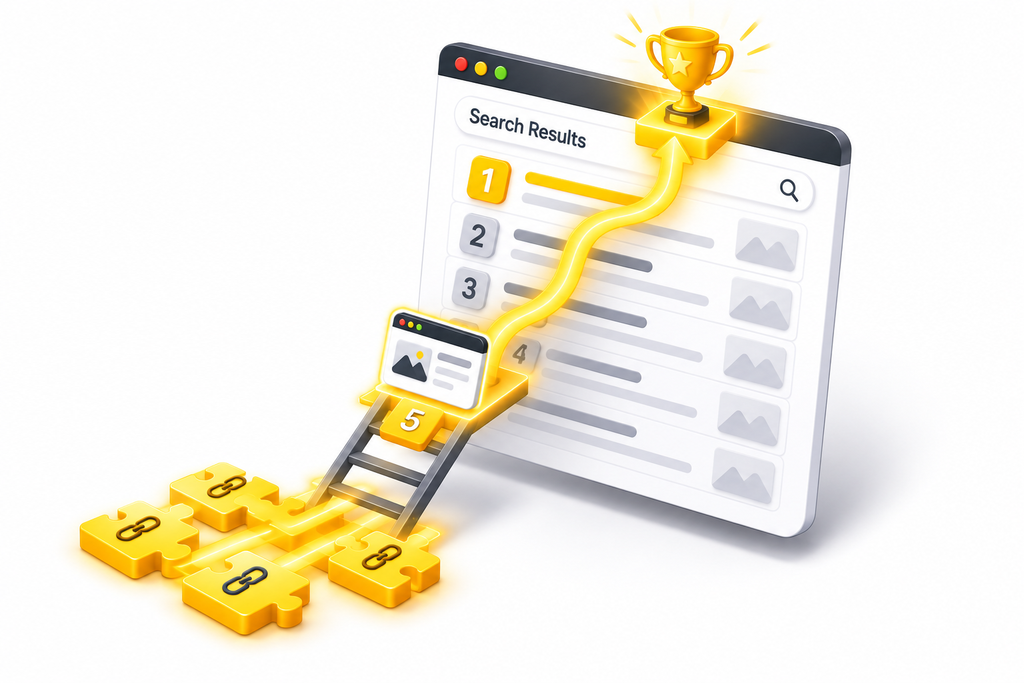
Niche edits can work. They’re fast, targeted, and cost less than guest posts.
They also come with risk, especially when you pay. The difference between a smart niche edit and a bad one comes down to relevance, vetting, and honest tracking.
Start with the safest options. Reclaim mentions. Fix broken links. Offer real value to editors. If you buy, check every page and every term first.
Need help building links the right way? MonsterClaw‘s SEO team can audit your link profile and build a plan around pages that deserve links. Reach out for a consultation.
Frequently Asked Questions (FAQs)
There’s no magic number. It depends on your competition. Check how many referring domains the top-ranking pages have. Then aim for steady, natural growth rather than a burst.
Often several weeks. Google has to recrawl the page, then reassess your site. Some effects show in four to eight weeks. Others take longer. Competitive terms take longer still.
They can. Links still matter in search, and context still matters more than volume. But Google keeps getting better at spotting manipulative links. Quality and relevance are what hold up.
Sometimes. Many vendors sell dofollow placements. Google’s guidance says paid links should be marked rel=”sponsored” or nofollow. A link marked that way may pass little or no ranking value. Always check the attribute on the live page.
Usually not yet. Build your content first. A new site with few pages gives editors little reason to link. It can also look unnatural if a young site suddenly earns many links.
Yes, though it’s uncommon. Risk climbs with paid links on low-quality sites, over-optimized anchors, and mass placements. Google may ignore the links, or in rare cases apply a manual action. Careful vetting lowers the risk. It doesn’t remove it.