



I’ve sat in enough beauty brand strategy calls to know the opening line by heart: “We just need to rank for our products.” Every time, I have to walk it back. Beauty shoppers don’t search the way that sentence assumes they do, and building an SEO strategy around product names alone leaves the majority of the category’s demand on the table.
Beauty is one of the few verticals where organic search genuinely carries the business. One industry traffic report tracking beauty ecommerce stores found that organic search accounted for the overwhelming majority of sessions as of early 2026, well above social, and far above paid channels, which barely registered. If that’s even roughly directionally accurate for your category, the math is simple: getting SEO wrong here isn’t a marginal loss; it’s your primary channel underperforming.
Why Beauty Industry SEO is a Different Game?
Most SEO playbooks are written for categories where people search by product name or generic descriptor. Beauty doesn’t work that way. A shopper isn’t typing “vitamin C serum”; she’s typing “best vitamin C serum for hyperpigmentation of dark skin” or “does niacinamide help with hormonal acne.” The intent is diagnostic before it’s transactional.
That changes three things about how you have to approach the category:
1. Trust Signals Matter More Here Than Almost Anywhere Outside of Health Content
People are putting these products on their face, and they know it. Claims about skin benefits sit close enough to health claims that Google’s quality systems scrutinize them as they would a supplement site, even though beauty isn’t formally classified the same way medical content is.
2. Retailers and Publishers, Not Brands, Dominate the SERPS
Sephora, Ulta, Byrdie, and Allure outrank individual DTC brands on almost every non-branded query. You’re not just competing with other beauty brands; you’re competing with entire media companies whose full-time job is producing beauty content.
3. Visual and Video Signals Carry Real Weight
Beauty is one of the most visually-driven purchase categories that exists, and search behavior reflects it – from image search for shade matching to video content in the SERP for tutorials and application demos.
I’ve worked accounts where the team spent months trying to out-optimize a product page for “retinol serum” while ignoring the fifty adjacent searches actually driving category discovery. Don’t make that mistake.
Keyword Research: Go Past the Product Name
The keyword universe in beauty splits into a few distinct buckets, and each one needs a different type of page:
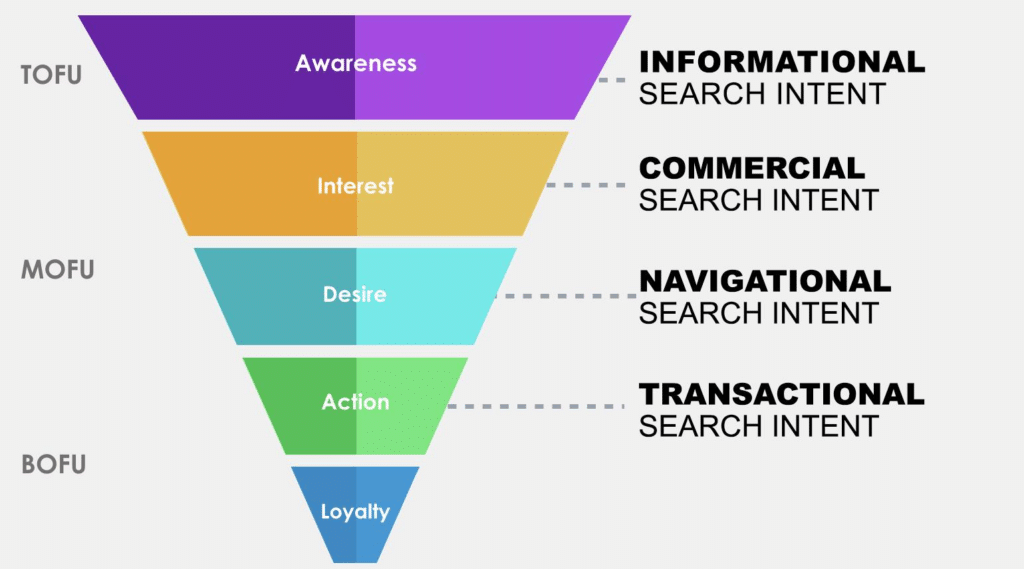
- Ingredient searches: “niacinamide benefits,” “what does hyaluronic acid do,” “bakuchiol vs retinol”
- Concern-based searches: “dark spot treatment,” “best products for combination skin,” “how to get rid of texture on skin”
- Routine and comparison searches: “morning skincare routine order,” “AHA vs BHA which one do I need”
- Product-specific searches: brand and SKU names, the smallest slice of total demand but the highest purchase intent
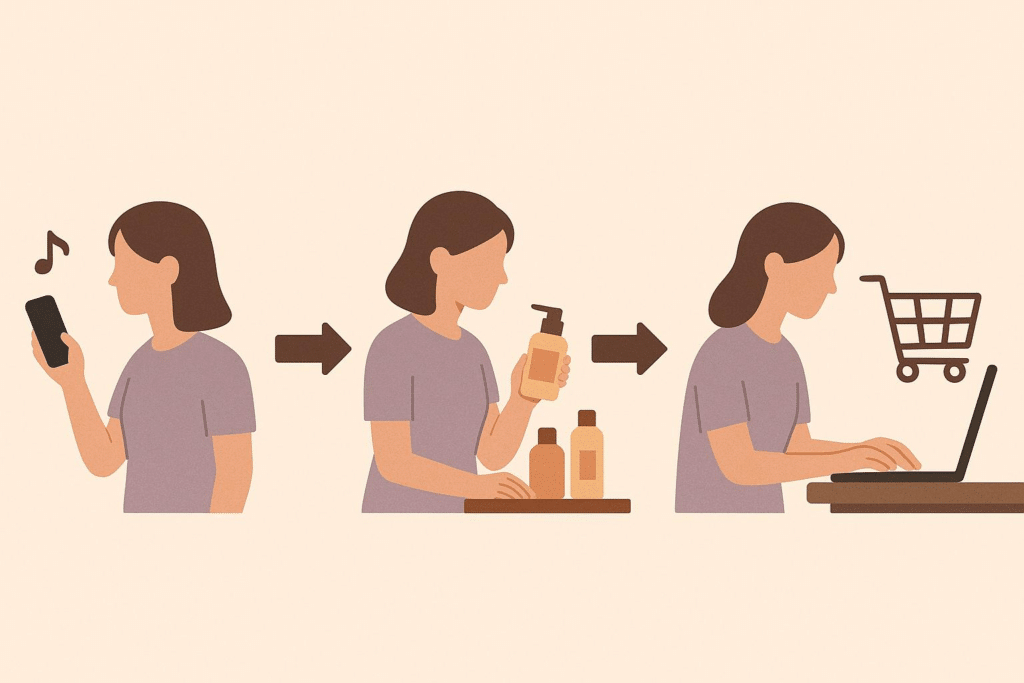
The mistake I see most often: brands build out product and collection pages, then stop. They never build the ingredient and concern-based content that actually captures the research phase of the journey, which, per one 2026 analysis of DTC beauty SEO tactics, spans roughly 6.7 touchpoints before purchase, with the majority including organic search. If you’re not present at touchpoint one, you’re fighting for touchpoint seven on someone else’s terms.
If you haven’t nailed down your keyword research process yet, this is worth a look; the fundamentals apply to beauty just as much as any other category; they just get applied against a different vocabulary.
On-Page: Product and Collection Pages That Actually Rank
Manufacturer boilerplate is the single biggest on-page problem in beauty ecommerce, and it’s almost universal: dozens of retailers selling the same SKU with the identical manufacturer-supplied description, which means Google has no reason to prefer any one of them.
One 2026 ecommerce SEO analysis found that brands writing product copy with meaningfully higher uniqueness ranked, on average, more than eight positions higher for long-tail product queries than brands relying on manufacturer descriptions – with the gap widening specifically in categories like beauty, where the same product feed gets pushed to hundreds of retailers.
That’s not a nice-to-have. That’s the difference between page one and page three.
Beyond unique copy, three things matter disproportionately for beauty PDPs:
- Product schema markup: implemented correctly, not assumed. I’ve audited beauty ecommerce sites where the theme claimed to generate Product schema automatically, and it was doing so incompletely. If you haven’t verified your schema output directly in Google’s Rich Results Test rather than trusting your platform, you probably have gaps.
- Ingredient transparency: full ingredient lists, sourcing information, and concentration details aren’t just a trust signal for shoppers; they’re the kind of specific, verifiable content that differentiates a page from the fifty other listings selling the same SKU.
- Shade and variant architecture: beauty is one of the worst categories for product-variant cannibalization. If your foundation has twenty shades and each one has its own indexable URL with near-identical content, you’re diluting ranking signal across pages competing with each other instead of consolidating it.
Content That Earns Trust in a Skeptical Category
Beauty content marketing has a fluff problem. “10 Best Products for Glowing Skin” round-ups are everywhere; they say nothing specific, and increasingly, they don’t rank because Google’s systems are explicitly built to reward genuine expertise and penalize exactly this kind of interchangeable listicle.
What actually works:
- Dermatologist-reviewed or expert-contributed content: clearly attributed, not a generic “medically reviewed” badge with no name behind it.
- Real before/after and UGC integration: the category’s own data backs this up: consumers report a strong preference for real customer photos over professional product imagery, and that preference shows up in engagement, not just sentiment.
- Original testing and data: even something as simple as an internal ingredient comparison or a small-sample wear test gives you something no competitor’s rehashed listicle has.
Every good piece of beauty content should read like it was written by someone who has actually used the product, not summarized what five other articles already said. That’s the difference between content that earns backlinks and content that just occupies space.
For the broader content framework this sits inside, our ecommerce content marketing strategy breakdown covers how to structure this at a program level, not just a post level.
AI Search Visibility for Beauty
This is the part most beauty brands still aren’t budgeting for, and it’s moving fast. AI Overviews now appear on roughly a quarter of all US searches, and beauty being research-heavy, comparison-driven, and full of “what’s the difference between X and Y” queries is exactly the kind of category where AI answer engines get pulled into the discovery process early.
The mechanism is different from classic SEO. AI models weight content based on information gain, rewarding verified data and original research over content that just rephrases what’s already indexed elsewhere. A brand’s own ingredient testing, original consumer surveys, or in-house formulation data are exactly the kind of citation-worthy material that gets pulled into AI-generated answers. A rehashed “benefits of retinol” post that says the same six things as every other post on the internet won’t.
If you haven’t looked at how Google’s AI Mode actually surfaces and synthesizes answers, it’s worth understanding before you assume your existing content strategy transfers over; a lot of what ranks well in classic organic doesn’t automatically get cited in an AI-generated response.
Link Building Without Looking Like a Spam Vape Brand
Beauty link building has a credibility problem, mostly self-inflicted. A lot of brands in this space have historically leaned on low-quality guest posts and directory spam, and it shows how skeptical beauty-adjacent publishers have become of outreach.
Realistic, durable link sources for beauty specifically:
- Beauty editors and publications: genuinely earn coverage with something newsworthy: a reformulation, an original ingredient study, a founder story with real substance
- Dermatologists and skincare professionals: cite their expertise properly in your content, and a meaningful share will link back or reference the piece themselves
- Ingredient and supplier partnerships: co-marketing with an ingredient supplier or manufacturer is an underused link source in this category
- Adjacent-category partnerships: this is a genuinely underrated tactic: a skincare brand partnering with a complementary but non-competing brand (think makeup and makeup remover) for cross-promotion and reciprocal linking
Whatever you do, don’t treat link building as a numbers game. Warm outreach actual relationship-building rather than mass cold email converts at meaningfully higher response rates than cold outreach, and in a category saturated with low-effort pitches, that gap matters even more than it would elsewhere.
Common Mistakes Beauty Brands Make With SEO
A few patterns I see repeatedly across beauty accounts:
- Chasing volume over intent: Ranking for a 50,000-volume generic term that converts at near-zero is worth less than ranking for ten specific, concern-based long-tails that actually convert.
- Ignoring shade and size cannibalization: Every indexable variant page competing against your own other variant pages for the same query is self-sabotage, not SEO.
- Publishing thin collection pages: A collection page that’s just a product grid with no unique copy, no schema, and no internal linking strategy is leaving ranking potential on the table, and internal linking density matters more than most brands assume: pages with a meaningfully higher number of internal links pointing to them have a real, measurable edge in getting to page one.
- Treating AI search as someone else’s problem: By the time “we should probably think about GEO” becomes a priority conversation, competitors who started twelve months earlier already have the citation share.
Where This Leaves You
Beauty SEO isn’t harder than other verticals because the mechanics are different; it’s harder because the SERP is more competitive, the trust bar is higher, and the audience researches more before they buy.
The brands winning here aren’t the ones with the biggest content budget; they’re the ones treating ingredient research, product page uniqueness, expert-backed content, and AI search visibility as one connected system instead of separate checkboxes.
If any part of this technical foundation, content strategy, or structured data implementation feels like it’s the piece your current setup is missing, that’s usually where the biggest near-term gains are sitting.
Final Words on Beauty Brand SEO
Beauty SEO is about more than ranking product pages; it’s about becoming a trusted resource throughout the customer’s journey. Brands that combine unique content, technical optimization, and genuine expertise are best positioned to earn lasting visibility in both traditional search and AI-powered experiences. Focus on delivering value first, and stronger rankings, qualified traffic, and long-term growth will follow.
If you’re looking for expert guidance to build a sustainable organic growth strategy, MonsterClaw’s beauty brand SEO services can help you turn search visibility into measurable business growth.
Frequently Asked Questions (FAQs)
Beauty SEO is the process of optimizing a beauty brand’s website to improve its visibility in search engines. It includes keyword research, product and collection page optimization, educational content creation, technical SEO, structured data implementation, and authority-building through quality backlinks.
Unlike many ecommerce categories, beauty shoppers rarely search using only product names. They often search for ingredients, skin concerns, routines, comparisons, and tutorials before making a purchase. This means beauty SEO requires a content strategy that supports users throughout their entire research journey.
Search engines reward content that provides unique value. Original ingredient research, expert insights, product testing, before-and-after results, and educational guides help establish credibility while differentiating your brand from competitors using generic or duplicate content.
Yes. AI-powered search experiences increasingly prioritize content with original research, trustworthy information, and clear expertise. Brands that publish unique insights and factual, well-supported content are more likely to earn visibility in both traditional search results and AI-generated answers.
SEO is a long-term investment. While technical improvements may produce early gains, most beauty brands begin seeing measurable organic growth within 3 to 6 months, with stronger and more sustainable results developing over 6 to 12 months through consistent optimization, content creation, and authority building.