


Social media engagement directly increases website traffic, brand credibility, and purchase intent for businesses in every industry.
That’s not a vague benefit, it’s measurable. Every like, comment, share, and reply is a signal, both to your audience and to the platform’s algorithm, that your business is worth paying attention to. This article breaks down exactly why that matters, what good engagement actually looks like by platform and industry, and how to build a strategy around it instead of just posting and hoping.
No matter how good you think your marketing strategy is, it won’t work unless you know your target audience well. Social media engagement will help you learn straight from them.

In this way, you will know their expectations and ways to approach them. Also, by identifying the market gap, you might even figure out how to get ahead of your competitors.
Plus, you will create brand awareness, reach your target audience, and inform them about the product/services you offer and how it will benefit them.
The best part of social media engagement is it will help you and your customers understand each other and stay connected.
Social media engagement is determined by clicks, likes, subscribers, mentions, comments, shares, retweets, and more.
This article discusses the primary reasons why social media engagement is important for your business.
Why Social Media Engagement is Important for Your Business
1. Opportunity to Reach a Broader Audience
The majority of the world’s population today is active on social media. This makes social the hub of online communication.
According to Statista, global social media users surpassed 5.4 billion in 2025, and average daily time spent on social platforms remains around 2 hours and 20 minutes per user worldwide.

Just by being on social media, your business is getting instant access to the majority of its target audience.
All you need to do is post frequently, comment often, respond to direct messages, and encourage customers to share your posts on their profile or relevant social media groups.
Plus, the more trending your social media posts become, the more views your page and its content are likely to get. The major social media algorithms are designed to reward business pages/profiles that have increased interaction and engagement.
This can create a positive spiral that will help you reach higher engagement in future posts due to increased circulation of your content on your target audience’s newsfeed.
2. Builds Credibility
When your target audience visits your social media profile and sees that you actively post and engage with your customers. This will develop a sense of security in their mind.

Psychologically, customers are more prone to trust businesses with more likes, comments, and shares on their social media page, as it shows social proof of your business. It reflects what your brand stands for and the extent of value it offers to its customers.
According to Sprout Social’s consumer research, businesses that engage actively on social media build significantly more customer trust than those that don’t, and audiences consistently rate active brands as more credible in head-to-head comparisons.
A large share of social media users read the comment section before forming an opinion of a brand, which means engaging there isn’t optional, it’s part of how trust actually gets built. Responding to comments and reviews consistently and promptly signals that a business is paying attention, which measurably increases how much customers trust it.
Also, by responding to comments and reviews on your social media page, the chance of your customers trusting your business increases by 1.7x.
3. Helps Boost Website Traffic
Your social media traffic has the potential to correspond to your website traffic.
Think about it; if you post interesting, informative, and lucrative content, it is highly likely to encourage your target audience to click your website’s link that you’ve attached to those posts. A well-planned content strategy supported by professional content marketing services can help you consistently publish content that attracts clicks, builds trust, and drives qualified traffic back to your website.
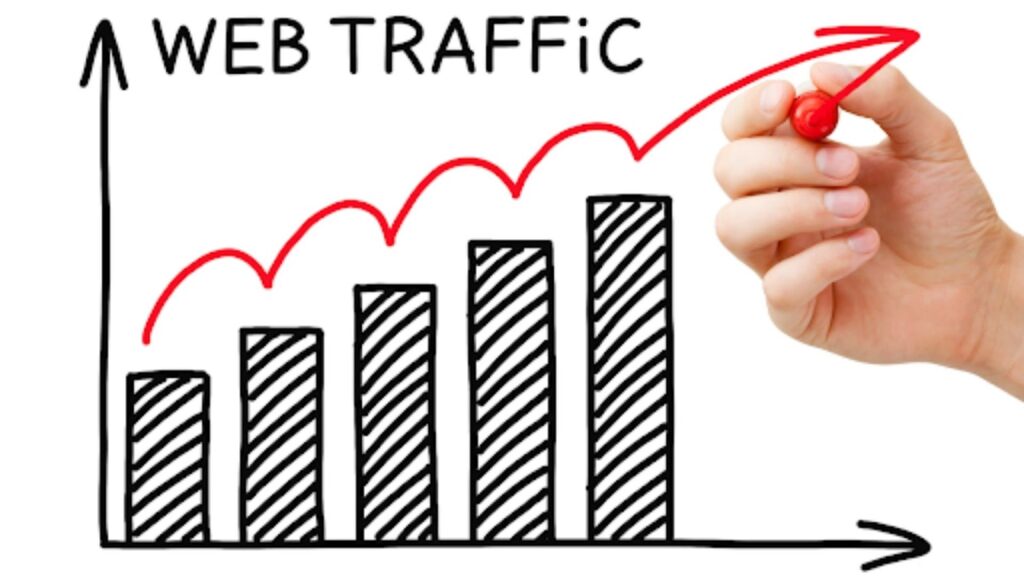
If you present your product/services in a way that appeals to the customers and encourages them to purchase it immediately, they will most likely click on that link and navigate to your website.
Similarly, the same can happen if you post brief, precise, and enticing information to encourage your target audience to read your blog posts. There is a high chance they will click the link to read detailed information.
4. Increases Sales Conversion
(Editorial note: these three stats need to be re-sourced before republishing. They read as older data, and “Hubspot studies” with no specific report named or linked isn’t a verifiable citation. Either find the current, specific HubSpot report these come from and link it directly, or replace with newer, sourced statistics on social media lead conversion.)
- Social media has a 100% higher lead-to-close rate than outbound marketing.
- 80% of US social network users prefer to connect to brands through Facebook.
- The number of businesses that say Facebook is critical to their business has increased by 75%.

With a bit of creativity, you can attract, persuade and compel your target audience on social media into paying customers.
If your posts on social media appeal to customer demand and create a sense of urgency to purchase it, then chances are, they will engage with you on social media to either get to know more or dive straight into purchasing it.
You can achieve that by making meaningful posts on social media and guiding your customers to purchase through your available channels that are most convenient for them.
But their decision to purchase will mostly depend on how you interact and engage with them. If they find it positive, there is a high chance that social media engagement alone will heavily impact your sales conversions.
5. How Social Media Engagement Shows the Human Side of Your Business?
Customers find brands more trustworthy that interact and engage in a meaningful way.
Social media engagement addresses customer queries and provides helpful and insightful information.
(Editorial note: link directly to the specific Forbes article or study this comes from. “According to Forbes” without a link is a weak citation for a specific statistic.)

Nobody likes scripted responses. Customers find real-time human interactions more convincing.
You can only turn your social media profile visitors into loyal customers by providing them with a satisfactory business experience.
So, you should respond to customer feedback in a positive, lively, and interactive manner. This will create the impression that you treat your customers with respect.

And, most importantly it will allow you to cater to your customers’ problems as soon as possible. It will show how seriously your business takes customer service into account.
Not to mention, customers love to purchase from businesses that provide the utmost convenience. So, with social media engagement, that’s your cue.
Ultimately it will help you build a solid business reputation and a strong relationship with your customers. Not only will it benefit your business in retaining existing loyal customers, but it will also help you acquire many new customers.
What Good Social Media Engagement Actually Looks Like?
“Good engagement” isn’t one number. It depends entirely on your industry, and the honest truth is that different benchmark providers report meaningfully different figures for the same industries, because they measure different things: brand accounts versus creator accounts, different follower size tiers, and different formulas (some count saves and shares, some only count likes and comments).
Here’s what the most-cited current sources report for Instagram, the platform with the most comprehensive published benchmark data:
| Industry | Typical Engagement Rate | Source |
|---|---|---|
| Higher Education | 2.1% to 2.4% | Rival IQ, 2026 |
| Food and Beverage | 2.0% to 2.5% | Dash Social, 2026 |
| Photography / Pets | 1.9% to 2.0% | eDigital Agency, 2026 |
| Fashion | 0.36% to 1.6%, wide variance by source | Rival IQ vs. eDigital Agency, 2026 |
| B2B Tech / Software (brand accounts) | 0.33% to 1.2% | Rival IQ, 2026 |
| Financial Services | 0.26% to 1%, B2C finance creators run higher | Rival IQ, 2026 |
The overall Instagram average across all industries sits somewhere between 0.5% and 1.5% depending on the source, with a rate above 3% generally considered strong for any established account.
Why the numbers diverge so much, and why that matters more than the numbers themselves: the more useful comparison isn’t your business against an industry-wide average pulled from a report. It’s your business against your own direct competitors, measured the same way, over time. If a fashion brand is sitting at 0.8% while the industry range runs anywhere from 0.36% to 4.5% depending on which report you read, that number alone tells you almost nothing. Tracking your own trend against 3 to 5 named competitors, using one consistent measurement method, tells you everything.
On other platforms: LinkedIn and X behave differently enough that Instagram-style percentage benchmarks don’t translate directly, which is exactly why platform-specific strategy matters more than a single blended engagement target. That’s covered next.
Platform-Specific Engagement Strategy: Instagram, LinkedIn, and X
nstagram, LinkedIn, and X don’t reward the same behavior. A strategy built for one and copy-pasted onto another will consistently underperform, because each platform’s algorithm and audience intent work on fundamentally different mechanics.
- Instagram: The popular social networking site is built for visual discovery, rewards saves and shares over likes. Instagram’s algorithm now weighs saves and shares as heavily as likes and comments, sometimes more, because a save signals someone wants to return to the content later, which keeps them on the platform longer. Carousels currently outperform Reels in most industries for this exact reason, they invite multiple taps and saves in a way a single video clip doesn’t. For most businesses, Instagram is the platform where product discovery and brand aesthetic matter most, and it converts well for consumer-facing, visually-driven businesses in particular.
- LinkedIn: The platform is built for professional credibility, rewards thoughtful comments over reach. LinkedIn’s engagement mechanics favor content that generates genuine discussion among a professional audience, comments carry more algorithmic weight than likes, and carousel-style documents have become a consistently high-performing format, reportedly generating multiples more engagement than standard video posts in recent platform data. For B2B businesses specifically, LinkedIn engagement correlates more directly with pipeline and lead quality than Instagram engagement typically does, since the audience is self-selected by professional relevance rather than general interest.
- X (Twitter): The network is now largely a poor fit for brand engagement outside a few categories. Current benchmark data shows most industries seeing engagement rates on X that round to effectively zero, fashion, food and beverage, and health and beauty brands included. The exceptions are media, sports, and tech, where individual, personality-driven accounts (founders, journalists, creators posting under their own name) still see real engagement. For most businesses, X is not where brand-account engagement investment pays off in 2026, a business account broadcasting to followers gets a fraction of the interaction an individual voice gets on the same platform.
The practical takeaway: don’t split effort evenly across all three by default. Match the platform to your business type first, B2C and visually-driven businesses lean Instagram, B2B and professional services lean LinkedIn, and for most businesses, X is worth deprioritizing entirely unless there’s a specific, personality-led angle to run it through.
Final Thoughts on Social Media Engagement
If your business is already doing well without social media engagement as a part of your marketing strategy, just think how much more you could achieve by engaging with your customers on social media.
On the flip side, if it isn’t, social media engagement has the potential to turn your business’s situation around. The possibilities to grow your business with active social media engagement are endless.
Tapping into social media engagement isn’t a walk in the park either. Each social media platform, such as Facebook, Instagram, Twitter, Linkedin, etc., has its cultural dynamics.
You need to know how to blend in and approach your customers. You can read our article on how to increase social media engagement organically.
Yet, if you are confused and have queries, you can book a Free Digital Marketing Consultation today. Our experts will get in touch with you shortly.
FAQs on Social Media Engagement
Social media engagement is important because it directly increases website traffic, builds brand credibility, and drives purchase intent. Every like, comment, share, and reply acts as a trust signal, both to your audience and to the platform’s algorithm, which increases how often your content gets shown to new people. Businesses that engage consistently see measurably higher conversion rates than businesses that only post without interacting.
Social media is effective for building trust because it enables direct, two-way communication instead of one-way broadcasting. When a business responds to comments, answers questions publicly, and engages with feedback in real time, it demonstrates responsiveness and transparency that traditional advertising can’t replicate. That visible responsiveness is what converts a passive follower into a customer who trusts the brand enough to buy.
The core benefits are broader audience reach, stronger brand credibility, increased website traffic, higher sales conversion, and a more human, relatable brand identity. Each of these compounds over time: higher engagement improves algorithmic reach, which increases traffic, which increases the pool of potential customers exposed to trust-building content, which increases conversion. It’s not five separate benefits so much as one connected system.