



In the world of luxury watches, more content doesn’t necessarily mean more prestige. When every detail signals exclusivity, brands need a strategy built on substance, not noise.
Luxury brands create well-crafted pieces that educate, inspire, and reinforce why the brand deserves a top place in the market. That’s right, it’s a part of their broader brand marketing technique!
In luxury, authority isn’t built by saying more. It’s built by having something worth saying. For watch brands, the goal isn’t to chase clicks or publish endlessly.
Read on to learn more about luxury watch brands’ content marketing!
TL;DR
- High-frequency publishing dilutes brand prestige, so luxury watch brands must prioritize authoritative, expert-led content over volume.
- Content should leverage internal knowledge from master watchmakers and historians to create unique, uncopyable technical and heritage insights.
- Structuring content into topic clusters anchored by deep pillar pages and supported by cluster articles builds comprehensive search authority and guides high-net-worth buyers.
What is Luxury Content Marketing?
Luxury content marketing is a specialized, brand-building strategy that prioritizes editorial quality, exclusivity, and deep authority over high-volume publishing. Unlike mass-market marketing, which often relies on high-frequency posting, aggressive calls-to-action, and broad keyword targeting, luxury content marketing focuses on refined storytelling, heritage, and genuine craft.
The primary goal is to educate, inspire, and build long-term trust with high-net-worth audiences, protecting the brand’s premium perception while establishing it as an unrivaled domain authority.
Brands leverage this strategy to showcase technical mastery, guide high-consideration purchases, and nurture post-sale customer loyalty. Key use cases include producing in-depth technical explainers, publishing original historical research, and offering provenance guides for prospective collectors.
For example, high-end horology brands like Patek Philippe and Audemars Piguet create comprehensive guides explaining complex mechanical movements, white papers detailing rare gold and ceramic craftsmanship, and documentary-style videos highlighting master watchmakers at the bench by converting brand expertise into searchable, highly authoritative knowledge.
Luxury Watch Brands Need a Different Content Strategy
Luxury Is Built on Perception, Not Product Volume
The building block of luxury is reputation, craftsmanship, and scarcity.
A company that posts a lot of filler on its blog is sending the wrong message.
If you cover every term, post frequently, and chase traffic through mass-market SEO without balancing quality, it can damage your brand’s premium image.
When a reader comes across a poorly written post about the “top 10 watch trends,” they will evaluate the watches based on the writing.
Let’s consider how a boutique operates. The employees don’t yell. The screen is altered. Every item merits its position. The same should apply to your website.
The Problem With “More Content”
More content increases the risk of publishing off-brand material that can damage the premium image of your brand.
Luxury brands, including premium watch brands, slip into these traps:
- Thin articles that say little
- Near-identical product pages
- Keyword-stuffed copy
- Generic buying guides that match every competitor’s
- Posts with no point of view
This is the exact goal of Google’s helpful content guidelines. The performance of a whole website can be negatively impacted by content that is primarily created to draw in search traffic rather than to assist users.
Authority Creates More Value Than Frequency
One perfect guide can outperform fifty average posts. It earns links, gets cited, and builds trust with every read.
Authority comes from:
- Real expertise
- Original insight
- Editorial quality
- Brand credibility
- Visibility that compounds over time
Create authoritative thought leadership pieces, industry reports, and white papers to signal your premium vibe to potential customers and industry competitors.
What “Authority Over Volume” Means in Luxury Watch Marketing?
Instead of being just another voice in the stream, you want to be the source that people go back to. You don’t care much about so-called search volume; you only care about whether it resonates with your ideal audience and solves their problems.
Here’s a little test:
“Would a serious collector bookmark this?”
Rework it or discard it if the response is negative.
Fewer, More Valuable Pieces
Focus on content that’s hard to copy:
- In-depth guides
- Original research
- Historical stories
- Technical explainers
- Expert commentary
A competitor can easily eat your lunch by replicating your craft!
They can’t copy your master watchmaker’s view on why a movement behaves the way it does. Can they?
Build Topical Authority, Not Just Rankings
Topical authority is a term SEO experts use to describe comprehensive, reliable coverage of a topic.
It’s not an official Google metric. However, the reasoning is sound. Websites that cover every relevant topic, as long as it concerns the core business.
Wait! You can’t just create one page after another for the sake of it. You need to comply with Google’s EEAT quality framework.
A watch brand can own topics such as:
- Mechanical movements
- Complications
- Materials
- Watchmaking history
- Collecting and authentication
- Servicing and maintenance
Don’t try to own all of them at once. Pick the ones your brand has earned the right to discuss. And, obviously, that EEAT framework — never forget that!
Turn Brand Expertise Into Searchable Knowledge
Your designers, historians, and watchmakers already possess expertise that others cannot match. The majority of it is not on your website, but rather in people’s minds. Take it out.
Here’s a simple process:
- Interview your experts for 30 to 45 minutes.
- Record and transcribe the conversation.
- Pull out the questions customers actually ask.
- Build each answer into a page, with the expert’s name and credentials attached.
That’s how knowledge becomes content people can find.
The Content Pillars That Build Authority
Heritage and Brand Storytelling
Tell the story only you can tell:
- Founding history
- Iconic references
- Key milestones
- Famous wearers
- Historic innovations
- Manufacture traditions
Stick to verified facts. Collectors check heritage claims, and errors spread fast. If you can’t source a date from your archive, don’t print it.
Horology and Technical Expertise
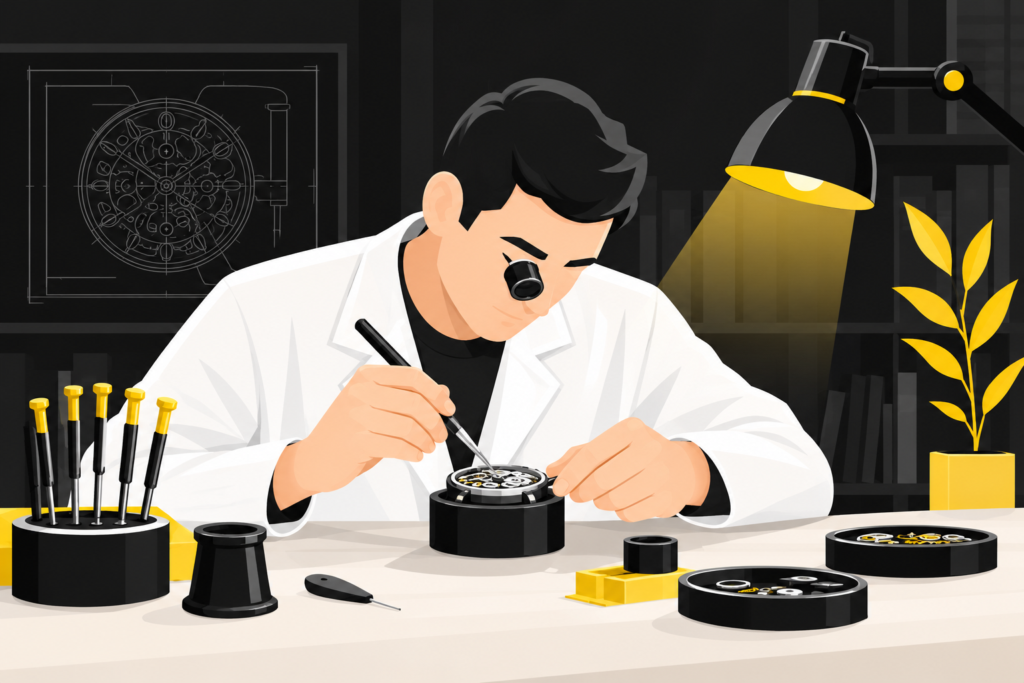
This is where you prove you know the craft. Strong topics include:
- How mechanical movements work
- Automatic vs. manual winding
- The tourbillon, patented by Abraham-Louis Breguet in 1801
- Chronograph complications
- Power reserve
- Water resistance
- Movement finishing
Give specifics. On a full wind, many contemporary automatics operate for between 38 and 70 hours. Indicate the range that your own calibers provide and explain how you determined it.
One example of a situation where accuracy is crucial is water resistance. A 50-meter rating does not imply that the watch is designed for 50-meter diving. A static pressure test is reflected in it.
Motion is a component of real swimming and diving, which increases pressure. Dive watches adhere to ISO 6425, a different standard. Giving a detailed explanation of this safeguards your clients and demonstrates genuine competence.
Craftsmanship and Materials
Show the work behind the price:
- Gold and platinum
- Ceramic and titanium
- Sapphire crystal
- Gem-setting
- Dial craftsmanship
- Hand finishing
Explain the importance of a material. Don’t just give it a name.
For instance, sapphire crystal has a Mohs hardness rating of 9, which explains why it is extremely scratch-resistant. Because titanium is substantially lighter than steel, a watch can be worn on the wrist for a longer period of time.
Finishing should be covered separately. Anglage, perlage, and Côtes de Genré are examples of techniques that demonstrate both machine and human expertise. The majority of readers are unfamiliar with these terms. Instruct them.
Collecting and Education
New collectors search before they spend. Meet them early:
- How to start collecting
- Understanding references
- Vintage vs. modern
- Condition and provenance
- Building a collection with purpose
Provenance content is particularly effective. Originality, documents, and service history are concerns for buyers.
You gain their trust before they ever get in touch with you if you honestly address their concerns.
Buying Guides and Product Discovery
These capture commercial intent. Make them honest and specific:
- How to choose a luxury watch
- Dress vs. sports watches
- Case sizing and wrist fit
- Your first luxury watch
- Watches for milestones and occasions
Don’t publish a manual that merely directs them to your best-selling book. It’s evident to readers. Describe trade-offs, such as who shouldn’t wear a watch.
More trust is created by that honesty than by any sales pitch.
After-Sales and Ownership
Ownership content builds loyalty. It also answers real searches:
- Servicing and maintenance
- Storage
- Water resistance testing
- Strap replacement
- Long-term care
Build Your Luxury Watch SEO Around Topic Clusters
One pillar page and many linked supporting pages constitute a topic cluster. Both users and search engines can better understand the connections between your material thanks to this structure.
Pillar Pages
Examples:
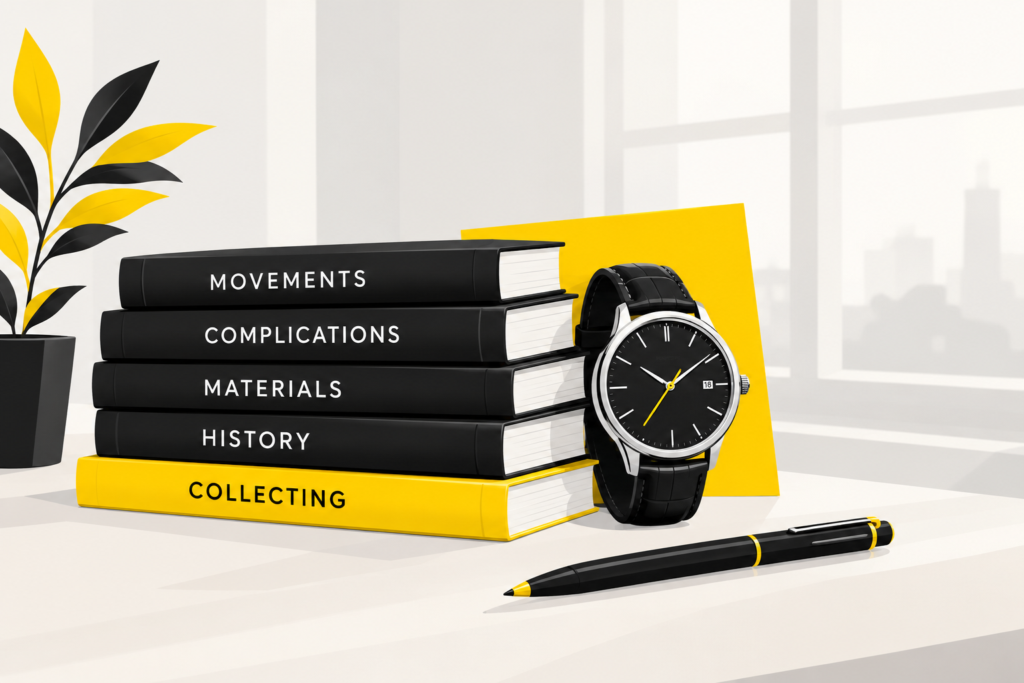
- The Complete Guide to Mechanical Watches
- The Ultimate Guide to Watch Complications
- A Guide to Luxury Watch Movements
The best page on the internet for its subject should be a pillar page. It provides a general overview of the topic before directing readers to more in-depth pages for each subtopic.
Supporting Cluster Content
For a “Mechanical Watches” pillar, support it with:
- Manual vs. automatic movements
- What is a power reserve?
- What makes a movement accurate?
- How often should a mechanical watch be serviced?
- Understanding movement finishing
Each cluster page should link back to the pillar. The pillar should link out to every cluster page. Cluster pages can also link to each other where it helps the reader.
Connect Education to Commerce
Link in a clear path:
Educational article → collection page → product page
A reader learning about chronographs should find your chronograph collection in one click. Use natural anchor text. Skip forced links.
Go Deep Before You Go Wide
Finish one cluster before starting the next. Thin coverage across ten topics gets you nowhere. Deep coverage of three beats it every time.
How to Make Content Feel Luxurious, Not SEO-Driven?
1/ Lead With Editorial Value
Focus writing for collectors. To select themes, use keyword data. Keep your voice under control.
Put keywords in the title, the first paragraph, a few headings, and the meta description, where they make sense. Then give up. Reword a sentence if a keyword makes it read odd.
2/ Replace Generic Copy With Expertise
Avoid lines like: “Luxury watches are timeless and elegant.”
Every brand says that. It tells the reader nothing.
Say something only you can say:
- A technical detail
- Historical context
- An expert observation
- An original point of view
Weak: “Our chronograph is a masterpiece of precision.”
Stronger: “The chronograph uses a column wheel, which gives the pusher a smoother, more tactile feel. Watchmakers have favored it for decades.”
3/ Use Storytelling to Differentiate
People remember stories. Good subjects include:
- The story behind a reference
- The inspiration for a collection
- A watchmaker’s process
- The evolution of a complication
Stay grounded when telling stories. Identify the individuals. Indicate the year. Describe the tools, the bench, and the issue they resolved. A tale feels authentic because of the details.
4/ Keep a Distinct Brand Voice
Put your standards in writing. Discuss terminology, tone, degree of technical depth, and premium positioning. The same guidelines should be followed by all writers and editors.
A brief style sheet is effective. Add a few sample paragraphs that perfectly capture the tone, as well as vocabulary you frequently and infrequently use.
5/ E-E-A-T and Trust in Luxury Watch Content
Experience, expertise, authority, and trustworthiness are all represented by the acronym E-E-A-T. Google’s Search Quality Rater Guidelines are where it originates. Although it defines what Google’s systems attempt to reward, it isn’t a direct ranking component. Of the four, trust is the most important.
Watches are expensive purchases. This places them in a category where accuracy is expected by both search engines and readers.
6/ Show Real Horological Expertise
Use people who know the craft:
- Qualified watch writers
- Watchmakers
- Collectors
- Historians
- Industry specialists
8/ Use Author Bios and Expert Contributors
Give each piece a genuine name and credentials. Connect the bio to the author’s entire page. Explain the author’s qualifications for writing on this subject.
An author’s experience, previous work, and other publications are listed on a decent author page. It makes it evident to readers and search engines who is responsible for the content.
9/ Cite Quality Sources
Link to industry and main sources. Manufacturer documentation, reputable horology periodicals, and certifying organizations like COSC, which evaluates movements over 15 days, are a few examples.
10/ Publish Original Research and First-Hand Insight
The first “E” is experience for a reason. Demonstrate that you have tested the claims, touched the watches, and spoken with the people. Stock photos are inferior to photos taken in your own workshop.
Large amounts of original data are not necessary. You can provide journalists and bloggers with fresh material to cite by conducting a poll of 200 customers or analyzing your own service records.
11/ Keep Every Fact Accurate
A single incorrect date or specification undermines confidence. A technical reviewer should be assigned. Before publishing, verify each claim. Important pages should have an honest “last reviewed” date.
Relatable Read: Copywriting vs Content Marketing: What’s the Real Difference?
Content Formats That Work for Luxury Watch Brands
Don’t publish everything. Choose a strategic mix.
| Format | Primary Goal |
| Definitive guides | Build topical authority |
| Brand history | Strengthen heritage |
| Technical explainers | Demonstrate expertise |
| Buying guides | Capture commercial intent |
| Interviews | Build credibility |
| Original research | Earn links and citations |
| Case studies | Demonstrate craftsmanship |
| Video | Showcase visual craft |
| Product stories | Support conversions |
| Editorial features | Shape brand perception |
The video deserves a note. A watch is a visual, tactile object.
A well-shot clip of a dial catching light or a watchmaker setting a balance spring shows craft better than any paragraph. Embed video inside your written guides so each format supports the other.
From Search Intent to the Luxury Customer Journey
Match content to where the buyer is.
Discovery
The reader is curious and not yet shopping.
- What is a tourbillon?
- How do mechanical watches work?
- History of the chronograph
Consideration
The reader is comparing.
- Best complications for collectors
- How to choose a mechanical watch
- Gold vs. platinum watches
Purchase
The reader is ready.
- Luxury watch collections
- Specific model searches
- Size and specifications
- Where to buy
At this stage, clarity wins. Show specifications, sizing, availability, and service support without making people hunt.
Ownership
The reader is already a customer.
- Servicing and care
- Maintenance
- Authentication
- Collecting
Many brands skip this stage. That’s a missed chance. Servicing questions bring in loyal, high-intent readers. Many brands suggest servicing a mechanical watch every five to ten years. Check your own manufacturer’s guidance and state it clearly.
Earn Backlinks Without Chasing Volume
One respected editorial mention beats dozens of low-quality links. Aim for the first kind.
Publish Link-Worthy Original Research
- Watch market trends
- Collector behavior
- Historical watch data
- Horological research
Create Definitive Reference Resources
Build the page others cite. A thorough glossary or complication guide can earn links for years.
Develop Expert-Led Editorial Content
Journalists link to people with something real to say. Offer them a watchmaker’s view.
Build Relationships With Relevant Publications
Target:
- Horology publications
- Luxury media
- Fashion and business outlets
- Specialist watch communities
Build real relationships over time. Mass outreach rarely works in this space. Read what an editor writes. Pitch something that fits their beat. Keep it short.
The Role of AI in Luxury Watch Content Marketing
AI is a tool. It isn’t an authority.
Where AI Helps
- Topic research
- Search-intent analysis
- Content briefs
- Content audits
- Internal-link suggestions
- Content gap analysis
Where Humans Must Lead
- Brand storytelling
- Technical horological knowledge
- Historical interpretation
- Original opinions
- Craftsmanship narratives
Make use of a human-in-the-loop process. A structure can be drafted by AI. The content must be added, verified, and approved by a watch specialist. Content that uses AI is not penalized by Google. Content that isn’t trustworthy or useful is penalized.
A workable review flow looks like this:
- A strategist builds the brief from search data.
- A writer drafts using expert interviews.
- A watch specialist checks every technical claim.
- An editor tightens the voice.
- The named author approves the final version.
Use AI for speed. Never use it to manufacture authority you don’t have.
Relatable Read: 21 Best B2B Content Marketing Agencies in 2026
Measure Authority, Not Output

Stop counting posts. Start tracking impact.
Organic Visibility
- Non-branded rankings
- Share of search
- Keyword visibility
- Topic coverage
Authority Signals
- Quality backlinks
- Referring domains
- Brand mentions
- Expert citations
- Media coverage
Engagement Quality
- Engaged sessions
- Scroll depth
- Returning visitors
- Time on key editorial pages
Commercial Impact
- Assisted conversions
- Product-page visits
- Qualified organic traffic
- Email signups
- High-value inquiries
- Revenue influenced by organic content
Luxury sales cycles run long. A reader might visit your movement guide today and enquire months later. Track the full path, not just the last click.
A Practical 90-Day Plan for Luxury Content Marketing
Month 1: Lay the foundation
- Audit existing content
- Find topical gaps
- Define your content pillars
- Build a keyword and intent map
- Improve your best existing pages
Month 2: Build authority
- Publish two to three flagship guides
- Add supporting cluster content
- Bring in expert contributors
- Strengthen internal linking
Month 3: Amplify
- Promote your flagship resources
- Start digital PR outreach
- Pursue editorial mentions
- Repurpose content into video and social
- Review organic performance
Ninety days won’t finish the job. SEO results usually build over months, not weeks. But this plan gives you a strong base and early signals to learn from.
Common Mistakes to Avoid in Luxury Content Marketing
- Creating off-brand content.
- Publishing too much, too fast.
- Putting keywords before brand voice.
- Writing generic “luxury” copy.
- Ignoring existing strong content.
- Treating product descriptions as the strategy.
- Using AI without subject-matter expertise.
- Chasing low-quality backlinks.
- Measuring only traffic.
The Future of Luxury Watch Content Marketing
Search is changing. AI-generated answers now appear above traditional results for many queries. People ask full questions and get summarized responses.
That shift favors brands with real knowledge. Expect more weight on:
- Entity-based search, where brands are understood as recognized names
- Brand mentions and citations
- First-party expertise
- Multimedia content
- Digital PR
Generic content is eliminated when responses are condensed. Unique information is cited. Brands that produce a ton of mediocre content will face difficulties. Genuinely knowledgeable brands will stand out.
Thus, write pages that explicitly address questions. Place the obvious response close to the top. Next, build depth beneath it. Readers, featured snippets, and AI-driven responses are all served simultaneously via that structure.
Relatable Read: Future of Content Marketing: What Actually Comes Next
Over to You
Don’t try to win the content race by publishing more. Aim to become the source people trust when they want to understand watches.
Ready to turn your watch brand’s expertise into an SEO-driven authority engine? Start by choosing the three to five horological topics your brand has the strongest right to own. Build your strategy around them.
If you want a partner for that, the MonsterClaw team is built for exactly this kind of authority-first work.
Frequently Asked Questions (FAQs)
It’s the process of increasing visibility and trust with excellent editorial and instructional content. It prioritizes craft, heritage, and expertise over large-scale publishing.
No magic number exists. Publish as quickly as your professionals can without sacrificing quality. Ten poor posts are outweighed by one good guide per month.
Not on its own. Google claims to reward trustworthy, helpful material regardless of how it is created. When AI material is generic, erroneous, or created solely to get clicks, issues arise.
It’s an SEO concept describing deep, consistent coverage of a subject. It isn’t an official Google metric. But brands that cover a topic thoroughly tend to earn more trust and rank better across related searches.
Most brands see meaningful movement over several months, not weeks. Timing depends on your site’s current strength, competition, and content quality.