




Are you looking for how you can improve your SEO and Google search ranking through social media? Then this article is for you. In this article, you will learn about the 5 best Social Media Strategies that can help you improve your Website’s SEO.
In this digital era, almost all small and big businesses promote and engage their businesses through social media and apply SEO to improve their website’s search ranking.
Most of us think social media might not create any worth In SEO. But that is not entirely true. If we apply a proper strategy to engage our website’s SEO through social media, it will help to improve search rankings.
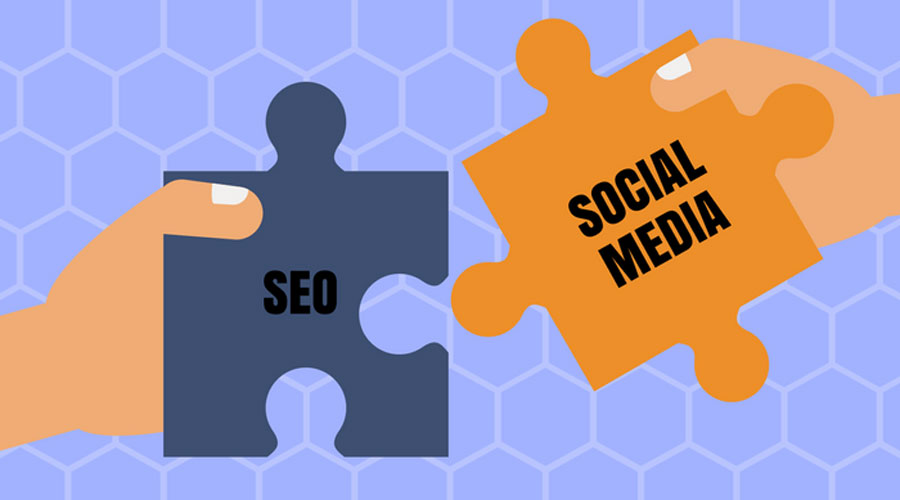
Two Different Things People Mean by “Social Media SEO”
Before going further, it’s worth clearing up something the term itself gets muddy on. Checking what’s actually ranking for this exact phrase right now, the current top results split roughly evenly between two related but distinct meanings, and most guides only cover one.
Sense 1: Does social media activity help your website rank on Google? This is the question most business owners actually have in mind, and it’s the one this guide leads with below.
Sense 2: Optimizing your social posts and profiles so people can find them through search, both inside each platform’s own search bar and, increasingly, directly in Google itself. YouTube titles and descriptions, keyword-rich social bios, alt text on social images, and hashtags chosen as real search terms rather than just trend-chasing all fall under this second sense.
Both matter, and they connect more than most guides admit. This piece covers both, starting with the one most people are actually asking about.
Does Social Media Affect SEO? The Direct Answer
No, social signals themselves are not a direct Google ranking factor, and Google has confirmed this multiple times. Your follower count, your likes, your shares- none of it gets factored into the algorithm the way a backlink or page speed does.
What social media does instead is trigger a chain of things that genuinely do affect rankings. A post that gets shared widely gets discovered and crawled faster, since Googlebot finds content through the links and mentions that sharing creates. That same visibility puts your content in front of people who run their own blogs or publications, some of whom link to it, and those links are what actually move rankings. Referral traffic from a shared post sends real behavioral signals- time on page, engagement- that search engines do weigh when judging content quality. And consistent visibility builds brand recognition, which shows up as more people searching your brand name directly, a signal Google can measure and does treat as relevance and trust.
None of this happens instantly, and none of it happens automatically just because you posted something. It’s a delayed, indirect chain, not a lever you can pull for a quick ranking bump.
The 5 Real Ways Social Media Supports SEO
1. Faster Content Discovery and Indexing
When content spreads across LinkedIn, X, or Reddit, search engines encounter it through the crawl paths that sharing creates, often well before traditional link building has caught up. For time-sensitive content competing in a crowded search result, that earlier discovery window is a genuine advantage, even though it’s not a ranking factor in itself.
2. Backlinks You Wouldn’t Have Earned Otherwise
This is the biggest indirect mechanism, and it’s worth understanding the actual chain instead of treating it as a vague benefit. A post shared in a niche community can generate real editorial backlinks over the following weeks, as people who saw it and run their own sites decide it’s worth referencing. Those backlinks are what move rankings. The social share just started the chain, and the connection is often invisible unless you’re tracking it deliberately.
Worth knowing the technical detail here too: most social platforms mark outbound links as nofollow, so a share itself doesn’t pass authority the way a standard backlink does. The value comes from the people who discover your content through that share and link to it from their own site, not from the share link itself.
3. Referral Traffic and Engagement Signals
Visitors arriving from a shared post and actually engaging with your page, spending real time there, clicking through to other content, send behavioral signals that support how search engines judge content quality. This works alongside your organic traffic rather than replacing it.
4. Brand Authority and Increased Branded Search
The more consistently your brand shows up in someone’s feed, the more likely they are to search your name directly later, and branded search volume is a real signal of trust and relevance. This is also where social media increasingly supports E-E-A-T, the experience, expertise, authority, and trust signals that both traditional search and AI-driven search systems weigh when deciding which sources to trust and cite.
5. Platforms That Are Search Engines in Their Own Right
This is the part most social-media-and-SEO guides skip, and it’s arguably more important now than the traditional social signals debate. Several platforms function as genuine, independent search engines, not just content feeds. YouTube is the second-largest search engine in the world, full stop. TikTok’s search function is becoming a primary discovery channel, particularly for younger audiences who increasingly search there before Google.
Pinterest drives real, substantial referral traffic for visual and image-based content. LinkedIn content can rank directly inside Google search results. And public Instagram professional accounts are now indexable by Google too, which expands your visibility across surfaces you might not have been optimizing for at all.
Treating “social media SEO” as only about whether Google likes your Twitter shares misses this entirely. Optimizing your presence and content directly for search within these platforms is its own discipline, and for some audiences, particularly younger or more visual ones, it may matter more than traditional Google visibility does.
5 Strategies of Social Media Helps Organic Search
Social media may not directly influence SEO results. But it has some elements that can have an impact on SEO. Social media can grow visitors to your website. You can increase traffic to your page by sharing links to it on your social media networks.
1. Share Content on Social Media Platforms
We all know that content is one of the most important elements of a website. If you want to rank your pages or website in the search engine, you need to provide high-quality content to drive traffic.

By sharing your website’s content on your social media platform, you can boost your SEO ranking. You can drive traffic from social media to your website through good content. It also helps to generate leads. Content sharing is the king of getting traffic for your website.
Your content should be unique and new. It will encourage your followers to return to your social media page. Your audience will become bored if you consistently post the same information or irrelevant content.
Social media is one of the best ways to motivate more external links to your content. So if you want to improve your SEO, share your content on your social media platforms.
2. Create Brand Awareness
In this virtual era of social media, people are more connected than ever. You need brand awareness if you want conversions and impressions for your website.
If people are more familiar with your brand, they will choose you over your competitors. And social media is the best option to create awareness for your brand.

When you post anything about your brand on your social media channels, your audience can learn about it. It creates an impression and draws attention to your brand easily.
It’s better for your company if you frequently post content so that your audience is exposed to your brand regularly. Applying your company’s distinct style to your postings will help to keep them consistent.
Now you might think about how it helps SEO?
You can improve your company’s search engine presence by promoting your brand on social media networks. When you continuously post content about your company, people will get to know about your business and search for it on the web. That will help to increase traffic and ranking as well.
3. Build Authority
Social media, content marketing, and SEO are all linked together. One of the most important advantages of content marketing is that it allows you to build your website’s authority in the industry over time if you constantly create high-quality content.
Then people start to believe the information you give, which builds trust in your entire brand. That’s great news because Google’s assessment of your website’s authority and trustworthiness is significant to its success in search rankings.

Now, use social media as a megaphone to broadcast your authoritative content to new audiences and increase your total reach, impressions, brand awareness, and visibility.
Nowadays, people don’t like to be stuck on one platform. They love to explore more channels. That’s why cross-channel marketing is such a powerful strategy for reaching customers no matter where they are.
Even if your social media follower counts aren’t factored into Google’s algorithm, you’re still reaching a large audience and gaining trust. This will benefit you in various ways, including shared content, word-of-mouth marketing, customer reviews, fresh prospects, public forums, organic site traffic, and so on.
4. Increase Your Followers
Growing followers is another of the best strategies to boost your SEO. More people will learn and read your content if you have millions of followers on your social media accounts. This will help increase your traffic to your website.

In SEO, we need to grow followers (audiences) organically. You can buy or manipulate followers, but Google will recognize that they aren’t high-quality leads. It won’t assist you in increasing your SEO rankings with those fake leads. On the other hand, you can get a penalty from Google.
Take the effort to present your brand to your audience regularly to help you obtain more quality followers. You can engage your followers by posting engaging content.
When your material is engaging, your audience is more inclined to share it on their social media accounts, allowing more people to see it.
5. Optimize Your Social Media Platforms
People get to know your brand more frequently through your social media. So it is very much needed that your social media accounts must be well optimized. People will trust you more if you have a well-optimized social media presence. That trustworthiness also impacts your brand.
In addition, several potential connections will look over your profile page before contacting you. Some people will also look you up on Google. As a result, your audience will find you easily across various marketing platforms, and Google loves it.
You can expand your reach and enhance your SEO rankings by implementing a social media SEO strategy. We have a team of 50+ experts at Monsterclaw LLC who can assist you in developing a marketing strategy that produces results.
Common Mistakes That Undermine Social Media SEO
Buying followers or engagement doesn’t just fail to help; it actively risks your brand. Fake engagement doesn’t generate real traffic or real backlinks, which are the actual mechanisms that matter. Platforms are increasingly effective at detecting artificial engagement, and getting flagged for it creates a trust problem that can follow your account.
Posting without a real content strategy behind it wastes the channel’s actual value. If nothing you post is genuinely worth sharing or citing, no amount of posting frequency will generate the backlinks and referral traffic that actually move the needle. Volume without quality is the single most common way businesses waste effort here.
Treating social and SEO as competing priorities instead of connected ones. The strongest results come from content built to work in both directions: genuinely useful enough to rank organically, and genuinely shareable enough to spread on social first and earn the backlinks that follow. Our content marketing service builds exactly this kind of dual-purpose content rather than treating the two as separate workstreams.
Bringing It Together
Social media won’t move your rankings by itself, and no amount of posting replaces genuine SEO strategy work. But treating it as irrelevant to SEO means walking away from faster indexing, real backlink opportunities, meaningful referral traffic, and a growing set of platforms that function as search engines in their own right. The businesses getting real value here aren’t chasing follower counts. They’re building content strong enough to spread on its own, then letting that spread do the indirect work that actually shows up in rankings months later.
Want a second opinion on whether your current content and social strategy are actually working together? Book a free SEO consultation, and we’ll walk through it with you.
Frequently Asked Questions
No. Google has confirmed that likes, shares, comments, and follower counts are not direct ranking factors. Social media supports rankings indirectly, through faster content discovery, backlinks earned from increased visibility, referral traffic, and brand authority, not through the social activity itself.
There’s no fixed timeline, since the effect is indirect and depends on how quickly social activity leads to real backlinks and referral traffic. It can take anywhere from a few weeks to a few months for the downstream effects of a strong social push to show up in organic performance.
Not directly. Likes and comments on Facebook or Instagram aren’t factored into Google’s ranking algorithm. High engagement can still drive meaningful traffic and brand awareness, which do contribute to SEO over time, just not through the engagement metrics themselves.
Write bios and captions with the actual terms your audience searches for, add custom alt text to images instead of leaving it blank, choose hashtags based on real search behavior rather than trends alone, and keep profile information complete and consistent across platforms. For video specifically, a title and description written to match real search phrasing matters more than a clever but vague one.
Yes, for two reasons. A well-optimized, active profile builds the trust and brand recognition that support indirect SEO benefits, and several platforms, especially YouTube, function as search engines in their own right, where direct optimization can drive significant discovery independent of Google entirely.
It carries real risk. Fake engagement doesn’t generate the genuine traffic or backlinks that actually support SEO, and platforms are increasingly effective at detecting it, which can create broader trust and reputation problems for your brand if it’s ever traced back to you.


