


Type a symptom into Google right now.
Chances are, it knows more than your neighbor’s doctor’s recommendation. That’s the reality hospitals face today.
Patients don’t wait around for referrals anymore. They pull out their phone, search a question, and pick whoever shows up first. Some of them even read reviews, scan a few websites, and form an opinion long before calling anyone.
Hospital marketing in 2026 shapes that entire process. It touches everything from the first search result to the moment a patient books an appointment.
But healthcare runs on different rules than most industries. Every campaign, blog post, and ad has to respect patient privacy under HIPAA.
So as the experts here, we wanted to share a few strategies that boost efficiency while maintaining compliance.
Significance of Hospital Marketing
1. Patient Education & Guidance
Most patients don’t call a hospital first anymore.
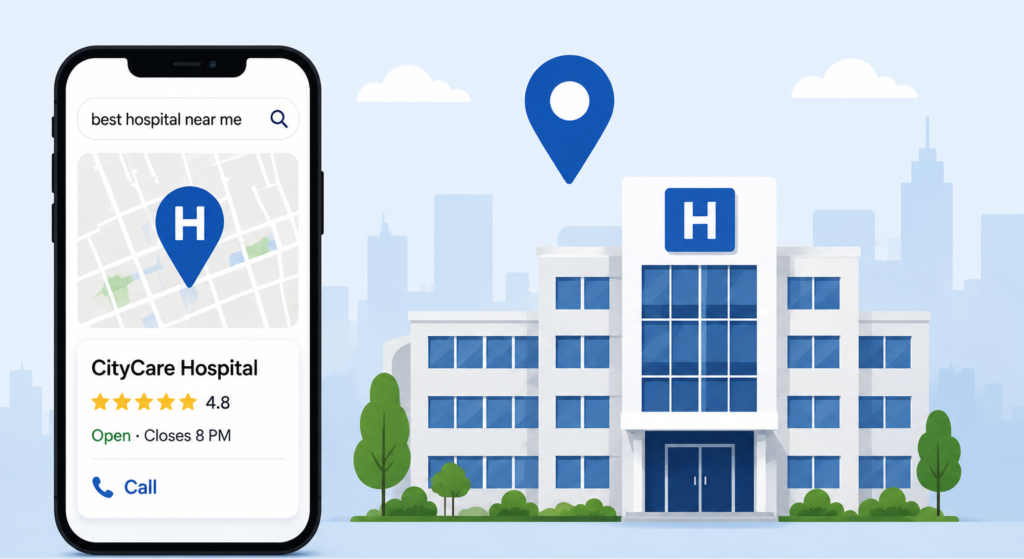
They open Google and start scouting. Hence, you see 77% of patients use search engines to find doctors before they book anything at all.
A lot of that searching happens on the go, too. 44% of patients look up hospitals right from their phones, often while waiting in line or lying in bed.
With roughly 70,000 health-related searches happening online every minute, patients are clearly hungry for information.
Hospital marketing fills that gap with clear, honest answers. Educational pages, doctor profiles, treatment details, and location pages. All these can guide patients toward informed decisions.
This also benefits hospitals. Better information brings more qualified visitors and reduces confusion before appointments.
Learn more about Medical Practice Marketing.
2. Trust & Reputation Building
Trust doesn’t come from a nice logo or a catchy slogan.
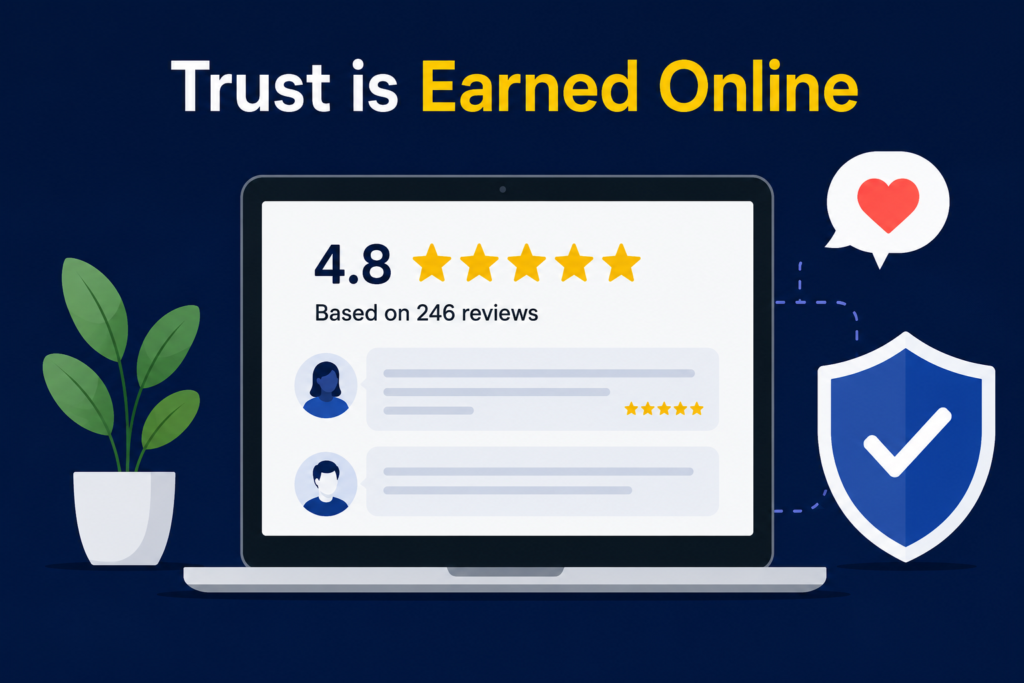
It comes from how a hospital actually shows up online. When a doctor takes the time to reply to a review, patients notice. Around 41% of patients say they trust doctors more after seeing those thoughtful responses.
The same goes for social media. When a physician shares something honest and human, people view it positively. Hence, close to one-third of patients say their trust in that doctor goes up after seeing a post like that.
Marketing gives hospitals more ways to communicate their values, expertise, and patient-focused approach. It involves monitoring reviews and responding with helpful details. This helps build real trust.
3. Patient Acquisition & Retention
Bringing in a brand-new patient isn’t cheap.
It can cost 5-7 times more than keeping a happy patient you already have. That gap alone makes retention worth taking seriously.
So how do hospitals keep patients around?
Personalized outreach helps a lot. Something as simple as a relevant health tip or helpful appointment reminders keeps your hospital on a patient’s mind. People who get that kind of personalized attention are 35% more likely to stick around for the long haul.
A thoughtful hospital marketing system supports both sides. It attracts new patients while giving existing patients reasons to return when they need care.
Also, when patients feel known, they stay. They also refer friends and family. Eventually, it helps build a community of healthy, satisfied patients who choose your hospital again and again.
4. Competitive Advantage & Growth
Marketing budgets aren’t the problem.
Most hospitals already spend 1-5% of their revenue on it every year. The real problem shows up after that money’s spent.
Most healthcare websites only turn 2-5% of visitors into actual patients. It means most of the traffic just walks away.
Better-targeted campaigns close that gap. Hospitals running personalized, well-planned marketing see 5-8 times more return on their investment. Quality scores rise too, by as much as 25%.
That kind of growth doesn’t stop at more patients walking through the door. It pays for better equipment, shorter wait times, and stronger service lines down the road. This is what hospital marketing brings.
12 Hospital Marketing Strategies That Work in 2026
1. Local Healthcare SEO
Optimize your listings for local search terms first.
When someone searches “urgent care near me,” search engines pull results based on location, relevance, and reviews.
Build a location page for every service and department you offer.
Say a patient searches “pediatrician in downtown Austin.” A hospital with an optimized listing and consistent address details wins that click.
Keep your name, address, and phone number identical across every directory online. Mismatched details quietly push you lower in search results.
With this, you open up a direct path from search bar to appointment booking. It costs far less than paid ads, too.
2. Google Business Profile
Claim your hospital’s Google Business Profile and fill out every field.
It’s often the first thing patients see before your website even loads. List accurate hours, address with directions, phone number, reviews, real photos, available services, and current specialties, since this builds instant credibility.
Post updates about new services or seasonal health tips to keep the profile active. Any missing hours or outdated address sends patients straight to a competitor.
The profile should answer questions before a patient even clicks through. For someone scanning results on their phone, that convenience often decides where they book their next visit.
3. Educational Content
Patients have questions.
Good hospital content answers them before another website does. Publish blogs that cover-
- Symptoms
- Treatments
- Recovery tips
- When to contact a professional.
The content should be clear and medically reviewed. It should also avoid giving individual medical advice.
Educational content supports search visibility while helping patients understand their options. You build authority and search rankings at the same time.
But keep everything general under HIPAA guidelines. Never share identifiable patient information, medical records, or patient stories without proper authorization.
General health education can still answer common questions and explain services while protecting patient privacy.
4. Patient-Friendly Website
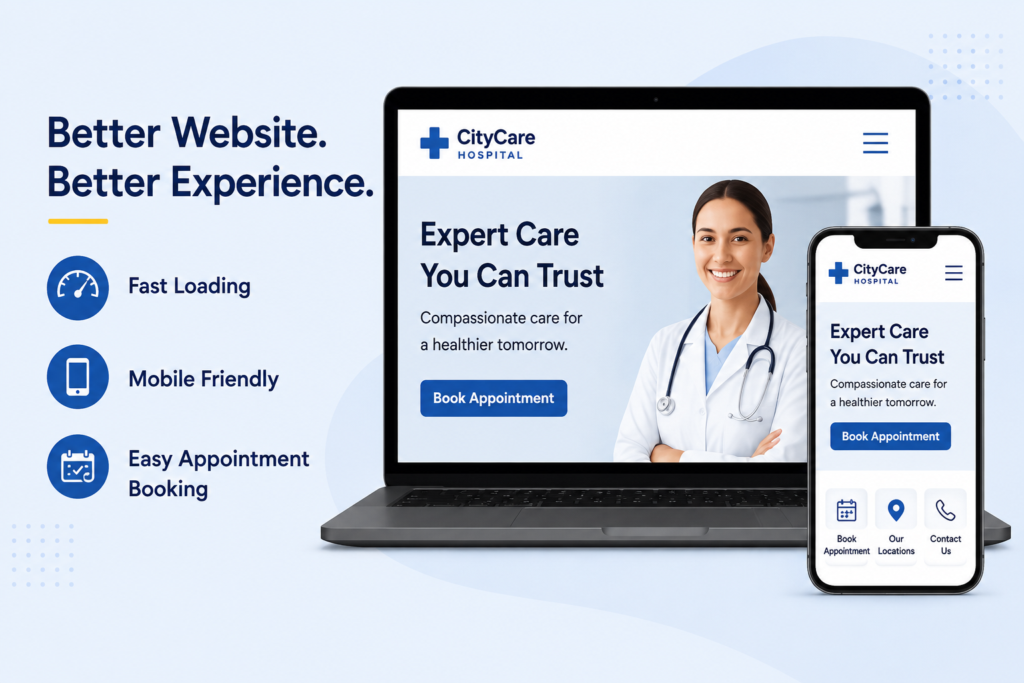
Rebuild your website around clear navigation and fast load times.
Simple menus can make a huge difference. Important pages should be easy to find, including:
- Doctors and specialists
- Hospital locations
- Medical services
- Appointment information
- Emergency care details
Make appointment booking simple enough for anyone to finish in under a minute. Add clear calls-to-action, like “Book Now” buttons, to guide visitors toward action.
Use a HIPAA-compliant contact form to protect patient data while keeping outreach simple.
Prioritize mobile design too, since most patients browse on their phones first.
A patient-friendly website helps visitors move from searching to taking action. Better usability can also improve the percentage of website visitors who become patients.
5. Reputation Management
Respond to every review, positive or negative, within a day or two.
A calm, professional reply to a frustrated review often does more good than ten five-star ratings alone.
Monitor
- Healthgrades
- Zocdoc
- Healthcare-specific review sites
Encourage happy patients to leave reviews too, since that balances out the occasional complaint naturally.
Keep every response general, and never reference specific treatment details, to stay HIPAA-compliant. A safe response can thank the person for feedback. But never confirm that the reviewer is a patient or reveal any health information in responses.
Hospitals can also identify repeated concerns from reviews. If people regularly mention scheduling problems, long wait times, or confusing directions, that feedback can support real improvements.
All these can help you avoid putting your hospital’s reputation at risk.
6. Social Media Campaigns
Social media gives hospitals a chance to communicate.
So, make the most of it. Share patient success stories, staff spotlights, and health awareness posts regularly.
Get signed consent forms from every patient before publishing anything identifiable. HIPAA requires it before any content or story goes live.
Use platforms like Instagram, YouTube, and Facebook to reach specific communities and age groups directly. Post a short video, since that spreads further than any brochure.
Stick to a steady posting schedule, a few times weekly, so the page stays active. This will help your hospital reach 5.4 billion social media users.
7. Targeted Digital Ads
Target your ad dollars toward specific groups.
Digital ads can help hospitals promote specific services to people searching for them. This works especially well for service lines such as
- Orthopedics
- Maternity care
- Cardiology
- Cancer care
- Outpatient services
For instance, you can run a geo-targeted ad promoting a new orthopedic clinic to nearby residents with joint pain. Set up retargeting ads for visitors who browsed your site but didn’t book yet.
Rely on general demographics and search intent when choosing who sees each ad.
Healthcare advertising requires careful handling of audience data. Never use protected health information or sensitive patient data for targeting. That breaks HIPAA rules instantly.
8. Email Communication
Email keeps your hospital top of mind.
Send appointment reminders, health tips, and seasonal wellness checklists through email. Announce new services.
Time a reminder around a patient’s annual flu shot, and watch them come back through the door.
Segment your email lists by service line, like cardiology or pediatrics. Build every list through opt-in consent only.
Then send relevant content to different groups. New parents get baby care tips. Older patients get preventive screening reminders. That way, messages feel relevant.
Email helps nurture relationships. It brings patients back and builds loyalty over time.
9. Physician Referral Networks
A major source of patients for many hospital service lines.
Build relationships with local physicians to create a steady stream of referrals. Share research findings or host continuing education events for outside doctors regularly.
Hospitals can also:
- Create dedicated pages for referring physicians
- Explain available specialties
- Provide clear contact paths
Updates about new services, treatment programs, and physician expertise can also help referring providers understand available options.
Follow HIPAA rules closely whenever sharing patient records between offices. Doctors talk to each other constantly, and that network shapes where patients get sent.
These relationships pay off twice over. You fill specialty appointments faster. Plus, you build a reputation among medical peers that eventually reaches patients too.
10. Community Outreach
Hospitals serve communities, not search engines.
Community outreach creates opportunities to connect with people before they need hospital care.
So, show up at local events. Activities may include:
- Health screenings
- Awareness programs
- Educational sessions
- School partnerships
- Local wellness events
Set up a booth at a community fair offering blood pressure checks for a memorable interaction.
Collect photos and stories from these events for later marketing use. You can promote them through local search, social media, email, and community websites.
But always get consent forms first for any photos or testimonials.
Outreach strengthens visibility. It shows that the hospital contributes beyond its walls. Plus, it introduces people to services they may not know exist.
11. Healthcare PR
This helps hospitals share news people genuinely want to hear.
Announce real milestones, such as new treatment programs, facilities, research, or major service expansions. Build relationships with health reporters before you need coverage.
Pitch local news segments and feature stories to reach audiences beyond paid advertising. Review every medical claim carefully before publishing it.
Share only information approved for public release, and protect patient privacy under HIPAA. Explain new services clearly without promising specific patient outcomes.
Healthcare PR increases awareness, strengthens credibility, and supports SEO, social media, and other marketing efforts. This gives hospitals third-party validation that paid marketing can’t provide.
12. Traditional Media Outreach
Traditional media still has a special place in hospital marketing, such as:
- Local newspapers
- Radio stations
- Television
- Print publications
- Billboard
- Community publications
These can reach patients who aren’t glued to their phones, especially older demographics.
Traditional campaigns work well for major announcements, new facilities, public health programs, and community events.
Pair traditional media with digital tracking, like a unique phone number per campaign, to measure results. Older patients, in particular, often respond well to print and radio health messaging.
Frequently Asked Questions on Hospital Marketing
Violations can trigger fines from $100 to $1.5 million annually per category, plus corrective action plans, criminal charges, and reputational damage. The Office for Civil Rights investigates most healthcare privacy complaints directly.
Most hospitals see ranking improvements within 3 to 6 months of consistent optimization. Full results, like steady patient bookings from search, typically take up to 12+ months to build. It depends on your starting point and competition.
Most hospitals spend the bulk of their budget on local SEO, website upkeep, and reputation management. Paid ads and PR usually take a smaller share, reserved for launches or new service lines.
Yes. Highlighting virtual visits, especially for follow-ups or minor concerns, meets patients where convenience counts most. Clear telehealth pages also capture searches from patients specifically looking for remote care options.
Track website traffic, appointment requests, phone calls, search rankings, service-line leads, and campaign results. Compare these numbers regularly to identify which marketing activities produce qualified patient inquiries.