


Running a medical practice today is different.
Patients now act like shoppers. They search online, read reviews, and compare options. This makes marketing necessary.
Medical practice marketing is simply the set of strategies a clinic, hospital, or private practice uses to attract and keep patients. That journey often starts online.
A practice can offer excellent care. But that work can stay hidden if people can’t find it.
Good marketing fixes that. It brings services in front of the right people and makes the next step easier.
For medical groups and private practices, the focus should stay simple: useful information, a clear message, and a patient-friendly experience.
Ready to grow? Let’s talk Medical Practice Marketing!
Significance of Medical Practice Marketing
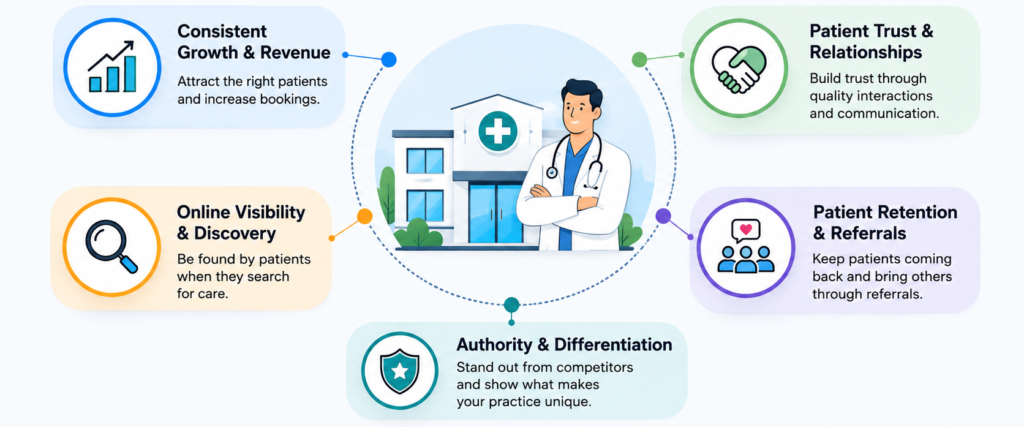
1. Consistent Growth & Revenue
Growth isn’t just about getting more eyes on your practice.
It’s about turning those eyes into booked, paying patients. Most medical practices set aside 1-5% of annual revenue for marketing. And that spend only pays off if your website actually turns visitors into appointments.
Today, healthcare practice websites typically convert between 2% and 5% of visitors into patients. This means a large share of traffic still walks away without booking.
Marketing, built around real conversion, closes that gap. It brings the right visitors who are ready to book and need your services.
Personalized campaigns work even better. They can deliver 5-8 times more return on investment. Plus, they boost quality scores by up to 25%. This means happier patients and better results.
Note that “a practice that markets well grows well”.
2. Patient Trust & Relationships
Healthcare decisions feel personal.
So, patients need to trust you before they’ll ever sit in your chair. That happens with doctors who share helpful information.
Marketing helps with this. It focuses on putting your website, blog posts, health tips, and patient reviews where people can see them before booking.
These touchpoints help patients learn about your expertise and feel more comfortable choosing your practice.
Trust also grows once patients see you respond online. 41% of patients trust doctors more when they reply to reviews. Nearly half also value the ones who respond to both positive and negative feedback.
Marketing uses both responses and feedback to show patients that your practice-
- Listens
- Responds and
- Cares about their experience
3. Online Visibility & Discovery
You could run the best clinic in town.
But if patients can’t find you online, you lose them. Discovery starts long before a patient ever calls your office. It starts with a search bar.
Currently, 77% of patients use search engines to find doctors. They scan listings, websites, bios, feedback, and maps first. So, you need to rank high in the SERP to ensure they find you.
That comes from marketing. It puts your practice in front of the right people at the right moment, whether that’s someone.
- Typing “pediatrician near me” into Google or
- Scrolling reviews before choosing a dermatologist
A strong website, local SEO, service pages, and an accurate Google Business Profile. All are part of digital marketing. These can help the practice appear for relevant searches.
4. Patient Retention & Referrals
Marketing shouldn’t stop after a patient books an appointment.
Staying connected can help medical practices build longer relationships and encourage future visits.
Personalized marketing can play a key role in this case. Custom emails, appointment reminders, follow-up messages, and useful health information. All these can make communication feel more relevant. Result: it ensures retention.
Even stats say the same thing. Patients who experience personalized marketing are 35% more likely to stay loyal.
That loyalty can also support referrals. Patients who have a positive experience might mention the practice to friends and family.
Eventually, retention marketing quietly fuels conversion and revenue.
5. Authority & Differentiation
Patients have plenty of options.
Among them, you have to stand out. That happens when you show your skills.
Reviews, educational content, doctor profiles, videos, and patient stories can all help communicate expertise.
Most patients consider “knowledgeable and expert” factors super essential. About 99% of them do.
Medical practice marketing helps with that. It
- Shares your knowledge
- Highlights your experience
Patients also check reviews and ratings to compare.
84% read online reviews to judge quality. Meanwhile, 75% filter out providers rated below 4.0 stars.
So, you need good feedback to compete. Marketing helps you earn that.
Top 15 Medical Practice Marketing Strategies
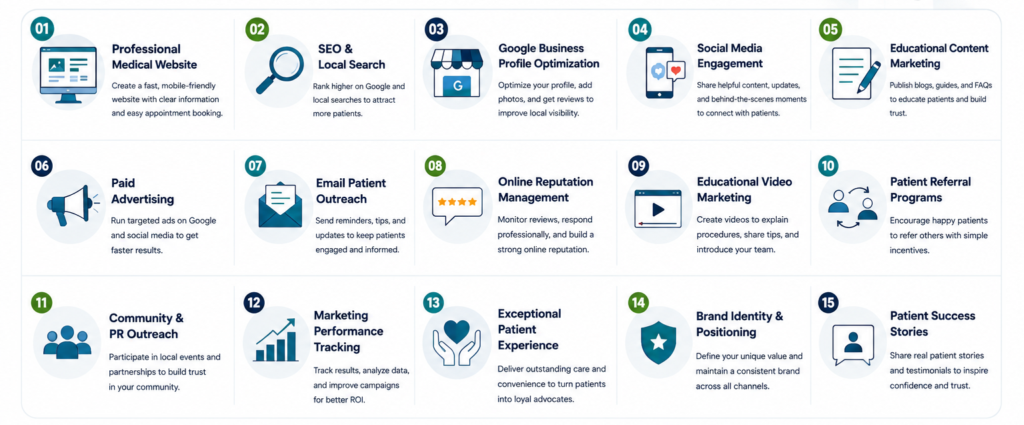
1. Professional Medical Website
Your website is where most patients form their first real impression.
So, it needs to work hard. A good medical website:
- Loads fast on phones
- Lists your services in plain language
- Shows real photos of your team
- Navigates easily
So, ensure these.
Besides, include clear doctor bios, locations, phone numbers, office hours, insurance details, and easy appointment booking.
This is exactly what a website should be doing for your practice every single day. Your website is your best medical practice marketing tool.
2. SEO & Local Search
Rank where patients are already looking.
Build useful pages around those searches. Add local information, service details, and helpful answers to your website. Also, post informative content with winning keywords that can appear at the top of the SERP.
Why? SEO helps your practice appear on Google when people search for healthcare services.
Local SEO works best in this case. It’s because most patients look for nearby healthcare providers. For example-
When someone searches for “dentist near me”, “back pain doctor nearby”, or “pediatrician in [your city]”, local SEO puts you on top.
The payoff is simple. Organic search traffic tends to be the most reliable and affordable a medical practice can get. Plus, it can be “convertible”.
3. Google Business Profile Optimization
Claim your Google Business Profile and keep it current.
That way, new patients know what to expect.
Do these to-
- Update your office hours
- Add recent photos of your office and team
- List your services clearly
- Respond to reviews on the listing
- Include correct address and phone number
Check the profile regularly and update details if anything changes. Encourage patients to leave honest reviews and respond to them professionally.
A complete profile looks professional. Google also ranks complete profiles higher. This means more people see you and pick you.
4. Social Media Engagement
Post regularly on social media.
Platforms like Facebook, LinkedIn, and Instagram work well for medical practices.
- Share health tips
- Introduce your team
- Show behind-the-scenes moments
- Reply appropriately to comments and questions
Social media helps you stay top of mind. Patients enjoy seeing your personality.
They feel more connected to you. When patients see your posts, they remember you.
This makes them more likely to book when they need care.
5. Educational Content Marketing
Patients have questions.
Your website can answer them before they pick up the phone. Create-
- Simple articles
- FAQs
- Checklists
- Health guides
Focus on common concerns. A diabetes clinic might publish content about blood sugar testing. An orthopedic practice could explain when knee pain deserves medical attention.
This type of content does 2 jobs.
It-
- Builds a relationship.
- Keeps patients engaged between visits.
Ensure you explain conditions in simple terms. Share prevention tips. Patients appreciate useful information. When you educate them, they trust you more and see you as an expert.
Disclaimer: Fact-check the details. Avoid making medical claims that sound like guarantees. Content should inform rather than diagnose.
6. Paid Advertising
Run targeted ads to get seen fast.
Use Google Ads or social ads to target specific services, locations, or patient types. That way, your money reaches people actually searching for care like yours.
Set a budget that fits your medical practice. Send each ad to a relevant landing page.
Track calls, form submissions, bookings, and cost per lead. This helps you adjust and improve.
Paid ads are cost-effective because you pay only when someone clicks. They also give newer medical practices visibility while the organic search presence is still growing.
7. Email Patient Outreach
Stay in touch with patients between visits through email.
Send appointment reminders, seasonal health tips, and updates about new services directly to their inbox. Keep messages relevant to the patient group receiving them. Do it regularly.
Personalize messages using what you already know about each patient’s history and care needs. It earns attention and engagement because email is cheap, direct, and lands somewhere patients actually check.
Use proper consent and follow healthcare privacy requirements when handling patient information. Helpful emails keep your practice familiar between visits. This makes them feel valued, which results in retention.
8. Online Reputation Management
Pay attention to what patients say online.
Monitor what people say across Google, Healthgrades, and similar platforms.
Ask happy patients for honest feedback through appropriate methods. Don’t try to manufacture positive ratings.
Respond to reviews politely. Thank patients for positive feedback and handle negative comments with professionalism. Also, ensure you avoid sharing private health information in public replies.
A strong review profile can influence decisions.
Besides, regular monitoring helps the medical practice spot repeated complaints about waiting times, communication, or booking. Those comments can reveal areas where you need to improve.
Make reputation management a regular habit. It protects your practice’s image.
9. Educational Video Marketing
Create informative videos for your patients.
Record short clips:
- Explaining a common procedure
- Introducing yourself
- Sharing health tips or patient testimonials
Then post them on your website, YouTube, LinkedIn, and social channels. Avoid making promises about medical results.
Videos feel personal and build trust quickly. Patients see your face and hear your voice. This makes them feel like they already know you.
Videos are also easy to share on social media and websites. They grab attention faster than text. Plus, they tend to get shared more, stretching your reach further.
You don’t need expensive equipment. A smartphone works fine. Keep videos short, clear, and easy to follow.
10. Patient Referral Programs
Make it easy and rewarding for patients to send others your way.
Set up a simple referral program for patients who refer friends or family.
You can offer-
- A discount
- A small gift
- A heartfelt thank-you note
Ask directly during checkout.
The logic is simple: referrals from real people still carry weight. Referred patients tend to arrive already trusting your practice.
That trust helps convert faster. Plus, they stick around longer than patients who found you cold through an ad or a search result.
Focus on making referrals simple, transparent, and appropriate for the practice.
11. Community & PR Outreach
Get involved in your local community and check out:
- Health fairs
- School programs
- Local events
- Educational talks
- Sponsorships
- Partnerships
Share these activities online. Post photos on social media. Write a blog post about your involvement.
All of these can introduce doctors to people who may need care later.
Being visible in the community builds trust and recognition. People remember your name when they see you around town.
Public relations also helps. Getting featured in local media boosts credibility. It reaches people who don’t search online much.
Community outreach shows you care about more than just profits. It makes you a trusted neighbor. This builds long-term relationships with patients.
12. Marketing Performance Tracking
Track your medical practice marketing results.
Use tools like Google Analytics to measure
- Website visits
- Calls
- Bookings
- Appointment requests
- Leads
- Campaign costs
This tells you what’s working. Review the numbers regularly and adjust your spending based on results. That helps you improve.
Tracking removes guesswork. You can see exactly how many patients come from each channel. That way, you make better decisions.
Moreover, it also helps you spend your budget wisely. If an ad isn’t working, you stop it. If a strategy is working, you do more of it.
13. Exceptional Patient Experience
Make the patient experience part of your marketing.
- Friendly staff
- Short wait times
- Easy booking
They all shape how patients see your practice. Use online booking, text reminders, digital forms, and follow-up emails to make each step easier.
Then encourage satisfied patients to leave honest reviews through appropriate channels.
Patients remember how you made them feel. A good experience leads to good reviews. And that leads to referrals and loyalty.
Your patients’ experience is your best marketing. It encourages patients to return and recommend your practice.
Marketing can’t fix a bad experience. But it can amplify a good one.
14. Brand Identity & Positioning
Give patients a clear reason to choose you.
Brand identity covers the practice name, visuals, tone, messaging, doctor profiles, and overall presentation.
Define what your practice does, who it serves, and what makes the experience different.
Keep your style consistent, too. Use the same colors, logos, tone, and message everywhere. Be it your website, Google profile, social media, email, ads, or printed materials. Consistency builds trust.
A clear identity makes the practice easier to recognize and remember. It also helps patients quickly understand whether your services fit their requirements.
15. Patient Success Stories
Share real stories from real patients, with their consent.
Collect testimonials, written stories, photos, before-and-after accounts, or short video interviews. Feature them on your service pages and social posts, right where future patients are deciding whether to book.
Avoid promises or statements that suggest every patient will get the same result.
Stories can make a practice feel more relatable as they show the human side of care. They also give potential patients a better sense of what working with your doctors and staff may feel like.
The Regulatory Requirements for Medical Practice Marketing
Medical marketing follows strict rules.
You must protect patient privacy under HIPAA. Marketing that uses patient information without written authorization is a violation. One healthcare company posted patient success stories online without proper consent and paid $182,000 to settle the case.
Get valid written HIPAA authorizations before sharing any patient details or photos for marketing.
Social media posts can’t contain protected health information. If you violate HIPAA privacy, it can result in
- Civil fines up to $50,000+
- Criminal charges
- Job loss
Email campaigns must follow CAN-SPAM and TCPA consent rules. The FTC prohibits false or misleading claims and unfair or deceptive acts. It also prohibits exaggerating success rates.
State medical boards regulate how you advertise specialties. These rules vary by state.
Stay compliant. It protects your practice.
FAQs on Medical Practice Marketing
The best agency understands healthcare, patient behavior, privacy rules, and local search. MonsterClaw combines SEO, content, paid advertising, reputation management, and performance tracking to help practices attract and retain patients.
Examples include SEO, Google Business Profile optimization, social media, educational content, paid ads, email outreach, reputation management, video marketing, and patient referral programs. Practices can combine several based on their needs.
Paid advertising can generate visibility quickly. Meanwhile, SEO, content, and reputation building usually take longer. Results depend on competition, location, website quality, budget, and how consistently you market.
Several practices lack the time and expertise to manage marketing well internally. An experienced agency understands healthcare compliance and patient behavior. This often helps deliver faster, more consistent results than handling everything alone.