




Influencers can put your brand in front of thousands overnight, while affiliates can turn trusted recommendations into trackable, performance-driven sales.
But when it comes to maximizing ROI, which strategy comes out ahead? The answer isn’t always straightforward.
Let’s see the comparison between influencer vs affiliate marketing – how each model works, what they cost, and which approach may deliver better results for your brand.
Influencer vs. Affiliate Programs: What’s the Difference?
Before comparing performance, it helps to define what each model actually involves.
What is an Influencer Program?
An influencer program is a planned marketing approach in which a company collaborates with social media influencers to advertise its goods and services. Through an influencer program, your company is paired with creators who already have a following.
To earn that trust, you must pay (in cash, merchandise, or a combination of both). Compensation may include commissions, provided goods, flat fees, and hybrid agreements that combine a base charge with performance bonuses.

A study says the global influencer marketing platform market is projected to reach $34.1 billion in 2026, up from $32.55 billion in 2025.
Instead of making a hard pitch, the majority of firms use influencer programs to raise awareness, encourage interaction, and introduce items to new audiences through narrative. Creator fit matters more than almost any other channel because they lend their credibility to your product; the wrong creator can make even a great product feel inauthentic.
What is an Affiliate Program?
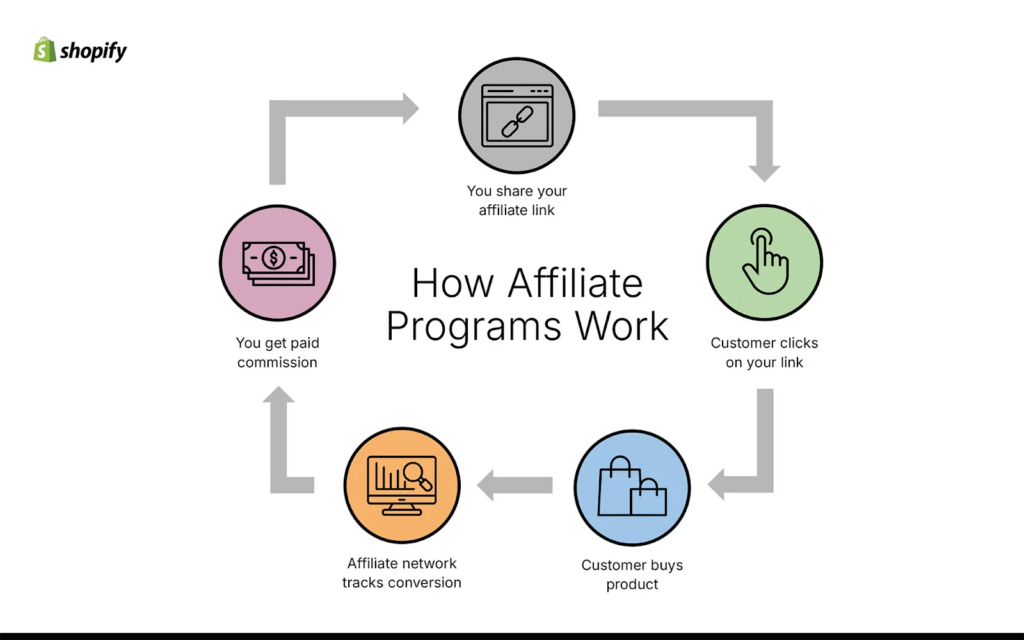
An affiliate program is a performance-based marketing strategy in which a company pays a commission to outside partners (affiliates) for each sale, lead, or click they generate via special tracking links.
Unique tracking URLs or promo codes are used in affiliate programs. When their connection results in a sale or another specified action, partners- bloggers, publishers, bargain sites, and content producers earn a commission. The partner is paid when the brand is paid; there is rarely an upfront charge.
Here, the goal is more straightforward: recurring customer acquisition, revenue, and conversions. Affiliates don’t require the same creative briefing as influencers because they are usually already creating content in your product category, such as reviews, roundups, comparison pieces, and offer sites. They require a link, precise terminology, and trustworthy tracking.
Relatable Read: High-Ticket Affiliate Marketing: 20 Programs to Try in 2026
Influencer vs. Affiliate Programs: Key Differences
| Factor | Influencer Program | Affiliate Program |
| Primary goal | Awareness + engagement + sales | Sales + revenue |
| Payment model | Flat fee, product, commission, or hybrid | Primarily commission |
| Upfront cost | Usually higher | Usually lower |
| Payment tied to performance | Sometimes | Yes |
| Attribution | Can be complex | Generally easier |
| Brand control | Higher | Varies |
| Audience reach | Strong | Depends on affiliate |
| Scalability | High | High |
| ROI predictability | Moderate | Generally higher |
| Best suited for | Demand generation | Performance marketing |
How Do Influencer and Affiliate Programs Generate ROI?
Both channels can be profitable, but the path to that profit looks different.
How Influencer Marketing Generates ROI?
Influencer ROI often develops in stages. A single post promotes audience trust, product discovery, and exposure. Even before a sale occurs, engagement metrics like shares, saves, and comments indicate resonance.
While some of that interaction results in a direct conversion, some help with a transaction that takes place on a separate channel days or weeks later. Over time, the effect is compounded by repeated exposure across several creators or publications.
Influencer ROI is more difficult to defend during a budget meeting because of this multi-layered approach. While subtly increasing branded search volume, site traffic, and add-to-cart rate for weeks later, a single campaign may result in minimal direct sales. You’re most likely underestimating the return if your reporting simply considers the week the post went live.
How Affiliate Marketing Generates ROI?
ROI for affiliates is more linear. The brand only pays a commission on sales that actually occur after a partner sends targeted traffic that either converts or doesn’t.
Successful partners typically continue to send sales over time without further negotiation because there is little to no upfront expenditure, which keeps the financial risk minimal.
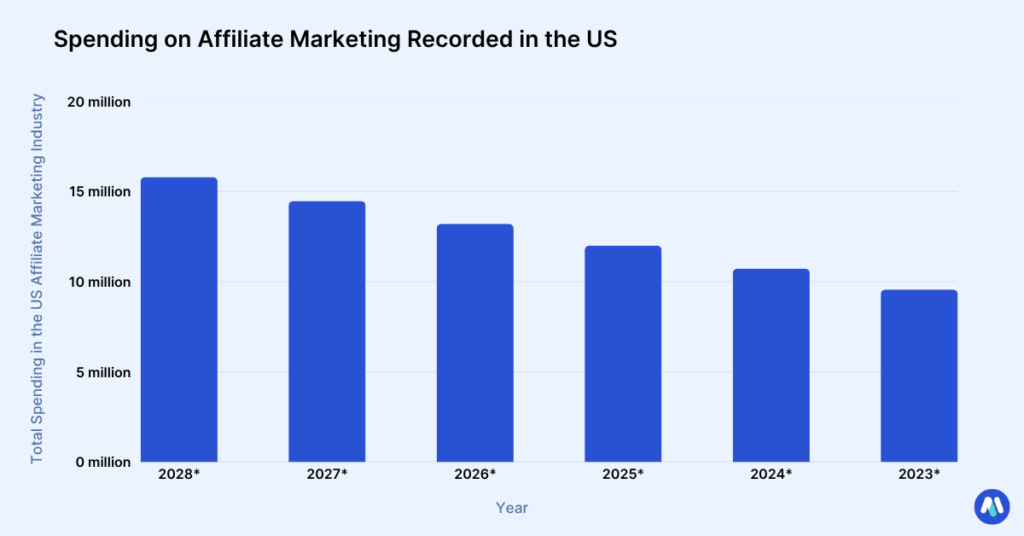
The drawback is that affiliate traffic frequently comes with pre-existing purchase intent; the affiliate rarely generates demand on their own. Typically, they are catching a customer who was already seeking a deal, evaluating possibilities, or finding a solution.
That’s worthwhile, but it’s not the same as when an influencer introduces your product to someone who wasn’t even looking for it.
Influencer vs. Affiliate ROI: How the Economics Compare
| ROI Factor | Influencer Marketing | Affiliate Marketing |
| Initial investment | Often higher | Usually lower |
| Cost structure | Fixed/hybrid | Performance-based |
| Financial risk | Higher upfront | Lower upfront |
| Revenue predictability | Variable | More predictable |
| Profitability measurement | More complex | More straightforward |
| Customer acquisition cost | Can fluctuate | Easier to calculate |
| Potential upside | High | High |
| Best ROI scenario | Strong creator/audience fit | High-converting partner |
Influencer Marketing vs. Affiliate Marketing: Which Is More Cost-Effective?
Cost-effectiveness depends on what you’re counting, not just how much you’re spending.
Influencer Program Costs
Campaign administration, usage rights, agency or platform fees, creator fees, product giving, and content creation all add up, and some of these expenses are incurred whether or not the campaign is successful.
Particularly, usage rights are neglected: repurposing a creator’s content in paid advertisements or on your own website is frequently a separate discussion with its own cost.
Affiliate Program Costs
Platform costs, program management time, promotional incentives, tracking technologies, and commissions (the primary expense) are all associated with affiliate programs. The majority of such expenses only arise following a sale.
Even the “fixed” expenses in this case, such as network fees and tracking software, are typically negligible in comparison to the money the program generates once it is operational.
Cost Structure
| Cost | Influencer Program | Affiliate Program |
| Creator/partner fee | Common | Usually not needed |
| Commission | Optional | Core compensation |
| Product gifting | Common | Optional |
| Content costs | Often included | Usually partner-created |
| Platform fees | Possible | Possible |
| Upfront financial commitment | Higher | Lower |
| Payment after sale | Not always | Usually |
Influencer vs. Affiliate Programs: Which Is Better for Different Marketing Goals?
| Marketing Goal | Better Option | Why |
| Brand awareness | Influencer | Creators provide audience reach and visibility |
| Product launches | Influencer | Strong storytelling and discovery potential |
| Direct sales | Affiliate | Compensation is closely tied to conversions |
| Customer acquisition | Affiliate | Easy performance tracking |
| Social proof | Influencer | Creator credibility can influence buyers |
| Long-term revenue | Affiliate | Partners can continue generating sales |
| Content creation | Influencer | Campaigns can generate branded content |
| New audience discovery | Influencer | Access to niche communities |
| Low-risk testing | Affiliate | Lower upfront costs |
| High-volume scaling | Affiliate | Easier to expand a performance-based network |
Influencer vs. Affiliate Programs: Which Offers Better Scalability?
Scaling an Influencer Program
Growth typically entails hiring more creators, standardizing briefs so that onboarding doesn’t take up your team’s week, creating performance-based creator tiers, repurposing top content across channels, and, as the program develops, moving toward performance-based compensation.
Human bandwidth is nearly always the bottleneck because it is difficult to automate the process of vetting authors, negotiating prices, and reviewing content before it goes public.
Scaling an Affiliate Program
Recruiting a wider range of publishers, bloggers, and communities; automating onboarding through an affiliate network; layering in tiered commissions; rewarding top performers with bonuses; and entering new markets without renegotiating every relationship from scratch are all ways to achieve affiliate scale. After tracking and commission policies are established, it takes far less effort to add the hundredth affiliate than the tenth.
Scalability
| Scalability Factor | Influencer Program | Affiliate Program |
| Partner recruitment | Moderate | High |
| Automation potential | Moderate | High |
| Upfront cost when scaling | Can increase quickly | Generally more controlled |
| Performance-based scaling | Moderate | Excellent |
| Content production | Requires management | Often partner-led |
| International expansion | Strong | Strong |
| Ease of scaling winners | Moderate | High |
Influencer vs. Affiliate Programs: Which Is Easier to Measure?
Influencer Marketing Metrics
Reach, impressions, engagement, revenue, cost per acquisition, click-through rate, conversion rate, and earned media value.
Affiliate Marketing Metrics
Clicks, revenue, earnings per click, commission, conversion rate, customer acquisition cost, and return on investment. For brands managing a growing partner network, affiliate management services can also help keep performance tracking, partner coordination, and program reporting organized.
Measurement and Attribution
| Metric/Measurement | Influencer | Affiliate |
| Reach | Strong | Variable |
| Engagement | Strong | Moderate |
| Click tracking | Yes | Yes |
| Conversion tracking | Yes | Yes |
| Last-click attribution | Possible | Common |
| Assisted conversions | Important | Less commonly emphasized |
| Revenue attribution | Can be complex | Generally straightforward |
| Brand impact measurement | Stronger | Weaker |
Direct credit is made easy with affiliate tracking links. Because a lot of the value appears as assisted conversions or brand lift that a last-click model won’t capture, influencer attribution is more complicated. Influencer campaigns will almost always appear weaker than they actually are if last-click revenue is the only metric used.
As a result, organizations that just use last-click reporting have a tendency to underinvest in influencer work over time, even when it subtly supports the remainder of the funnel.
Conducting a lightweight incrementality check, which involves stopping influencer engagement in a particular area or segment for a few weeks and comparing conversion trends with a control group, is a workable solution. It provides a sharper interpretation than attribution modeling alone; however, it’s not flawless.
Influencer vs. Affiliate Programs: What Are the Risks?
Influencer Marketing Risks
Paying for unconverted reach, inadequate audience-brand fit, overstated or fraudulent engagement, problems with brand safety if a creator’s actions or material don’t fit your brand, and difficult-to-determine attribution.
Affiliate Marketing Risks
Junk traffic from low-quality affiliates, an excessive dependence on coupon or cashback websites that reduce margin, inconsistent messaging among partners, channel attribution disputes, and concentration risk if too much money passes through a small number of top affiliates.
Risk Comparison
| Risk | Influencer Programs | Affiliate Programs |
| Upfront financial risk | High | Low |
| Brand safety risk | Moderate–high | Moderate |
| Attribution risk | High | Lower |
| Fraud risk | Moderate | Moderate |
| Messaging control | Higher | Lower |
| Performance uncertainty | Higher | Lower |
With the appropriate safeguards, both risk profiles are controllable. For influencer programs, this typically means incorporating usage rights and disclosure obligations into each contract and evaluating engagement quality (rather than just follower counts) before signing an agreement.
Setting clear brand criteria for partners, watching for coupon code abuse, and diversifying beyond a small number of high earners are all necessary to keep affiliate programs from being destroyed by a single partner’s withdrawal.
Which Brands Benefit Most From Influencer Programs?
If brand awareness is your top priority, your product needs to be demonstrated or explained to be sold, social proof has a significant impact on purchasing decisions, you’re launching something new, you want creator-generated content for other channels, or you’re breaking into a new audience segment, you should use influencer marketing.
| Brand Situation | Influencer Fit |
| New product launch | Excellent |
| Visual consumer product | Excellent |
| Strong social presence | Excellent |
| Awareness-focused campaign | Excellent |
| Content-led strategy | Excellent |
Which Brands Benefit Most From Affiliate Programs?
If measurable revenue is your main objective, your product already converts well, you want acquisition to be directly related to performance, your margins can absorb commissions, you want to reduce upfront spend, or you’re prepared to build out a partner network at scale, you should choose affiliate marketing.
| Brand Situation | Affiliate Fit |
| E-commerce brand | Excellent |
| Proven conversion funnel | Excellent |
| Performance-focused strategy | Excellent |
| Limited upfront budget | Excellent |
| Strong customer lifetime value | Excellent |
Can You Combine Influencer and Affiliate Programs?
This is where the “vs.” framing breaks down a bit because for a lot of brands, the answer isn’t either/or.
How a Hybrid Influencer-Affiliate Model Works
Award a special affiliate link or discount code to the chosen creators in exchange for their initial content and reach; monitor the sales that the link generates; award bonuses or higher commissions to the creators who perform well; and develop your top performers into long-term affiliate partners.
With this framework, you can tie a portion of your budget to quantifiable results while still capturing the awareness value of influencer material. Additionally, it resolves a real operational issue: future budget decisions are based on performance rather than follower numbers or intuition because the affiliate link provides you with hard data on who truly drives sales, eliminating the need to speculate about which artists are worth a larger long-term investment.
Influencer vs. Affiliate vs. Hybrid
| Factor | Influencer | Affiliate | Hybrid |
| Brand awareness | High | Moderate | High |
| Direct sales | Moderate–high | High | High |
| Performance tracking | Moderate | High | High |
| Upfront cost | High | Low | Moderate |
| Creator relationships | Strong | Varies | Strong |
| Scalability | High | Very high | Very high |
| Overall flexibility | High | Moderate | Excellent |
Influencer vs. Affiliate Programs: Which Drives Better ROI?
| Category | Influencer | Affiliate | Winner |
| Brand awareness | ⭐⭐⭐⭐⭐ | ⭐⭐⭐ | Influencer |
| Audience engagement | ⭐⭐⭐⭐⭐ | ⭐⭐⭐ | Influencer |
| Direct conversions | ⭐⭐⭐⭐ | ⭐⭐⭐⭐⭐ | Affiliate |
| ROI predictability | ⭐⭐⭐ | ⭐⭐⭐⭐⭐ | Affiliate |
| Upfront cost efficiency | ⭐⭐⭐ | ⭐⭐⭐⭐⭐ | Affiliate |
| Content generation | ⭐⭐⭐⭐⭐ | ⭐⭐⭐ | Influencer |
| Attribution | ⭐⭐⭐ | ⭐⭐⭐⭐⭐ | Affiliate |
| Scalability | ⭐⭐⭐⭐ | ⭐⭐⭐⭐⭐ | Affiliate |
| Social proof | ⭐⭐⭐⭐⭐ | ⭐⭐⭐⭐ | Influencer |
| Overall flexibility | ⭐⭐⭐⭐ | ⭐⭐⭐⭐ | Tie |
How to Choose Between an Influencer and Affiliate Program?
Choose influencers if your path looks like: Awareness → Trust → Discovery → Content → Community.
Choose affiliates if your path looks like: Traffic → Conversion → Revenue → Performance → Scale.
Choose hybrid if you need: Awareness + Conversion → Creator relationships + Performance incentives.
Questions to Ask Before Choosing
- What is our primary marketing objective?
- How much upfront budget do we have?
- What is our average order value?
- What are our gross margins?
- How strong is our existing conversion rate?
- How important is brand awareness right now versus revenue?
- How easily can we track conversions across channels?
- Do we have the internal resources to manage creators or affiliates well?
These are more important questions than they may initially appear to be. Since commissions can be carefully calculated against proven profitability, affiliate relationships typically work better for brands with tight margins and a high conversion rate. Even if the initial cost is more difficult to explain on a spreadsheet, a brand with high margins but little category awareness can still benefit.
Relatable Read: 11 Best B2B Affiliate Programs in 2026 (With Buyer’s Guide)
The Bottom Line
There’s no one-size-fits-all winner in the influencer vs affiliate debate. It depends on whether your priority is awareness, trust, or measurable conversions.
Influencers can spark attention quickly, while affiliates offer performance-driven growth with a clear path to ROI.
With MonsterClaw, you can build a strategic partnership program that combines the strengths of both and turns partnerships into sustainable growth.
Ready to build a partnership strategy that drives growth? Partner with MonsterClaw and turn the right creators and affiliates into your next growth engine.
Frequently Asked Questions (FAQs)
In general, neither is better than the other. Affiliate marketing typically outperforms influencer marketing in terms of measurable, predictable revenue, whereas influencer marketing typically outperforms in terms of awareness and trust-building. The stage at which your brand and product are at will determine the best option.
As remuneration is based on actual sales, it is frequently more predictable. However, influencer marketing can also be quite profitable, particularly if the business tracks assisted conversions instead of just last-click data and there is a good creator-audience fit.
Indeed. In essence, the hybrid strategy mentioned above is what many brands do when they pay creators an upfront fee and provide them with an affiliate link or code. It’s one of the most popular ways for brands to create a recurring revenue stream from a one-time campaign.
Since last-click data alone underrepresents influencer impact, compare the overall campaign cost against attributed revenue, taking into account both direct and aided conversions when feasible. The holes left by normal attribution can be filled by monitoring branded search lift and site traffic in the days after a campaign.
Indeed, a lot of people do. Running both, or combining them into a hybrid model, enables a company to target measurable revenue and recognition at the same time, utilizing each channel for its unique strengths rather than making one program perform both tasks.


