



Planning your marketing without a clear strategy can leave your HVAC business chasing leads instead of consistently booking jobs.
A well-structured HVAC marketing plan helps you attract the right customers, generate qualified leads, and turn more inquiries into paying service calls.
When combined with HVAC SEO, your business becomes easier to find when homeowners search online for heating, cooling, or emergency repair services.
Let’s explore how to build an effective HVAC marketing plan that drives steady growth, strengthens your online presence, and keeps your schedule full year-round.
Why Every HVAC Business Needs a Marketing Plan?
The Cost of Marketing Without a Strategy
Without a plan, advertising expenditures are like a leaky pipe: money comes in, results trickle out, and no one knows exactly where it went. Many HVAC owners run Google Ads for a few months, lose track of the cost per lead, become irritated, and stop using them. They then try again with a different agency and continue the pattern six months later.
The other sign is irregular lead flow. When summer gets busy enough to put off work, the phone stops ringing when March arrives. Every year, that fluctuation severely affects revenue if a strategy isn’t based on seasonal demand.
Benefits of a Well-Planned HVAC Marketing Strategy
Those swings are mitigated by a sound plan. Knowing your metrics, such as cost per lead, conversion rate, and average job value, allows you to estimate the approximate number of calls that a particular ad expenditure will generate. You can employ confidence, stock parts ahead of demand, and stop viewing every slow month as a crisis because of this predictability.
It compounds as well. Because you remained visible and developed trust in the interim, a homeowner who discovered you through a useful blog article about furnace noises today might schedule a complete system replacement in three years.
Relatable Read: How to Set SEO Goals That Are Realistic and Actually Achievable?
Step 1: Define Your HVAC Business Goals
Set SMART Marketing Objectives
“Get more customers” is an example of a vague goal that doesn’t tell you what to build. Certain ones do. Here are some actual instances:
- Within six months, increase service calls by thirty percent.
- By year’s end, increase the number of people signing up for maintenance memberships from 40 to 100.
- Within 90 days, rank for “AC repair near me” in the local map pack.
You may determine precisely what to measure and when to check in with each of these.
Identify Key Performance Indicators (KPIs)
Pick the numbers that actually tell you if the plan is working:
- Website traffic (and where it’s coming from)
- Calls generated, tracked by source
- Form submissions
- Cost per lead
- Conversion rate from lead to booked job
- Customer lifetime value
If you’re not tracking cost per lead by channel, you’re flying blind on where to spend next month’s budget.
Step 2: Understand Your Target Customers

Residential vs Commercial Clients
These are two different businesses. Residential clients typically want immediate attention; a malfunctioning air conditioner in July doesn’t wait. Contracts, uptime assurances, and long-term maintenance partnerships are more important to commercial clients. This is where your messaging and, frequently, your entire sales process should be divided.
Build Customer Personas
A few identities that are worth developing:
- Price, timeliness, and trust cues like reviews are important to homeowners.
- Property managers are concerned about dependability and response times across various units.
- Managers of commercial facilities are concerned about service contracts and uptime.
- For new construction, builders require installation partners.
- Real estate firms require prompt return times and pre-sale inspections.
A different landing page, or at the very least, a different area of your website, should be shaped by each character.
Identify Customer Pain Points
People usually always look for HVAC providers because they are uncomfortable or afraid of paying a larger bill later:
- When a system fails in the middle of the season, emergency repairs
- High energy costs due to an outdated or badly maintained unit
- Systems that are so ancient that fixing them seems risky
- Concerns about indoor air quality, particularly for allergy patients
Ad text and content that properly addresses these problems consistently beat a generic “quality HVAC services” message.
Step 3: Analyze Your Local Competition
Review Competitor Websites
Look at your service area’s top 3-5 competitors. Which service pages are available to them but not to you? How fast is their website? Do they have financing offerings that you don’t?
Compare Local SEO Performance
Use your primary search phrases, such as “AC repair [city],” or “furnace installation [city]”; observe who appears in the map pack as opposed to organic results. It’s not just the businesses you are familiar with that are your true rivals.
Study Google Reviews
Read reviews from competitors, particularly those with three stars. They let you know just where clients are disappointed, which is frequently your opening.
Evaluate Their Advertising Strategy
You don’t need to guess what offers are successful in your market by taking a glance at their Google Ads (through the Google Ads Transparency Center) and social media presence.
Relatable Read: How to Outrank a Tough Competitor in Search Engine Rankings
Step 4: Build a Strong Online Presence
Create a High-Converting HVAC Website
Your website should be operating around the clock because it is your busiest technician. To turn visitors into scheduled jobs, it requires:
- Mobile-friendly design (the majority of HVAC searches take place on a phone, frequently in the middle of an emergency)
- Quick loading: Each additional second of load time costs you and visitors money.
- Not just a phone number, but online scheduling
- One clear service page for each important service
- Financing details are at the forefront.
- Trust badges (association memberships, insurance, and licenses)
- Embedded customer reviews rather than being linked out
Optimize for Local SEO
For the majority of HVAC companies, local SEO is crucial. Priorities:
- A completely completed Google Business Profile with precise hours, images, and services
- Location pages if you provide services to several counties or towns
- NAP (name, address, phone) uniformity among all directories
- Local references on directories such as Yelp, Angi, and the BBB
- Keywords that encompass not just your service but also your service area
Create Dedicated Service Pages
Each core service deserves its own page, built around its own keywords:
- AC Repair
- Furnace Installation
- Heat Pump Services
- Indoor Air Quality
- Emergency HVAC Repair
A single “Our Services” page trying to cover all five will rank for none of them as well as five focused pages would.
Step 5: Develop an HVAC Content Marketing Strategy
Publish Helpful Blog Posts
Content that answers real questions builds trust before the sale even happens. Strong topics include:
- HVAC maintenance tips by season
- Pre-summer and pre-winter checklists
- Energy-saving advice homeowners can act on immediately
- Buying guides for new systems
Create Location-Based Content
As it indicates local relevance to both Google and the reader, a piece with the headline “Signs Your Furnace Needs Repair in [City]” will perform better than a generic version.
Answer Common Customer Questions
“How often should I replace my filter?” is a question that customers ask on every call. “Why is my AC leaking water?” You will begin to appear in featured snippets and AI-generated answer boxes if you directly and completely respond to these.
Produce Video Content
Compared to text alone, video fosters trust more quickly. Think about:
- Quick maintenance guides
- Walkthroughs of the project before and after
- Technician introductions, which give the brand a personal face
- Videos with customer testimonials
Relatable Read: What is SEO Writing? Complete Guide for Creating SEO-Optimized Content
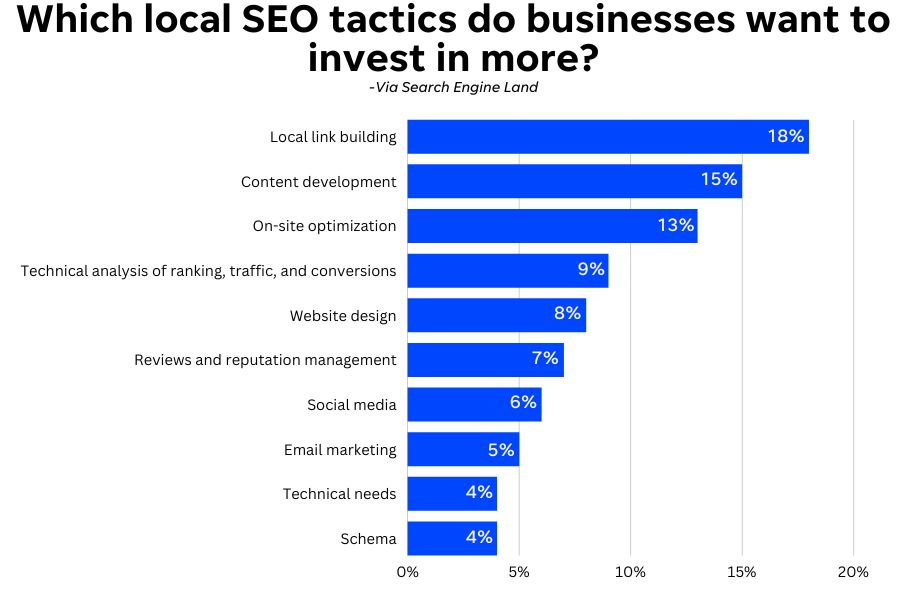
Step 6: Invest in Local SEO
Separate from ordinary content work, this merits a special push:
- Update your Google Business Profile with new images and content.
- Don’t wait for reviews to appear; actively seek them out.
- Increase the number of citations in the directories that your clients actually visit.
- Obtain local backlinks from trade associations, local news, and chambers of commerce.
- Specifically target “near me” searches in the headers and titles of your pages.
Step 7: Run Paid Advertising That Generates HVAC Leads
Google Ads
When someone searches for “AC not cooling” tonight, they are ready to make a reservation rather than explore.
Local Services Ads
Google’s Local Services Ads feature a Google Guarantee symbol and appear above standard search ads, giving homeowners who are quickly evaluating options instant trust.
Facebook & Instagram Ads
Since customers aren’t searching social media for a repair provider, it’s better suited for awareness and seasonal marketing (like tune-up specials) than for emergency capture.
Retargeting Campaigns
The majority of guests do not make reservations on their first visit. Until they’re ready, retargeting keeps your brand in front of them.
Seasonal Promotions
Ad campaigns should be tied to the calendar, such as spring AC tune-ups and fall furnace inspections, to meet rather than exceed demand.
Relatable Read: How Does Google Ads Generate Responsive Search Ads?- Explained
Step 8: Use Email and SMS Marketing
Email and text are a retention engine in addition to being used for announcements:
- Reminders for maintenance based on the season
- Promotions for seasonal tune-ups
- Campaigns to renew memberships before they expire
- Referral programs that compensate current clients for recommending you to friends
Step 9: Build Trust Through Online Reviews
Request Reviews After Every Job
The maximum moment to inquire is immediately following the technician’s completion, when the relief of a fixed system is still palpable. Days later, a straightforward text message with a review link is more effective than any follow-up email.
Respond to Every Review
A reaction, whether positive or negative, demonstrates to potential clients that you are paying attention. In many cases, a well-considered response to a bad review builds greater trust than a stack of uninterested five-star reviews.
Showcase Reviews Across Your Website
Reviews that are relevant to the particular choice a visitor is making should be pulled onto service sites rather than being buried on a single testimonials page.
Step 10: Generate Repeat Business
HVAC Maintenance Memberships
Recurring maintenance plans provide you a reason to visit their home twice a year and convert one-time clients into reliable yearly income.
Referral Programs
Satisfied customers become an unpaid sales force when they receive a structured referral reward, such as a discount for both the referrer and the new client.
Loyalty Discounts
Regular customer discounts are less expensive than the advertising expenditure required to generate a new lead.
Annual Service Agreements
A yearly agreement locks in revenue and lowers the likelihood that commercial clients would shop around the next time something goes wrong.
Step 11: Track Marketing Performance
Essential HVAC Marketing Metrics
Keep a close eye on:
- Website traffic and its sources
- Organic rankings for core keywords
- Calls generated by channel
- Booked appointments versus leads
- Lead conversion rate
- Customer acquisition cost
- Return on ad spend
- Revenue broken down by marketing channel
Marketing Reporting Dashboard
Combine these into a single dashboard (even a basic spreadsheet would do) so you can quickly determine which channel is truly paying for itself and which is just wasting money.
Common HVAC Marketing Mistakes to Avoid
Underperforming HVAC marketing frequently exhibits the following patterns:
- Ignoring local SEO in favor of only using sponsored advertisements
- Running advertisements without a conversion tracking system
- A sluggish, antiquated website that loses mobile users before they reach the service page
- Leads that remain unfollowed for several hours or days
- Distinctive branding on the website, vehicles, and social media accounts
- No methodical approach to gathering reviews
- Focusing solely on acquiring new clients while neglecting existing ones
- ROI is never truly measured by channel.
Sample 90-Day HVAC Marketing Plan
Month 1: Audit the website, fully optimize the Google Business Profile, run keyword research, set up analytics tracking, and build out missing service pages.
Month 2: Publish the first round of blog content, launch a focused local SEO push, start actively collecting reviews, and set up email marketing sequences.
Month 3: Launch Google Ads, run seasonal social campaigns, start retargeting, and begin analyzing KPIs to optimize what’s working.
Relatable Read: Affiliate Marketing KPIs: 14 Metrics, Benchmarks + Formulas
Essential Tools for HVAC Marketing
Usually, a successful HVAC marketing campaign depends on:
- CRM software to monitor customer history and leads
- Google Analytics to gain insight into traffic
- Google Search Console for search efficiency
- Using call tracking software to link phone leads to particular channels
- An email marketing tool for discounts and maintenance reminders
- To automate review requests, use review management software.
- SEO tools for site audits and keyword tracking
- A social media scheduler to maintain regular posting without having to do human labor every day
Final Thoughts
If you are ready to grow your HVAC business with a data-driven marketing strategy, MonsterClaw can help.
So, partner with MonsterClaw today and build an HVAC marketing plan that delivers measurable growth year after year.
Frequently Asked Questions (FAQs)
Since they target consumers who are currently looking for HVAC assistance, local SEO and Google Ads (including Local Services Ads) usually generate the most leads.
It often takes four to six months to see significant local SEO effects, and as content and citations pile up over 12 months, the gains get stronger.
Yes, especially for emergency services, provided that conversion tracking is implemented to control the cost per lead.
By focusing on specialty service pages, quick review answers, and hyper-local SEO – all of which larger businesses with generic websites frequently overlook.
Consistent reviews, location-specific material, and a robust Google Business Profile work better together than any one channel alone.