



A search engine friendly eCommerce platform is the foundation your entire organic growth strategy sits on. Get it wrong and no amount of content, backlinks, or technical fixes will compensate for what the platform itself is preventing.
The wrong platform locks you into poor URL structures, slow page speeds, limited schema markup, and bloated code that hurts Core Web Vitals. The right platform removes these obstacles from the start.
This guide compares the 10 best search engine friendly eCommerce platforms in 2026 across four criteria that actually determine how well your store ranks: SEO control depth, Core Web Vitals performance, schema markup capability, and URL customization flexibility. Each platform is reviewed with a consistent format so you can compare them directly.
Relatable Read: 5 MAJOR E-COMMERCE MARKETING STRATEGIES FOR YOUR BUSINESS
eCommerce Platform SEO Feature Comparison (2026)
| Platform | SEO Control Level | URL Customization | Core Web Vitals (Default) | Schema Support | Blogging | Best For |
|---|---|---|---|---|---|---|
| Shopify | Intermediate | Partial (some URL paths forced) | Good | App-dependent | Basic | Small to mid-size stores, fast setup |
| WooCommerce | Advanced | Full control | Depends on hosting + theme | Full (with plugins) | Excellent (native WordPress) | SEO-focused brands, custom builds |
| BigCommerce | Advanced | Full control | Good | Built-in | Good | Growing mid-size stores, B2B |
| Magento (Adobe Commerce) | Full | Full control | Requires optimization | Full custom | Good | Enterprise, large catalog B2B/B2C |
| Wix Ecommerce | Basic | Limited | Moderate | Limited | Basic | Beginners, very small stores |
| OpenCart | Intermediate | Customizable | Requires optimization | Plugin-dependent | Plugin-dependent | Budget-conscious SMBs |
| Weebly | Basic | Limited | Basic | Limited | Basic | Micro-businesses, early-stage stores |
| 10Web | Basic-Intermediate | Moderate | AI-optimized | Limited | WordPress-based | Beginners wanting automation |
| Squarespace | Basic-Intermediate | Moderate | Good | Limited | Good | Creative brands, design-first stores |
| PrestaShop | Advanced | Full control | Requires optimization | Full custom | Good | Startups needing flexibility |
SEO Control Levels defined:
- Basic: Title tags and meta descriptions editable. Limited URL control. No schema without third-party tools.
- Intermediate: Full meta control, partial URL control, schema support with apps/plugins.
- Advanced: Full control over all on-page elements, URL structure, schema, robots.txt, canonical tags, and technical settings.
What Is a Search Engine Friendly eCommerce Platform?
A search engine friendly eCommerce platform is a content management and store-building system built with the technical requirements of organic search visibility in mind. It gives store owners control over the SEO elements that Google uses to evaluate and rank pages.
Five technical characteristics define whether an eCommerce platform is genuinely search engine friendly:
1. Editable URL structure. Every product page, category page, and blog post should have a URL you can customize. URLs that default to /product?id=4821 or /shop/item_003 are not search engine friendly. Clean, keyword-containing URLs like /running-shoes/nike-air-max-2026/ communicate content relevance directly to Google.
2. Full control over title tags and meta descriptions. Every page must allow independent editing of its title tag and meta description. Platforms that generate these automatically from product names or force the same structure across the catalog create SEO problems at scale.
3. Schema markup support. Schema.org structured data tells Google what your pages contain – product prices, availability, ratings, breadcrumbs. Platforms with built-in schema support or the ability to inject custom JSON-LD code earn rich results in SERPs. Those without it leave organic CTR gains on the table.
4. Site speed and Core Web Vitals performance. Google’s Core Web Vitals (LCP, CLS, INP) are confirmed ranking signals. Platforms with heavy JavaScript rendering, uncompressed images, or bloated themes create CWV failures. A platform’s default performance architecture determines how much technical SEO work you will need to maintain passing scores.
5. Blogging and content capability. Product-only platforms cannot compete on informational keywords that drive top-of-funnel traffic. A search engine friendly eCommerce platform includes a proper blog system with categories, internal linking, and independent URL management for content pages.
Not all platforms that claim to be “SEO-friendly” are equal on these five dimensions. The comparison below shows how each platform actually performs.
Why SEO Matters in E-commerce and Why Platform Choice Is the First Decision
Your platform choice determines your SEO ceiling.
Most eCommerce businesses treat platform selection as a design and features decision. They compare checkout flows, template libraries, and app integrations. SEO enters the conversation as an afterthought, usually when the store is already live and rankings are not moving.
This is the wrong order of operations.
Here is why platform choice is an SEO decision first:
- URL structure is set at launch: Changing URL structures after a store is live requires redirects across hundreds or thousands of pages. Each redirect adds a small delay. Redirect chains compound. Large-scale URL migrations are one of the most common causes of organic traffic drops that never fully recover. Getting the URL structure right at the platform selection stage costs nothing. Fixing it after launch costs traffic.
- Speed architecture is platform-dependent: Some platforms serve pages from a global CDN with server-side rendering. Others generate pages with heavy client-side JavaScript. The difference in Core Web Vitals scores between these architectures can be 30 to 50 points on Google’s Lighthouse scale. SEO plugins and optimization apps can partially close this gap but cannot fully overcome poor base architecture.
- Content architecture determines topical authority: Platforms that separate product catalog content from editorial content (blog posts, guides, buying advice) into disconnected silos limit your ability to build topical authority through internal linking. Platforms with integrated content structures let you link product pages to relevant guides and guides back to product pages, compounding authority signals across both content types.
The conclusion: Choosing the right search engine friendly eCommerce platform before launch is the highest-leverage SEO decision you will make. Every other SEO investment – content, backlinks, technical fixes – performs better on a platform that was selected with SEO requirements in mind.
Choosing the right platform is only the first step. Long-term organic growth also depends on a comprehensive Ecommerce SEO Services strategy that combines technical optimization, content development, authority building, and ongoing performance improvements.
Organic Traffic as a Long-Term Revenue Driver
Organic traffic originates from unpaid search results compared to many paid channels. It offers online retailers a greater conversion rate and a better long-term return on investment. It is crucial for long-term brand equity development and sustainable e-commerce growth. As it lessens dependency on sponsored advertising.
A website that has been optimized is more likely to appear higher in search engine result pages (SERPs). It will result in a notable rise in free and repeat visits. Click-through rates for organic search are typically higher than those for paid advertisements. Businesses may draw customers without having to pay for each click by investing in organic search.
As a result, this makes it an affordable growth channel with a strong long-term return on investment.
Organic Traffic vs. Paid Traffic




| Aspects | Organic Traffic | Paid Traffic |
| Definition | Website visitors from unpaid search results. | Website visitors from paid campaigns(e.g., Google AdWords, Facebook ads) |
| Time Until Results | 6-12 months | Immediate |
| Cost | Initial investment for content and optimization, then free traffic | Ongoing cost per click |
| ROI | Average ROI of 748% (for every $1 invested, $7.48 return) | Varies average CTR for paid search ads varies by 3.17%. |
| Conversion Rate | 2.4% | 1.3% |
| Trust and Credibility | High, viewed as legitimate and relevant | Lower due to “Ad” label, users may have “ad blindness” |
Best E-commerce Platforms for SEO
Let’s explore the best e-commerce platforms for SEO!
1. Shopify
[Source: Shopify]
Shopify is the platform of choice if you want to open an online store quickly with a smooth experience from design to sales. It is an all-inclusive ecosystem in which you can control inventory, product listings, and even social media integration.
| Pros | Cons |
| Ease of use | Costly high-tier plans |
| Extensive integrations | Transaction fees |
| Built-in SEO features | Limited fee themes |
| Point-of-sale (POS) | Overwhelming features for beginners |
| Customer Support | Technical support for coding |
Ideal For: Shopify is a great option for new business owners and small to medium-sized enterprises that want to create an online presence. Such as companies that sell electronics, gadgets, courses, and online services. It is also suitable for companies that intend to grow internationally and online.
Relatable Read: 6 Effective Shopify SEO Tips in 2025
Advanced SEO Options:
- Optimization of product descriptions for SEO
- Customization of meta titles, page titles, and URLs
- Handles loading times, redirects, and SSL certificates
2. WooCommerce (WordPress)
[Source: Woocommerce]
The game-changing plugin that transforms your regular WordPress website into a thriving online marketplace is called WooCommerce. It’s ideal for people who enjoy WordPress’s freedom and wish to keep everything in one place. It’s like giving your blog a business suit and a cash register.
| Pros | Cons |
| Extensive customization | Complexity for beginners |
| SEO capabilities | Reliance on WordPress |
| Budget-friendly | Not always a strong solution for large stores |
Ideal For: WooCommerce is a fantastic starting point for businesses who are accustomed to or prefer a WordPress environment.
Advanced SEO Options:
- Customization of product pages
- SEO plugins like Yoast SEO can be integrated to help products appear better in search results
Relatable Read: Shopify vs WordPress (Woocommerce): Which One is Better for SEO?
3. BigCommerce
[Source: Bigcommerce]
BigCommerce is a powerful, all-in-one hosted solution that is full of features for growing your online business. This makes it ideal for people who mean business. Imagine it as a fully furnished spaceship with sophisticated SEO technologies integrated into it. Always ready for intergalactic e-commerce adventures.
| Pros | Cons |
| Comprehensive features | Pricing Tires |
| Strong SEO capabilities | Complexity |
| Scalability | |
| Performance |
Ideal For: Ideal candidates for BigCommerce medium-sized businesses and quickly growing companies.
Advanced SEO Options:
- Detailed customization of on-page SEO elements like SEO titles, meta tags, and image alt tags.
- SEO features such as built-in title and meta description editors, advanced SEO audits, and rank tracking
4. Magento (Adobe Commerce)
[Source: Adobe Commerce]
E-commerce has become a highly customized art form. Thanks to Magento, which is now Adobe Commerce. It is the powerhouse for those who require the highest level of customization and scalability. This platform enables intricate B2B and B2C interactions and extensive customisation.
| Pros | Cons |
| Extensive control over SEO | Complexity |
| Flexibility and customization | Cost |
| Feature-rich | |
| Mobile-friendly |
Ideal For: Businesses that want a high degree of flexibility, customization options, and powerful SEO and marketing tools. Especially for sizable B2B and B2C operations, you may consider Magento (Adobe Commerce).
Advanced SEO Options:
- Detailed control over various SEO aspects like meta tags, canonical tags, and robots.txt files
Relatable Read: How to Set Realistic SEO Goals for Your Enterprise Business?
5. Wix Ecommerce
[Source: Wixcommerce]
Even if you are not a tech expert, Wix Ecommerce is the approachable local website builder that makes creating an online store seem easy. It’s ideal for swiftly opening a shop with a polished appearance and no hassle.
| Pros | Cons |
| User-friendly interface | Template lock-in |
| Attractive templates | Scalability limits |
| SEO support | Potential for poor performance |
| All-in-one solution |
Ideal For: Wix Ecommerce is an excellent choice for individuals and small businesses looking to quickly launch a professional online store with ease. Without needing extensive coding knowledge. It’s also a good starting point for learning SEO.
Advanced SEO Options:
- Wix offers a range of SEO tools to help improve website rankings, enabling users to optimize various on-page elements.
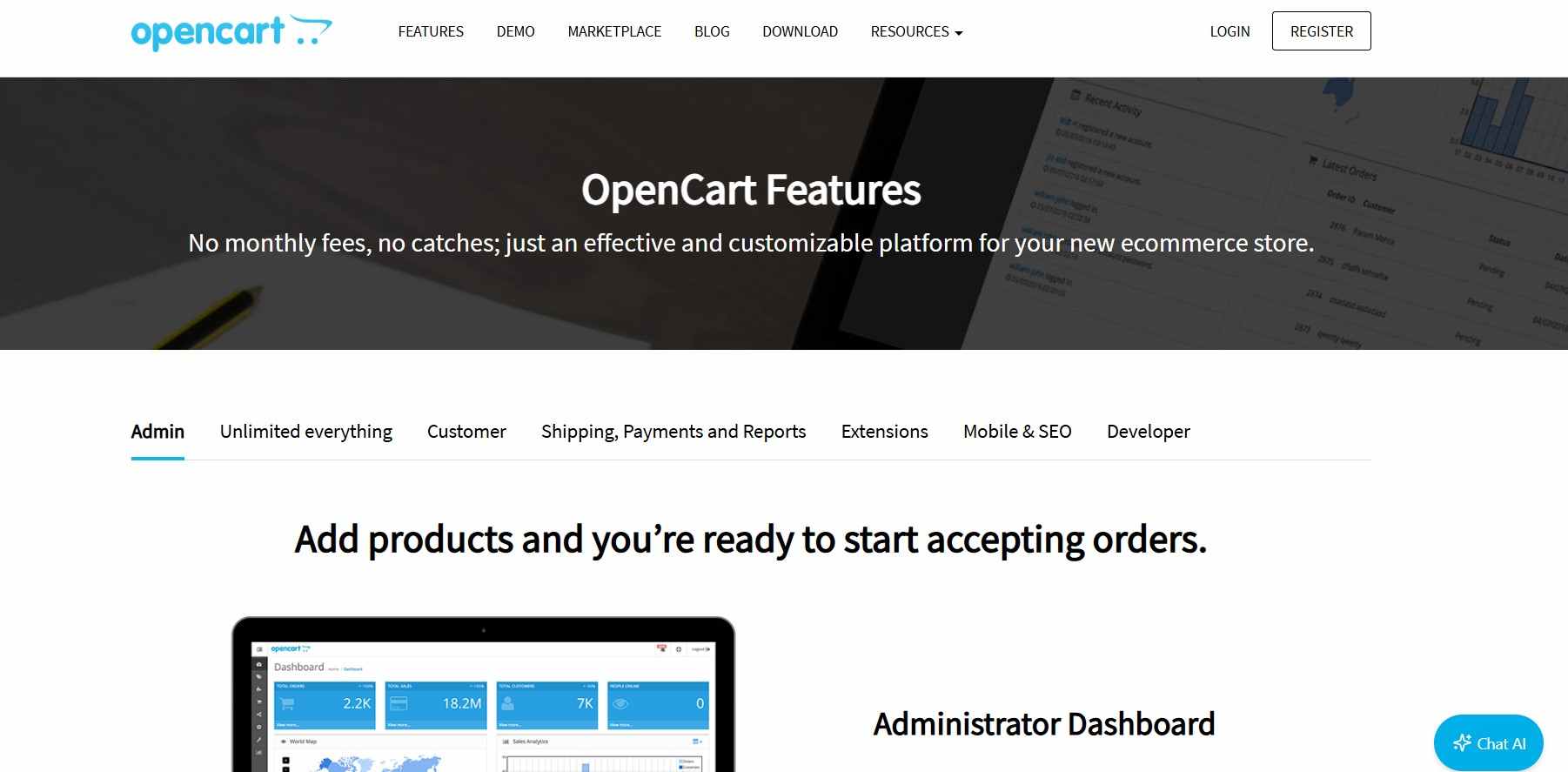
6. Opencart
[Source: Opencart]
The trustworthy open-source platform OpenCart provides a well-rounded approach to e-commerce. It allows you to personalize without becoming overly complicated. It’s a sweet spot for small and medium-sized enterprises looking for a safe and easy-to-use solution.
| Pros | Cons |
| User-friendly | Canonical issues |
| Cost-effective | Limited advanced SEO without plugins |
| Built-in SEO features | Not ideal for very large businesses |
| Secure |
Ideal For: Small to medium-sized enterprises looking for a balance between flexibility and usability are the ideal ones.
Advanced SEO Options:
- Sitemaps and customisable URLs
- Customization of meta titles and descriptions
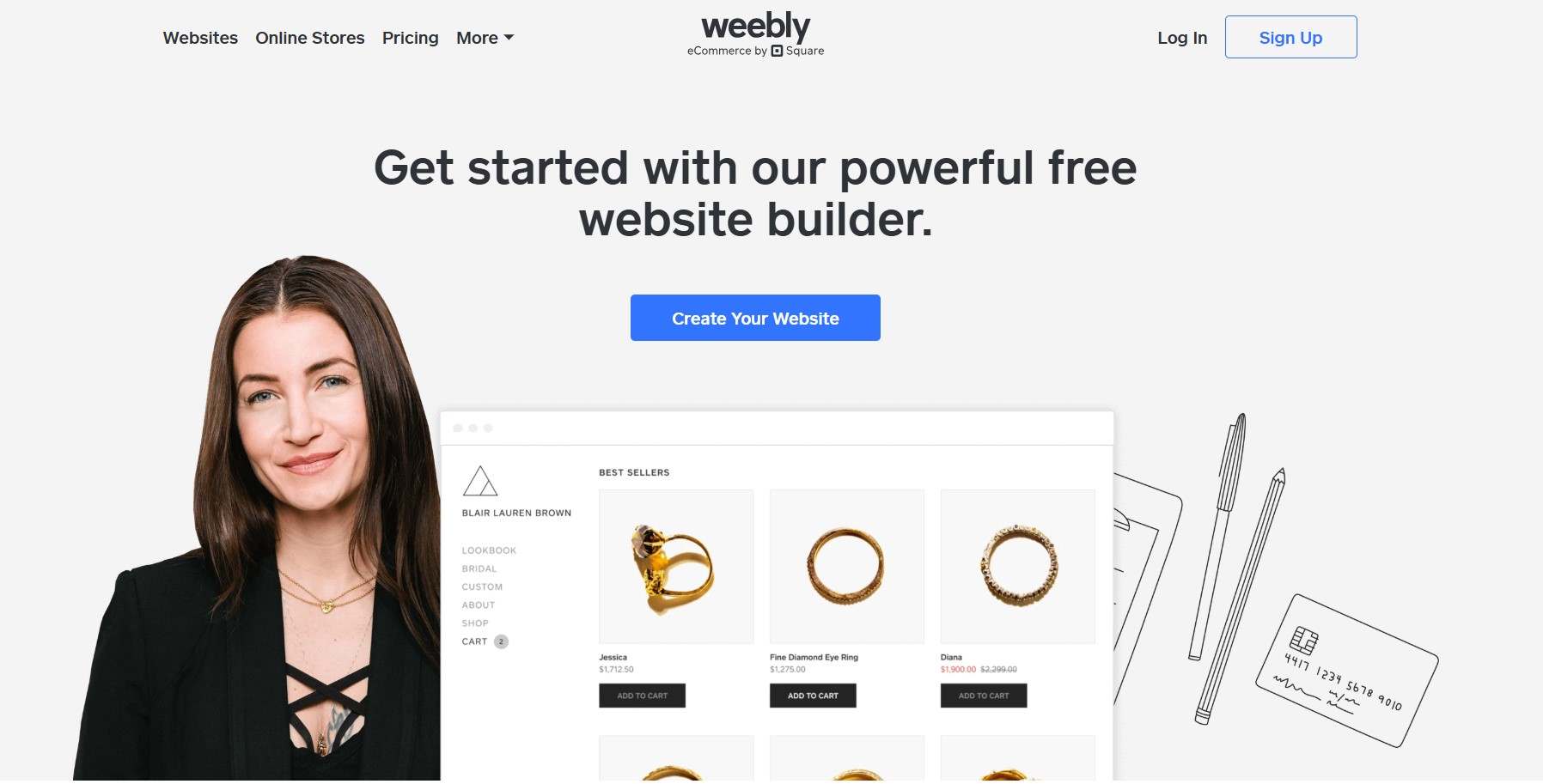
7. Weebly
[Source: Weebly]
A well-known website builder with e-commerce capabilities for online retailers is Weebly. Weebly makes it easy to design and manage your online store using drag-and-drop functionality. Weebly offers basic SEO tools to help your store show up in search results.
| Pros | Cons |
| Easy-to-use drag-and-drop interface | Limited advanced SEO features |
| Affordable pricing plans | Fewer customization options than some competitors |
| Built-in e-commerce features | May outgrow the platform as the business expands |
Ideal For: Small to medium-sized online retailers looking for an easy solution to create and maintain their website would find Weebly ideal.
Advanced SEO Options:
- Customizable URLs, meta descriptions, and alt text for images
- Header and sitemap for better search engine visibility
8. 10web
[Source: 10web]
The AI-powered wizard 10Web makes web design simply magical by automating the development and optimization of websites. It’s your go-to tool for increasing internet visibility and rankings with little work.
| Pros | Cons |
| AI-powered | Limited customization |
| User-friendly | Limited SEO tools |
Ideal For: 10Web is perfect for beginners and small enterprises who wish to swiftly launch with polished websites and use AI to streamline the design and optimization process.
Advanced SEO Solutions:
- 10Web offers artificial intelligence (AI) SEO solutions designed to automatically optimize websites for search engines
Relatable Read: 6 Trendy & Useful eCommerce Website Design Tips
9. SquareSpace
[Source: Squarespace]
Squarespace is a website-building platform that specializes in slick design and visual appeal. This makes it ideal for stylishly presenting your goods. It all comes down to creating a stunning first impression and using reliable SEO strategies to make sure your work of art is viewed.
| Pros | Cons |
| Ease of use | Limited customizability |
| Aesthetic templates | Not as powerful for advanced SEO |
| Solid SEO options |
Ideal For: For novices, small business owners, and people who value design and usability while creating their web presence, Squarespace is perfect.
Advanced SEO Solutions:
- Users may alter URLs, meta descriptions, and title tags
10. Prestashop
[Source: Prestashop]
The open-source platform Prestashop was created with SEO in mind. It provides a strong basis for companies looking to increase their online presence. It’s a machine that can be customized to increase website visitors.
| Pros | Cons |
| SEO-friendly | Needs technical knowledge |
| Customization and global support | Better for startups |
| Advanced SEO capabilities |
Better For: Startups and small businesses that require an e-commerce platform that is configurable, SEO-friendly, and at ease.
Advanced SEO Solutions:
- The alteration of title tags and other SEO-related features for product pages
- The creation of URLs
Tips to Maximize SEO on Any E-commerce Platform
- Invest in keyword research
- Optimize product pages (titles, descriptions, images)
- Leverage content marketing (blogs, guides, FAQs)
- Build internal links
- Use tools like Google Search Console, Ahrefs, and Semrush
Relatable Read: 7 Signs of a Good SEO Agency
Wrap Up!
So, if your online store is lost somewhere on page 5 of Google, it’s probably crying for help. And more importantly, for sales. Choosing the right e-commerce platform for SEO isn’t just a smart move. It’s survival of the fittest and fastest.
And if you are ready to stop playing hide-and-seek with your customers, let MonsterClaw take the wheel! Contact them today!
FAQs
What is the best SEO tool for e-commerce?
It often works best for e-commerce to use a mix of products designed to address various SEO facets. SEMrush and Ahrefs come highly recommended due to their extensive features, which include site audits, competitor analysis, and keyword research.
What platform is best for SEO?
The particular requirements of your website and your level of technical proficiency will determine which platform is “best” for SEO. WordPress.com for blogging. Due to their SEO-friendly features, Shopify, WooCommerce, and BigCommerce are all formidable competitors in the e-commerce space.
Is SEO worth it for e-commerce?
Yes, e-commerce companies can benefit greatly from SEO. It’s an essential tactic for raising awareness, generating organic traffic, and eventually increasing purchases.
How much does e-commerce SEO cost?
E-commerce SEO typically costs between $75 and $200 per hour.