


Your products can be amazing, but if shoppers can’t find them, sales stay stuck. That’s where the right SEO consultant comes in. But not every “SEO expert” knows e-commerce.
If you are wondering how to hire an e-commerce SEO consultant, start by asking these 8 questions before handing over your store, budget, or rankings.
What Does an Ecommerce SEO Consultant Do?
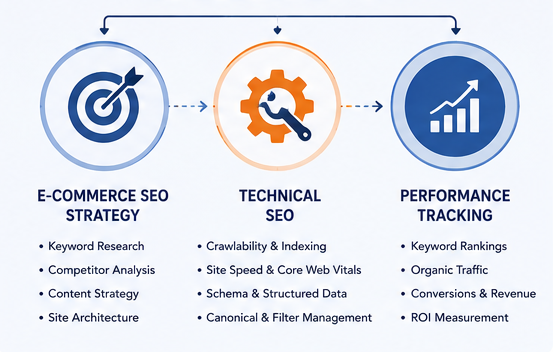
An e-commerce SEO consultant helps online retailers increase their search engine presence, resolve technical issues, and attract targeted, profitable visitors.
A professional e-commerce SEO consultant focuses on three areas: performance monitoring, technical execution, and strategy. Before hiring, it’s important to understand that most consultants prefer one area more than the others.
Ecommerce SEO Strategy
Researching keywords based on buying intent rather than merely search traffic is the first step in this process. A consultant assigns keywords to each stage of the funnel: transactional searches for product and category sites, commercial-investigation searches for comparison and “best of” pages, and informative searches for blog and guide content.
After that, they do competition analysis to identify coverage gaps, develop a content strategy around those gaps, and optimize the product and category sites that generate income rather than merely traffic.
Technical Ecommerce SEO
This is the point at which e-commerce SEO becomes truly complex, and many consultants exhibit their limitations. In order for listings to appear correctly in search results, a consultant must manage XML sitemaps that automatically update as inventory changes, handle crawlability and indexation issues at scale, correctly set up canonical tags across variant and filtered URLs, and implement structured data, including product, review, pricing, and availability schemas.
Site architecture is equally important. One of the most technical hurdles on any e-commerce site is faceted navigation, which includes filters for size, color, price, and brand. Without the right controls, every combination of filters can create a new URL, which increases your crawlable sites without adding any distinct value. Since phones now account for the majority of e-commerce traffic and an increasing portion of e-commerce income, page speed and core web vitals complete this, particularly on mobile.
Performance Tracking
Rankings are not the objective; rather, they are a leading indicator. Because a customer frequently finds a product through organic search and purchases it two weeks later through a different channel, a consultant worth hiring keeps track of organic traffic, keyword rankings, non-brand clicks in particular, organic conversions, revenue attributed to organic search, and assisted conversions throughout the buying journey.
A consultant is most likely a generalist if they are unable to communicate effectively in all three areas. That’s fine for some businesses with a simple, small catalog. It’s risky for a store with a large product range or a complex technical setup.
Relatable Read: SEO Audit Report Example And Templates
8 Questions to Ask Before Hiring an Ecommerce SEO Consultant
1. Have You Worked With Ecommerce Businesses Like Mine?
Experience with e-commerce is multifaceted. The crawl budget concerns of a marketplace with 500,000 listings or the international SEO challenges of a store selling in six currencies and four languages may not have been addressed by a consultant who optimized a 200-SKU direct-to-consumer brand.
Ask about:
- Industry experience – fashion, electronics, home goods, beauty, and so on
- Business size and monthly traffic volume
- Product catalog size
- Target markets, whether that’s a single country or several
- B2B versus B2C ecommerce, since the buying journeys differ
- Previous platforms – Shopify, Magento, WooCommerce, BigCommerce
What to look for: Specific examples with numbers attached. Traffic growth, ranking movement, revenue lift, timeframes. Not vague claims about “driving SEO success” or “boosting visibility.” If they can’t name a client’s industry, catalog size, or what they actually did on the project, keep asking. Vagueness at this stage usually means limited hands-on experience.
2. What Is Your Ecommerce SEO Strategy?
Instead of using a general SEO strategy taken from a blog article, ask them to explain how they would particularly approach your website. Technical SEO, keyword research, site architecture, product and category page optimization, content, internal linking, and how they would track their success are all covered in a good response.
Follow up with: “What would you prioritize during the first 90 days?”
Instead of using a copy-and-paste checklist, their response should address the real issues with your website. It’s a good indication that they understand what they’re looking at if they can quickly identify two or three potential problems after looking at your site for thirty seconds, such as sparse category descriptions, missing schema, or a slow product page template.
3. How Will You Find SEO Opportunities for My Store?
This question separates consultants who actually audit your site from consultants who run the same playbook on every client regardless of what’s actually wrong.
They should be pulling from:
- Search demand data for your specific product categories
- Your existing keyword rankings and where you’re losing ground
- Competitor keyword gaps – terms competitors rank for that you don’t
- Missing product or category coverage
- Search Console and analytics data
- Technical crawl issues surfaced through a site crawl
- Content gaps against top-ranking competitors
Important: Before offering suggestions, a customized procedure examines the real data on your website. A general checklist would be applicable to everyone and doesn’t require your website. It’s a red flag, not an asset, if a consultant can provide you with a thorough plan before you ever look at your Search Console data.
4. How Do You Handle Technical SEO for Ecommerce Sites?
Maybe the most crucial question on this list is this one. By using filters, product variations, and pagination, e-commerce websites can produce hundreds of thousands, even millions, of URLs. If you do this incorrectly, Google will waste crawl budget on irrelevant pages while your profitable product pages remain hidden or unindexed.
Ask specifically how they handle:
- Faceted navigation and filter URLs
- Duplicate product URLs, where the same product is reachable through multiple paths
- Canonical tags, and how they’re applied across variants
- Pagination on category pages
- Out-of-stock and discontinued products, including what happens to their URLs
- Product variants such as size and color
- Redirect strategy during migrations or replatforming
- Structured data implementation for products and reviews
- Crawl budget management on large catalogs
- Indexation issues, including pages Google is choosing not to index
Any store with filterable categories, which is the majority of them, will have a serious issue if their response is ambiguous or if they have never worked with faceted navigation.
Relatable Read: B2B Ecommerce SEO: Strategy That Actually Converts
5. How Will You Measure SEO Success?
Rankings alone don’t pay the bills. A consultant should be able to connect SEO work to business outcomes, and explain how they’ll prove that connection to you.
Ask them to walk through how they’d track:
- Organic clicks and impressions
- Keyword visibility over time, across your priority terms
- Non-brand traffic specifically, since brand traffic often grows regardless of SEO effort
- Product and category page traffic
- Conversion rate from organic visitors
- Revenue from organic search
- Average order value from organic visitors compared to other channels
- Return on SEO investment relative to what you’re paying them
Key point: A consultant may be optimizing for stats that appear nice in a report but don’t advance your business if they focus only on rankings and traffic without discussing conversions or income.
6. What Will You Report, and How Often?
Reporting expectations should be clear before you sign anything, not negotiated after the first confusing update lands in your inbox.
Ask:
- Is reporting monthly, biweekly, or weekly?
- Which KPIs are included, and are they the ones that matter to your business?
- What tools do they use – Google Search Console, GA4, third-party SEO platforms?
- Do reports include explanations and next steps, or just raw numbers with no context?
- Who joins strategy calls, and how often do they happen?
- How do they communicate setbacks or ranking drops when they happen?
When a consultant is confident in their work, they won’t cover it up with ambiguous reporting. They ought to feel at ease demonstrating to you what succeeded, what failed, and why, including the months when advancement was slower than anticipated.
7. How Do You Charge for Ecommerce SEO?
There are different pricing schemes, and none of them are intrinsically superior. Your needs, internal resources, and desired level of implementation assistance all play a role.
Common structures include:
- Hourly consulting
- Monthly retainer
- Project-based pricing for a defined scope
- An SEO audit followed by implementation work
- Ongoing strategy consulting with your team handling execution
What Should an Ecommerce SEO Contract Include?
Verify the contract’s scope of work, specified deliverables, reporting schedule, communication expectations, duration, cancellation terms, implementation responsibility, and any additional fees for work beyond the initial scope before signing.
The scope of work, market competition, and site size all have a significant impact on e-commerce SEO pricing. Since there isn’t a single “right” amount that works for all consultants, use quotes as a springboard for discussion rather than a set number that you compare to each consultant you speak with. Anyone who estimates a flat fee without first inquiring about your catalog size, current traffic, or technical health should be avoided because this usually indicates that the pricing wasn’t based on your actual website.
8. What Do You Need From My Team to Get Results?
This question surfaces whether both sides have realistic expectations going in, and it’s one a lot of businesses skip until it’s too late.
Ask whether they’ll need:
- Developer access to implement technical fixes
- CMS access to update on-page content
- Analytics and Search Console access
- Product data and content resources from your team
- Design support for new page templates
- Engineering time for larger technical fixes
- Sign-off from marketing or leadership before changes go live
Typically, SEO consulting refers to suggestions rather than execution. Ask up front if the consultant gives implementation support or if you’ll need to employ a developer separately to implement their advice, and whether your internal staff has the capacity to carry out technical fixes on their own.
Relatable Read: What is SEO Marketing and How Does It Work? (Complete Guide)
How to Evaluate an Ecommerce SEO Consultant’s Answers?
Once you’ve asked all eight questions, look for these signals in their responses.
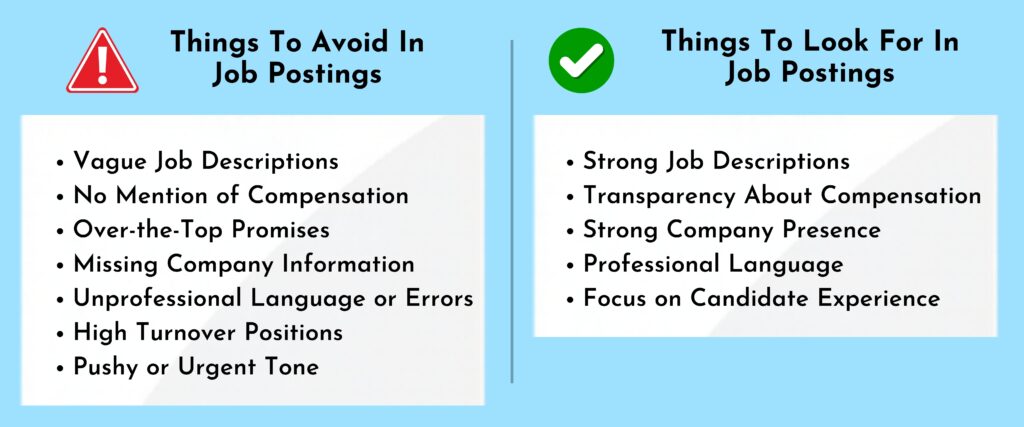
Good signs:
- Ecommerce-specific experience backed by real examples
- A clear, repeatable process they can explain simply
- KPIs tied to business outcomes, not just rankings
- Solid technical SEO knowledge, demonstrated through specifics
- Transparent communication, including about risk and uncertainty
- Realistic timelines that account for your site’s starting point
- Customized recommendations built around your actual site
- Clearly defined deliverables in writing
Warning signs:
- Guaranteed rankings or promises like “page one in 30 days”
- Heavy focus on vanity metrics such as raw impressions
- A one-size-fits-all strategy regardless of your site or industry
- Unclear or evasive answers about pricing
- Refusal to explain their methodology in plain terms
- A backlink-only strategy with no broader technical or content plan
A consultant is automatically disqualified if they promise rankings. Google’s algorithm is not controlled by anyone, and anyone who says otherwise is either ignorant or dishonest.
Ecommerce SEO Consultant vs. Ecommerce SEO Agency
| Factor | Consultant | Agency |
| Direct access | Often higher | May vary |
| Team size | Usually smaller | Larger |
| Range of services | More specialized | Often broader |
| Implementation resources | May require your team | Often available in-house |
| Cost structure | Often simpler | Varies by scope |
| Best fit | Strategy and expertise needs | Larger execution needs |
Neither option is universally better. A consultant makes sense when you need specialized strategy and already have an internal team that can implement recommendations. An agency makes sense when you need both strategy and execution under one roof, particularly if your internal marketing team is stretched thin already.
How Much Does an Ecommerce SEO Consultant Cost?
Pricing depends on several factors:
- Website size and number of products
- Number of target markets and languages
- Competitive landscape in your category
- Technical complexity of your platform and setup
- Scope of consulting – strategy only versus full-service including implementation
- Whether implementation work is included or billed separately
- Consultant’s experience level and track record
- Expected project duration
Treat any offer as a beginning point for a discussion rather than a set number you compare consistently across all consultants you speak with, as these aspects differ greatly between businesses. The scope of work offered by two consultants who quote the same monthly charge may differ significantly.
Relatable Read: How Much Does SEO Cost in 2026?
When Should You Hire an Ecommerce SEO Consultant?
A few common scenarios point to it being the right time:
- Organic traffic has plateaued, and internal efforts haven’t moved the needle
- Key product or category pages aren’t ranking despite reasonably good content
- The site recently went through a redesign or platform migration, and traffic dropped
- Google isn’t indexing pages correctly, or is indexing the wrong ones
- You’re expanding into new markets or launching new product lines
- Your internal team lacks technical SEO expertise, especially around crawl budget and indexation
- Organic traffic is growing, but it isn’t translating into revenue
Ecommerce SEO Consultant Hiring Checklist
Use this as a quick scan before you commit:
- Relevant ecommerce experience in your industry or at a similar catalog size
- Familiar with your specific ecommerce platform
- Can perform a real, site-specific technical SEO audit
- Has a documented strategy customized to your site
- Defines measurable KPIs tied to revenue, not just rankings
- Explains reporting clearly and upfront
- Provides transparent, itemized pricing
- Sets realistic timelines and manages expectations honestly
- Clarifies who handles implementation work
- Can provide references or case studies on request
Relatable Read: How to Choose an SEO Company: 11 Questions to Ask Before Signing
Final Thoughts
Hiring an ecommerce SEO consultant comes down to relevant experience, a clear and explainable methodology, transparent communication, and measurement tied to real business outcomes, not just rankings on a report.
Interview more than one candidate, and ask each of them the same eight questions. The differences in how they answer will tell you more about who they are than any pitch deck ever could.
If you are looking for a partner that understands the complexities of ecommerce growth, MonsterClaw can help you turn SEO into a scalable acquisition channel.
Ready to improve your store’s organic visibility? Use these eight questions when interviewing e-commerce SEO consultants.
Frequently Asked Questions (FAQs)
Look for direct e-commerce experience, a clear and understandable process, excellent technical SEO knowledge, particularly concerning faceted navigation and crawl budget management, and KPIs linked to income rather than just rankings.
Costs can range from a few thousand dollars per month for smaller retailers to much more for large, multi-market catalogs with more complex technical requirements, depending on factors including catalog size, market rivalry, and scope of work.
It depends on whether you require a consultant to provide specialized strategy alone or an agency to provide strategy along with full implementation. Make the decision based on the capacity and expertise of your internal staff.
Yes, using a mix of technical corrections, on-page optimization, content enhancements, and internal linking; however, the speed and scope of results will vary depending on your competition and the initial state of your website.
No. Nobody controls Google’s algorithm, and ranking guarantees are a red flag rather than a selling point. A trustworthy consultant will talk about probability and process, not guarantees.