


Affiliate marketing can seem complicated when you are just starting. The idea is simple: promote products or services, refer customers to a business, and earn a commission on successful referrals.
However, getting started involves more than sharing links. From choosing the right affiliate programs to understanding commission structures, tracking performance, and building audience trust, beginners have plenty of questions.
This guide answers 17 essential affiliate marketing FAQs to help you understand how affiliate marketing works, avoid common mistakes, and build a solid foundation for long-term success.
17 Affiliate Marketing FAQs for Beginners

1. What is Affiliate Marketing?
Affiliate marketing is a way to earn money by promoting other companies’ products or services. When someone buys a product or takes a specific action through your referral link, you earn commissions.
Think of it like a referral. You tell a friend about a great coffee maker. They buy it. The seller thanks you with a cut. Affiliate marketing does the same thing online, at scale, with tracked links.
The business concept is basic. Only outcomes are paid for by the merchant. Only when you deliver them do you get paid. Customer service, returns, and shipping are not your responsibility. That is what the trader does. Finding the appropriate product for the right individual is your job.
That’s why providing links alone shouldn’t earn you a salary. Earning the click requires effort.
2. How Does Affiliate Marketing Work?
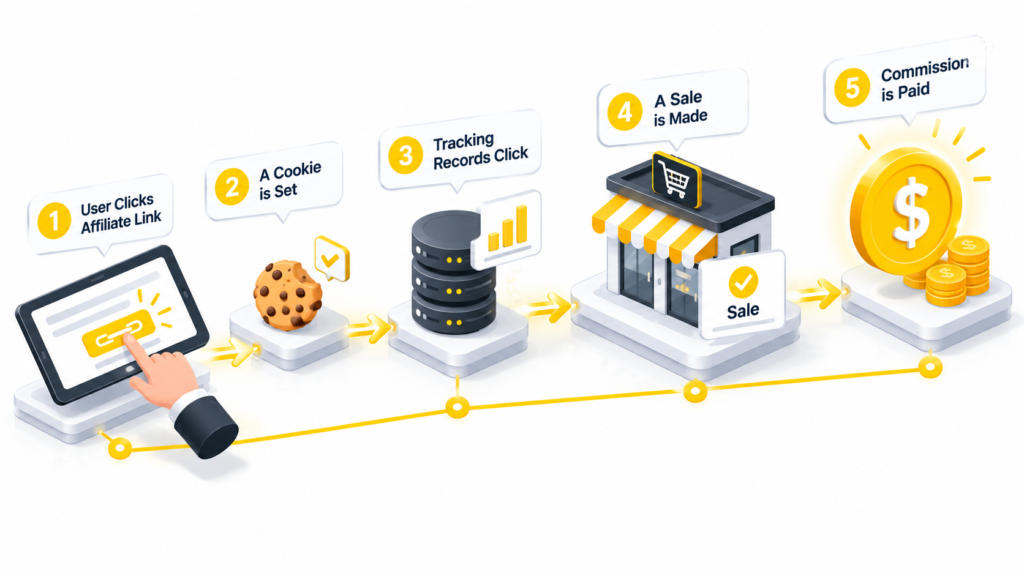
The process has five steps:
- You join an affiliate program.
- You get a unique affiliate link.
- You place that link in your content.
- A reader clicks it, and a cookie is stored in their browser.
- If they buy within the cookie window, you earn a commission.
Cookie windows vary. Amazon lasts 24 hours. Other programs offer 30, 60, or 90 days. Some browsers limit cookies, so many networks now add server-side tracking too.
Here’s a simple example. With a 30-day cookie, a program pays 10% on each sale. On Monday, a reader clicks on your link. On Friday, they purchase a $100 item. You get ten dollars. You don’t get paid if they buy forty days later.
Before promoting a program, always review its cookie length and attribution guidelines.
3. Is Affiliate Marketing Legitimate?
Yes. Major retailers, software companies, and brands run affiliate programs. This digital marketing channel is cost-effective and low-cost to set up. Agencies like ours manage them every day.
Scams exist, though. Watch for these red flags:
- You must pay a large fee to join.
- The program promises fast, guaranteed income.
- Earnings depend mostly on recruiting other people, not selling products.
A real program reimburses you for actual sales of actual goods. It publishes unambiguous terms. Additionally, it anticipates that you will reveal your connection to the vendor.
Do a quick check before you sign up. Go over the terms. Look for other affiliates’ reviews. Seek out a legitimate business address or contact page. Check to see if the program specifies its payout timeline. Leave if the pitch seems too nice.
4. Can Beginners Start Affiliate Marketing With No Experience?
Yes. Most affiliates start from zero.
You’ll need to know a few skills along the way:
- Writing or video basics
- How search engines work
- How to research what people want to buy
- Simple tracking, like reading click and sales reports
You don’t have to become an expert at them initially. Learn by doing with a single channel. You can use a specialty social media account, a YouTube channel, or a blog. You’ll need to stick with the format you like, so start with that.
Your initial work won’t be the best. That’s typical. Consider your early work as practice rather than a judgment.
5. How Much Money Can You Make From Affiliate Marketing?
It depends, and nobody can promise you a number.
Four factors drive earnings:
- Traffic: how many people see your content
- Niche: some topics pay more than others
- Commission rates: a few percent on one product, much higher on software
- Conversion rate: how many visitors actually buy
Here’s an illustration, not a benchmark. Say your page gets 2,000 visitors a month. Five percent click your link. That’s 100 clicks. Two percent of those buy. That’s two sales. At a $40 commission, you earn $80.
Double the traffic now, or choose a higher-paying program. The math is changing quickly. As a result, growth comes from both traffic and trust.
A lot of affiliates make very little money. Some get full-time salaries. Time, material quality, and audience trust are typically the main causes of the discrepancy. Avoid anyone who shows income screenshots without explaining the work involved.
6. Is Affiliate Marketing Free to Start?
You can start for free. You’ll likely spend some money as you grow.
Free options include social media accounts, a YouTube channel, or a free blogging platform. Most affiliate programs don’t charge to join.
Paid extras that help:
- A domain name, often around $10 to $20 a year
- Web hosting
- An email marketing tool
- SEO or keyword research tools
- Equipment or software for video and design
Start with the basics. Invest in a paid tool only when it solves a specific problem. If you’re not using it, it’s just another monthly expense.
7. How Do I Get Started With Affiliate Marketing?
Follow this order:
- Choose a niche: Pick a topic you can discuss for months.
- Pick a platform: A website, YouTube, or social media.
- Find affiliate programs: Look for products your audience would actually buy.
- Create helpful content: Reviews, comparisons, tutorials.
- Promote your links: Place them where they help readers decide.
Don’t wait for ideal circumstances. After publishing your initial work, make improvements. You learn more quickly from actual feedback from real readers than from any course.
Publishing five helpful articles in your first month is an excellent starting point. Next, observe what attracts traffic.
Relatable Read: Affiliate Outreach Email Templates That Actually Get Replies
8. How Do I Choose the Best Affiliate Marketing Niche?
Judge each niche on four points:
- Demand: Do people search for it and buy it?
- Competition: Can a newcomer realistically rank?
- Your expertise: Do you know the topic or enjoy learning it?
- Products: Are there good affiliate programs to join?
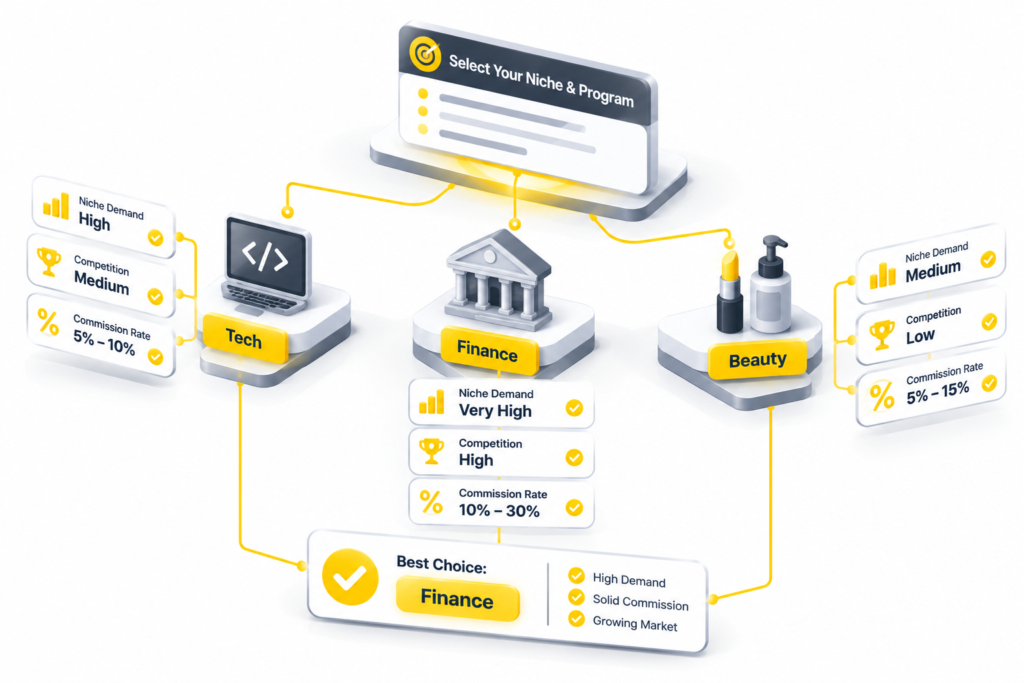
Technology, personal finance, fitness, and beauty are popular niches. They face fierce competition as well. For novices, a narrower angle is frequently more effective. It’s simpler to win “budget laptops for students” than “technology.”
Take a brief test. In 10 minutes, can you come up with twenty ideas for articles in your niche? Choose another one if you are unable to. Don’t pursue the highest commission by yourself. If you can’t maintain a dull niche, it will stagnate.
9. Where Can I Find Affiliate Marketing Programs?
You have two main routes.
- Direct programs run by the merchant itself. You apply for the program on the brand’s page. Many software companies work this way.
- Affiliate networks host many merchants in one place. You sign up once and apply to multiple programs.
Amazon Associates, Awin, CJ, and Impact.com are well-known choices. Each has its own tracking system, compensation terms, and approval requirements.
Before applying, read the terms. Verify payment levels, cookie durations, and commission rates. A program with a high rate but a short duration may pay less than you anticipate.
Also look at the product itself as well. Would you suggest it to a friend? If not, omit it. A single commission doesn’t survive as long as your reputation.
Relatable Read: Affiliate Marketing ROI: How to Measure What’s Actually Working
10. Do I Need a Website to Do Affiliate Marketing?
No. But a website helps.
A site you own gives you long-term search traffic. You control the content, the design, and the audience relationship. Good articles can bring visitors for years.
Email newsletters, social networking, and YouTube are some alternatives. They are capable of doing good work. They have limitations as well. Certain programs limit where you may put links, and platforms alter their policies. For instance, Amazon restricts the use of its links, including in emails.
Always review the regulations on both the platform and the program. That risk is decreased by a website. Additionally, it provides you with a location to send individuals from all other channels.
11. How Do I Get Traffic to My Affiliate Links?
Start with the channels that fit your skills:
- SEO: Target searches your buyers actually make.
- Helpful blog posts: Answer one clear question per post.
- Social media: Share short tips that point to deeper content.
- Video: Show the product in use.
- Email newsletters: Build an audience you own.
- Online communities: Answer questions without spamming links.
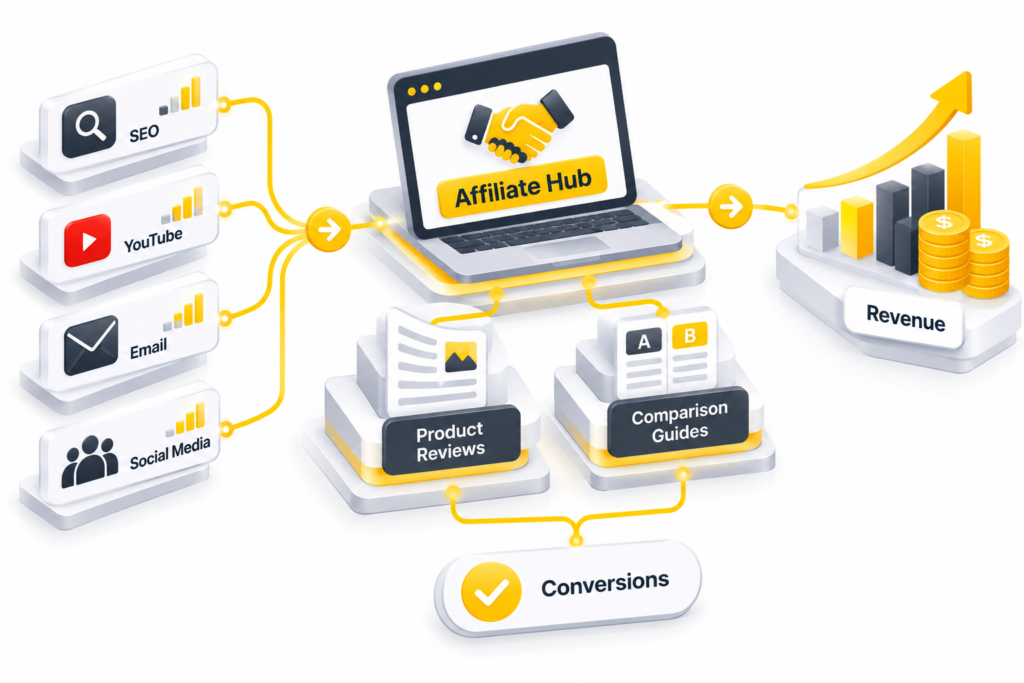
Quality beats quantity. Ten customers who are prepared to make a purchase are worth more than a thousand unintentional clicks. Aim for the appropriate audience rather than merely clicks.
First, choose one primary channel. When the first goes well, add a second. One classic trap is to spread thin.
12. What Are the Best Affiliate Marketing Strategies for Beginners?
Focus on content that helps people decide:
- Product comparisons: “X vs. Y” posts
- Reviews: honest, with pros and cons
- Tutorials: how to use a product to solve a problem
- Buying guides: a shortlist for a specific need
- Problem-solving content: answers to “how do I fix…” searches
Why is this effective? Trust. Readers are more likely to believe your recommendations when you offer practical, well-rounded guidance. Clicks are the result of trust. Commissions are earned from clicks. Conversely, pushy sales copy has the opposite effect.
When you can, use the product yourself. Add your own images, remarks, and errors. You stand out from pages that only restate a specification sheet with first-hand information.
13. How Do Affiliate Marketers Get Paid?
Most Affiliate marketers are paid from leads or successful conversions. It’s a performance-based marketing channel.
Programs pay in three common ways:
- Pay-per-sale: you earn when a customer buys. This is the most common model.
- Pay-per-lead: you earn when someone signs up, requests a quote, or starts a trial.
- Pay-per-click: you earn for traffic sent, whether or not anyone buys. It’s less common.
The majority of programs have a minimum payout threshold. Before you get paid, you have to get there. Usually, payments are made on a monthly basis. Checks, PayPal, and bank transfers are common methods.
In order to accommodate returns, many programs additionally retain commissions for a period of time. The commission might be refunded if a buyer returns the item. First, go over the terms of payment. Timing surprises are common.
14. How Long Does It Take to Make Money From Affiliate Marketing?
Longer than most people hope.
It may take several months to see consistent traffic if you depend on SEO. Finding, indexing, and trusting new content takes time for search engines. Although they are expensive and require expertise, paid advertisements might yield quicker results.
Your timeline depends on:
- Niche choice
- Content quality
- Competition
- How often you publish
- Your consistency
Set small goals. An indexed page could be your first victory. Next, your initial 100 visitors. Next, you click on an affiliate link for the first time. Next, your initial sale. Every stage demonstrates the system’s effectiveness.
Affiliate success doesn’t happen overnight, and anyone promising quick results is simply exploiting people’s expectations. Prepare for the long game. Keep publishing valuable content, monitor what works, and continuously improve your top-performing pages.
15. What Are the Most Common Affiliate Marketing Mistakes Beginners Make?
Avoid these:
- Promoting irrelevant products: Your audience stops trusting you.
- Choosing a niche only for high commissions: You’ll burn out.
- Ignoring SEO: Great content nobody finds earns nothing.
- Publishing thin, low-quality content: Search engines and readers both notice.
- Skipping disclosures: It’s a legal and trust problem.
- Quitting too early: Many people stop just before results show.
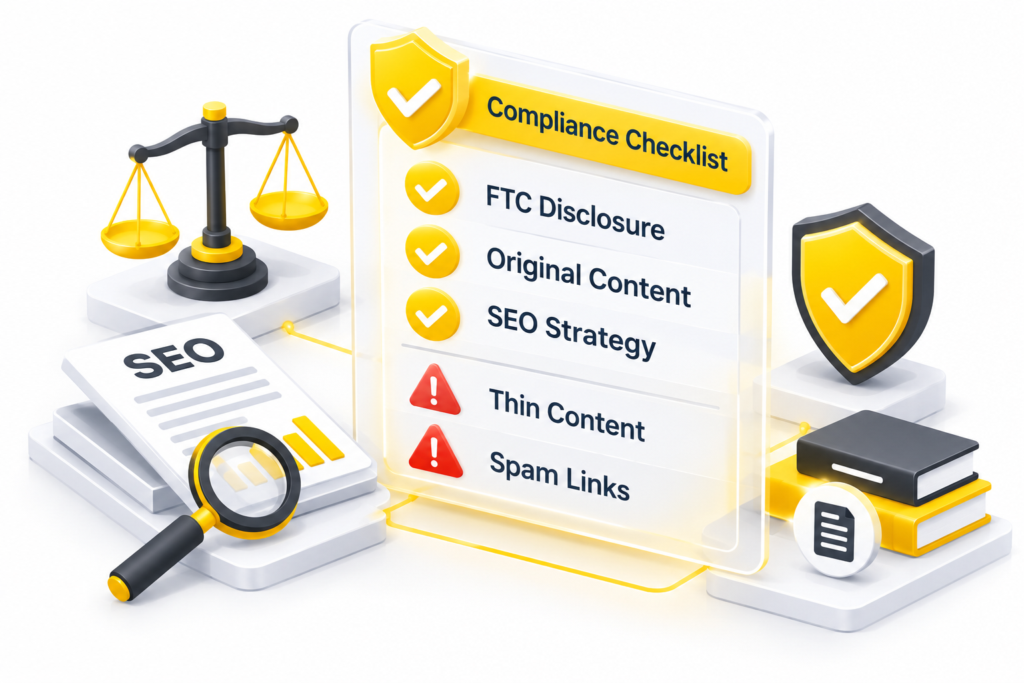
Fix one mistake at a time. You don’t need to be perfect. You need to keep improving. Review your content every few months and ask a blunt question: would I trust this page?
16. Do I Need to Disclose Affiliate Links?
Yes. Disclose clearly every time.
The Federal Trade Commission in the United States requires you to disclose to readers any income you receive from a recommendation. Check the legislation where you and your audience reside, as other nations have comparable regulations.
Platforms and affiliate programs frequently impose additional criteria. For example, Amazon demands a certain declaration from its Associates.
Put your disclaimer in a visible location, close to the link and before readers click. It is insufficient to have a line buried in the footer. Simple language is more effective. As an illustration, “I may receive a commission if you buy through my links, at no extra cost to you.”
Additionally, search engines request it. Google advises adding the rel=”sponsored” element to paid or affiliate links.
Being honest doesn’t cost you anything. It fosters trust.
17. Is Affiliate Marketing Still Worth It for Beginners?
For many people, yes. It has real benefits:
- Low startup costs
- No inventory or customer support
- Flexible, content-based work
- Income that can grow as your content ages
It has actual difficulties as well. There is fierce competition. Search results are constantly evolving, with AI-generated responses now ranking higher than many other results. Unreliable recommendations are easily recognized by audiences. And before you see results, you have to work consistently, often for months.
One characteristic is often shared by the affiliates who endure. Instead of treating it as a side gig, they handle it like a legitimate business. It’s still a good option if you appreciate producing helpful information and have patience.
Relatable Read: High-Ticket Affiliate Marketing: 20 Programs to Try in 2026
Tips for Beginners to Succeed in Affiliate Marketing
Keep these six habits close:
- Choose a focused niche: Understand your audience, what they search for, what problems they face, and which products they want to buy.
- Promote relevant products: Recommend products that align with your audience’s needs and that you genuinely believe in. Poor recommendations can damage the trust you have built over time.
- Create original content: Answer real search queries as a first-hand user of the product, with practical examples and honest opinions that add value.
- Apply SEO best practices: Write clear titles, use descriptive headings, add relevant internal links, improve page speed, and update older content when information changes.
- Track performance: Monitor clicks, conversions, and affiliate commissions. Improve underperforming pages and focus on content that generates results.
- Build trust through transparency: Disclose affiliate relationships clearly and explain each product’s genuine strengths and limitations. Readers are more likely to return to sources they trust.
Final Notes on Affiliate Marketing FAQs
Affiliate marketing rewards the people who help others make good buying decisions. It doesn’t reward shortcuts. You’ve now seen how it works, how it pays, and where beginners slip.
Here’s what to take away. Start small. Choose a niche you can stick with. Write for your reader first and search engines second. Disclose your links. Give it time. Learn from every page you publish, even the ones that flop.
If you do this well, the payoff goes beyond commissions. You build an audience, a skill set, and an asset that can keep working for you.
For most novices, the first post isn’t the difficult part. It’s developing an expanding strategy that includes appearing in AI-driven responses, gaining trust, and ranking in search. MonsterClaw can help with that.
As a performance and affiliate marketing company, we assist publishers and businesses in integrating SEO, AEO, and GEO into a single strategy that generates quantifiable income from content. We are the team to contact if you would prefer to build on a tried-and-true approach rather than speculate.
Are you prepared to turn your first affiliate concept into a viable strategy? Get in touch with MonsterClaw right now.
Frequently Asked Questions (FAQs)
Choose a niche you are familiar with, sign up for one or two affiliate programs, and use blog entries, videos, or social media posts to advertize their items. Learn what converts, start small, and then scale.
Earnings vary greatly: seasoned affiliate marketers can make hundreds of dollars a month or more, while the majority of novices make next to nothing in the initial months. Niche, traffic quality, and how well you match offerings to your audience all affect the outcome.
No. You can promote through YouTube, social media, newsletters, or paid ads. A website still helps because you own the traffic and can rank in search over time.
Yes, if you build trust and real expertise. Brands keep shifting budgets to performance channels, but thin, generic content gets filtered out by search engines and AI answers, so quality now matters more than volume.