



Think SEO is boring? Tell that to the startup that went from invisible to viral without spending a dime. Your competitors may have budgets, but you’ve got brains and SEO.
Entering the digital space as a new company is similar to arriving at a marathon after everyone else has already begun to run.
However, here’s the twist. With smart SEO for startups, you don’t need to sprint; you just need to play smarter. Think of it as your growth hack that helps you rank quickly, attract your ideal customers, and outshine your competitors.
Whether you are bootstrapped or backed by investors, mastering SEO for startups is how you turn your brand from “just launched” to “top-ranked.”
Relatable Read: The Ultimate SaaS SEO Guide
When Should a Startup Actually Start SEO?
Start SEO the moment you have a product-market fit signal, not the moment you have funding. That’s the honest answer, and it’s different from what most agencies tell you.
Here’s why timing matters this much. SEO takes 4 to 9 months to compound into meaningful traffic, even when it’s executed well. If you start SEO before you know who your customer is, you’ll spend those months ranking for the wrong keywords, writing for the wrong reader, and building topical authority in a category you’ll pivot away from in Q3.
I’ve seen this exact mistake twice this year. A pre-seed client came to us wanting to “own” a broad keyword category before they’d validated their positioning. We told them to wait. Three months later, their positioning shifted entirely, and every page we’d have built would have needed a rewrite. The founders who wait until they can describe their customer in one sentence, without hedging, are the ones whose SEO investment actually compounds instead of resetting.
That said, don’t wait for revenue. Wait for clarity. A pre-revenue startup with a validated ideal customer profile is ready. A funded startup still testing three different personas is not, no matter how big the check was.
Why Does SEO Matter for Startups?
SEO matters for startups because it’s the only channel that gets cheaper per lead the longer you run it. Paid ads get more expensive every quarter as the auction gets more competitive. SEO gets less expensive every quarter as your content library compounds and your domain earns trust.
The data backs this up directly. Organic search leads close at 14.6%, compared to 1.7% for outbound leads, according to Search Engine Journal’s analysis of inbound versus outbound performance. That’s not a marginal difference. That’s an 8x close rate, and it comes from intent, not tactics. Someone who searched for your solution is already halfway to a decision. Someone on a cold list is not.
Consumer behavior data. Every search a prospect runs tells you what they actually want, in their own words, before you’ve spent a dollar to ask them. That’s market research you don’t have to pay for separately.
Compounding, not renting. An evergreen guide you publish today can still be pulling in qualified leads three years from now. A paid ad stops the moment the budget does. SEO is the rare startup investment where month 24 is cheaper per result than month 1.
Trust that paid can’t buy. Ranking organically signals to a skeptical buyer that Google, not just your ad budget, thinks you’re credible. That trust transfers to your paid campaigns too. Higher organic visibility measurably lifts the click-through rate on your paid ads running alongside it.
Related Read: Killer SEO Strategies for E-commerce Sites
How SEO Drives Sustainable, Long-Term Growth
SEO offers a basis for long-term, sustainable success by consistently
- Generating leads and traffic
- Adjusting to market shifts
- Establishing brand authority
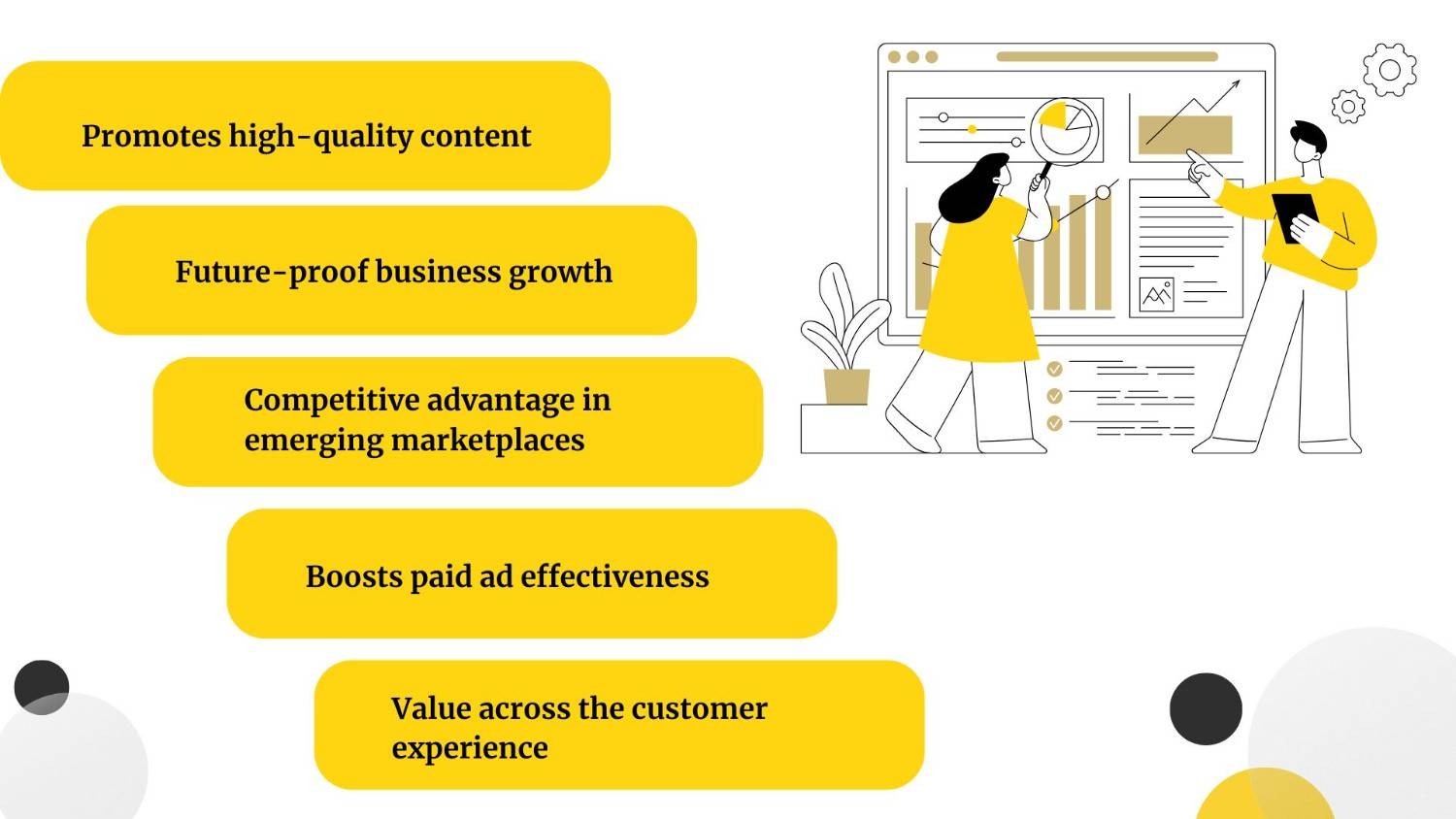
Promotes high-quality content: Startups need to produce useful, high-quality content to rank well. The content should answer consumer queries and pain areas and establish the brand as a reliable source.
Higher ranks and more reputation result from Google’s preference for “people-first content” that provides genuine value.
Future-proof business growth: SEO acts as an investment. It compounds over time, produces traffic, and leads long after the content is released, in contrast to sponsored ads that stop producing results once the budget runs out.
For instance, an evergreen blog post can draw in new clients for years without requiring further advertising expenditures.
Competitive advantage in emerging marketplaces: Before marketplaces become saturated, SEO helps firms access new, less competitive areas
- Getting awareness
- Establishing authority
They can take advantage of opportunities by focusing on specialized keywords.
Boosts paid ad effectiveness: SEO and paid advertising can work in tandem. It’s a high organic position that raises the possibility that consumers would trust a company when they see its paid advertisements. The need for paid advertisements may decline as organic traffic increases.
And existing ads may perform better as a result of more trust.
Value across the customer experience: SEO delivers value at every stage of the customer experience, from initial awareness to post-purchase assistance. SEO facilitates the development of enduring relationships by presenting brands to consumers who are considering their options.
Relatable Read: eCommerce SEO Case Study: $30k to $700k Sales Journey
SEO vs Paid Ads for an Early-Stage Startup
| Aspect | SEO | Paid Ads |
| Cost | Includes one-time expenditures for content and optimization, but excludes fees for organic traffic per click. | Has recurring expenses for traffic and requires a budget to cover clicks or impressions. |
| Longevity | Sustainable: even if efforts are reduced, rankings and outcomes can endure over time. | Short-lived; as soon as you stop paying, traffic stops. |
| Placement | Organic listing, which appears below paid ads. | Sponsored listings that appear at the top of search results. |
| Trust & Credibility | Higher | Lower |
| Best For | Building authority, sustainable growth, and long-term brand development. | Fast promotions, exclusive deals, and instant lead generation. |
The startups I’ve seen make the costliest mistake are the ones that treat these as competing budgets instead of a relay. Run paid ads to generate revenue and test which messaging actually converts, while your SEO content builds in the background. By month 6, the message-tested paid copy becomes your best on-page copy, and the SEO channel takes over as the cheaper source of the same leads.
Phase 1: SEO Foundations for Startups
Get these three pieces right before you scale content production. Everything downstream- authority building, link velocity, funnel-stage depth- sits on top of this foundation, and skipping it is the single most common reason a startup’s SEO spend produces nothing for the first year.
Keyword Research for Startups: Fish Where the Competition Isn’t
Target the keywords a well-funded competitor considers too small to bother with. That’s your entire keyword strategy in one sentence, and it’s the single highest-leverage decision you’ll make.
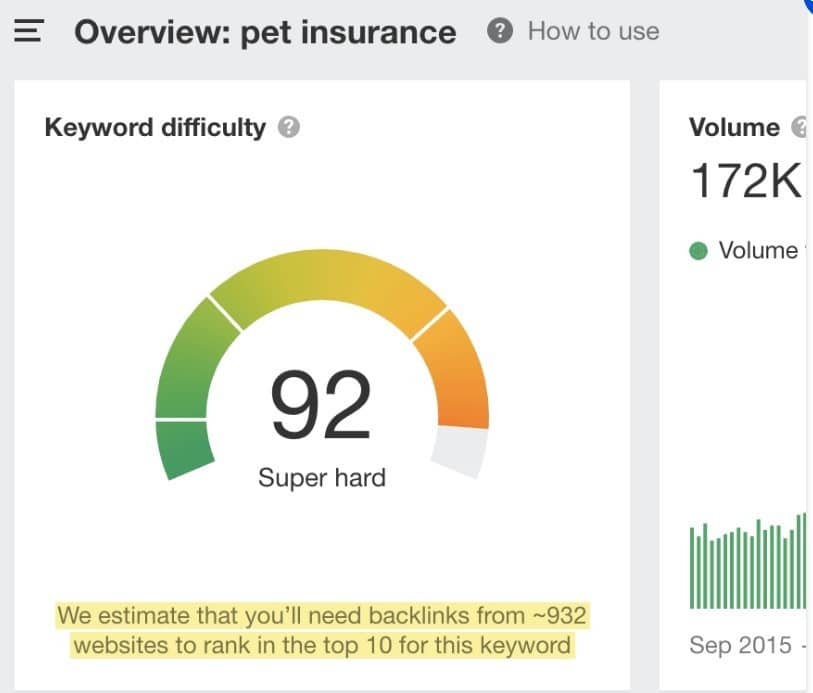
A Series C competitor with a 20-person content team will chase the head terms with 10,000+ monthly searches, because their volume math justifies it. You can’t win those in year one, and trying will waste your entire budget. What you can win are the long-tail, high-intent terms that competitors’ content teams consider not worth a dedicated page. Those searchers are further along, more specific about their problem, and more likely to convert, because a specific question signals a real, immediate need.
Run this in practice: pull every keyword variation around your core offering, sort by difficulty, and build your first 90 days of content entirely from the terms under a difficulty score of 10. Ignore volume as your primary filter early on. A term with 40 monthly searches and a buyer clearly ready to act beats a term with 4,000 monthly searches and no clear intent, every time, for a startup with limited publishing capacity.
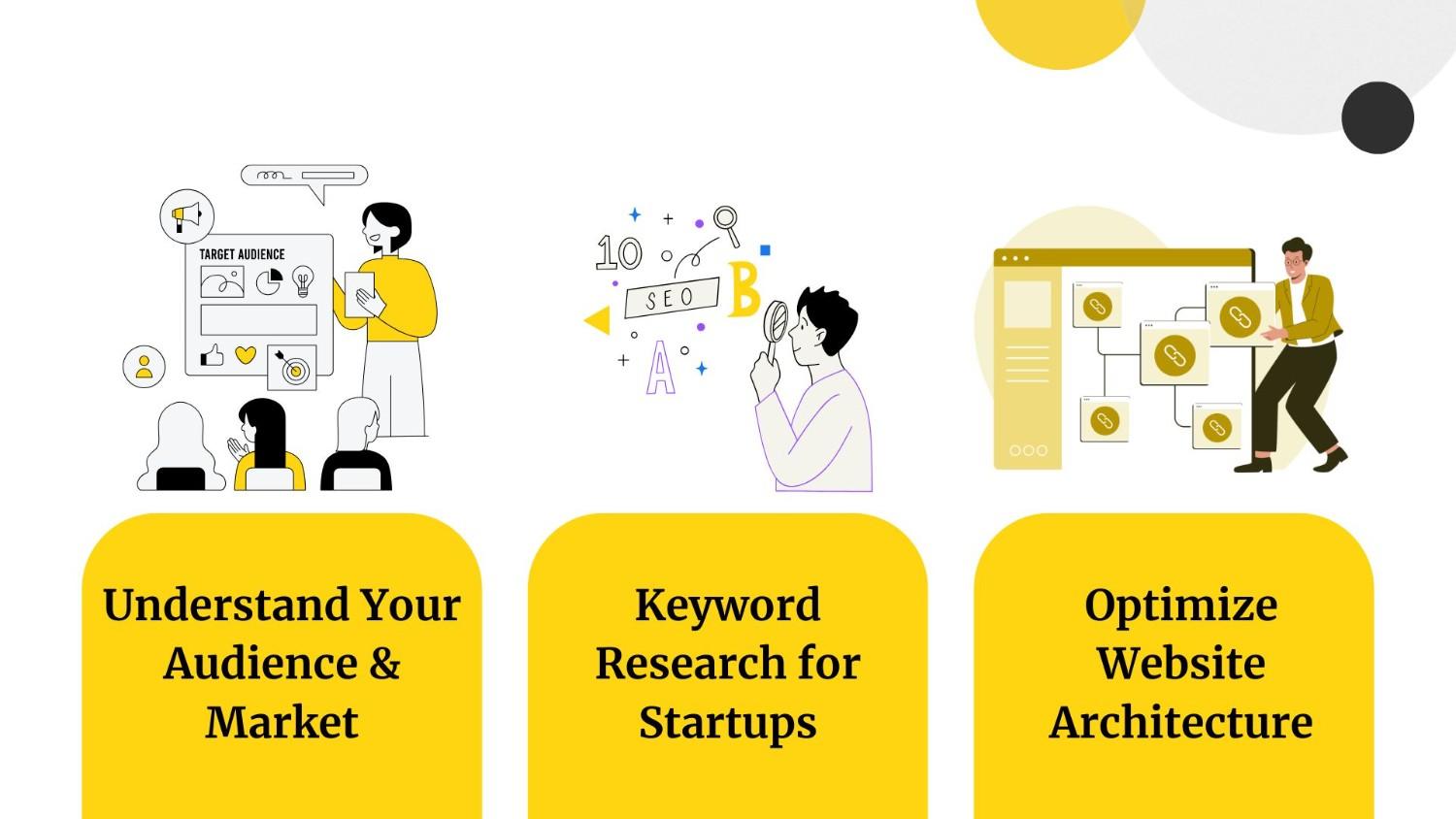
Understand Your Audience & Market
Determine target consumers and search intent: You can analyze audience search behavior to determine what your customers actually want and the intent behind their searches. Search patterns disclose the subjects and issues that are important to your customers.
Use tools like Ahrefs, Semrush, or Google Trends: Ahrefs and Semrush are standard keyword and competitive-research tools. They provide complementary strengths for backlinks, keyword metrics, and more comprehensive SEO/PPC data. While Google Trends surfaces real-time and historical interest that helps you spot rising topics and regional demand.
Optimize Website Architecture
SEO-optimized website architecture (home → category → content): A clear, logical structure makes it easier for users and search engines to locate material.
Mobile-first and fast-loading pages: Mobile-first design is a baseline expectation for search performance and usability. Therefore, prioritize mobile responsiveness and page speed. This is because modern SEO and user experience require it.
Clean URLs, internal linking, and crawlability: Your website will be easier to crawl and understand with simple, descriptive URLs and an effective internal linking strategy. As a result, it will improve indexation and boost ranks.
On-Page SEO: Fast Wins for Early Growth
Optimize what you control before you chase what you don’t. Backlinks take months to earn. On-page fixes take an afternoon and start moving the needle within weeks.
Titles and meta descriptions decide whether someone clicks your result over the one above or below it. Match search intent, lead with the clearest benefit, and keep the primary keyword in the URL so what the searcher expects matches what they land on. When it makes sense, update titles and meta descriptions on low-CTR pages using the highest-impression keywords from Search Console, which often produces a rapid lift with almost no additional work.
Schema markup doesn’t change your rankings directly, but it changes how your listing looks in the results, and a rich result with a rating or FAQ dropdown pulls more clicks than a plain blue link sitting right next to it. Add schema to your highest-traffic pages first, then verify eligibility with Google’s Rich Results test.
Keyword clustering lets one strong page own an entire topic, instead of spreading thin pages across a dozen near-duplicate subjects. This concentrates your ranking signal instead of splitting it, and it prevents your own pages from competing against each other in the same SERP.
Relatable Read: Guaranteed SEO Services: Why You Should Never Believe This Scam
Optimize Titles, Meta Descriptions, and Headers
Titles and meta descriptions have a significant impact on click-through rates and how your pages appear in search results. So make sure they match search intent and emphasize the primary advantage while staying within the ideal length constraints.
Use the same primary phrase in the URL to ensure that user expectations and page content are consistent.
When it makes sense, update the titles and meta descriptions of low-CTR pages using the highest-impression keywords from Search Console. This often results in rapid lifts.
Add Schema Markup for Better SERP Visibility
Structured data helps search engines read and interpret pages more properly. In addition, to enabling rich snippets like ratings, price, or FAQs that increase exposure and CTR.
You can get fast wins by adding schema to already-existing pages without altering their essential content. Then you can use Google’s Rich Results test to verify eligibility.
Moreover, schema is very helpful for e-commerce, articles, FAQs, and other kinds, where richer listings significantly boost clicks.
Use Keyword Clustering to Rank for Multiple Terms
To focus ranking signals instead of dispersing them over numerous thin pages, group related keywords by intent and target the cluster with a single complete page or topic cluster.
Topical authority growth is accelerated, and high-impact keywords are found.
Moreover, this approach can be streamlined by using tools that cluster keywords based on SERP similarity or purpose. This can help you decide which page should own a certain topic to prevent cannibalization.
Relatable Read: Guaranteed SEO Services: Why You Should Never Believe This Scam
Phase 2: Content and Authority Building
Map Your Content to Where the Buyer Actually Is
Every piece of content should map to a specific stage of the buyer’s decision, not just a keyword. This is the gap I see in almost every startup’s content calendar. They publish keyword by keyword, with no regard for whether the reader is six months from buying or six minutes from buying.
Awareness stage. The reader doesn’t know your product exists yet, and might not even have fully named their problem. Content here answers “why does this matter,” not “buy this.” A startup selling sustainable packaging might rank for “why sustainable packaging matters” long before that reader is shopping for suppliers.
Consideration stage. The reader knows the problem and is now evaluating approaches. This is where comparison content, methodology explainers, and “how to choose” guides do the heavy lifting.
Decision stage. The reader is close to buying and needs the last confidence boost. How-to guides, implementation walkthroughs, and detailed FAQs remove the final friction. This is also where your product pages themselves need to be doing SEO work, not just your blog.
Post-purchase. SEO doesn’t stop at the sale. Documentation, onboarding guides, and advanced use-case content keep existing customers engaged and searching your domain instead of a competitor’s, which compounds retention and referral value.
Audit your current content calendar against these four stages right now. Most startups I onboard have 80% of their content sitting in one stage, usually awareness, and almost nothing built for decision-stage readers who are the closest to becoming revenue.
Is Your Startup Visible in AI Search, Not Just Google?
Traditional Google rankings are no longer the whole game, and a startup building its SEO strategy in 2026 without accounting for this is already behind. AI Overviews now appear on roughly 1 in 5 Google searches, and for lower-volume, more specific queries, the exact kind a startup should be targeting, they appear even more often. Being cited inside an AI Overview measurably lifts your organic click-through rate on the traditional result beneath it.
This changes what “ranking well” means for a startup with limited content capacity. Content built for AI citation looks different from content built purely for a page-one ranking. It answers the question directly and early, in a clear declarative sentence, before it explains the reasoning. It’s structured so a system can lift a clean, accurate answer out of the middle of the page, not just the top. Vague, hedge-everything content that never commits to a direct answer gets skipped, both by human readers and by the systems summarizing search results.
The practical move for a startup: write every core page to answer its target question in the first sentence, in plain language, before you build out the supporting depth. That single habit is the difference between content that gets cited and content that gets ignored, and it costs nothing extra to implement.
Content Marketing on a Startup Budget
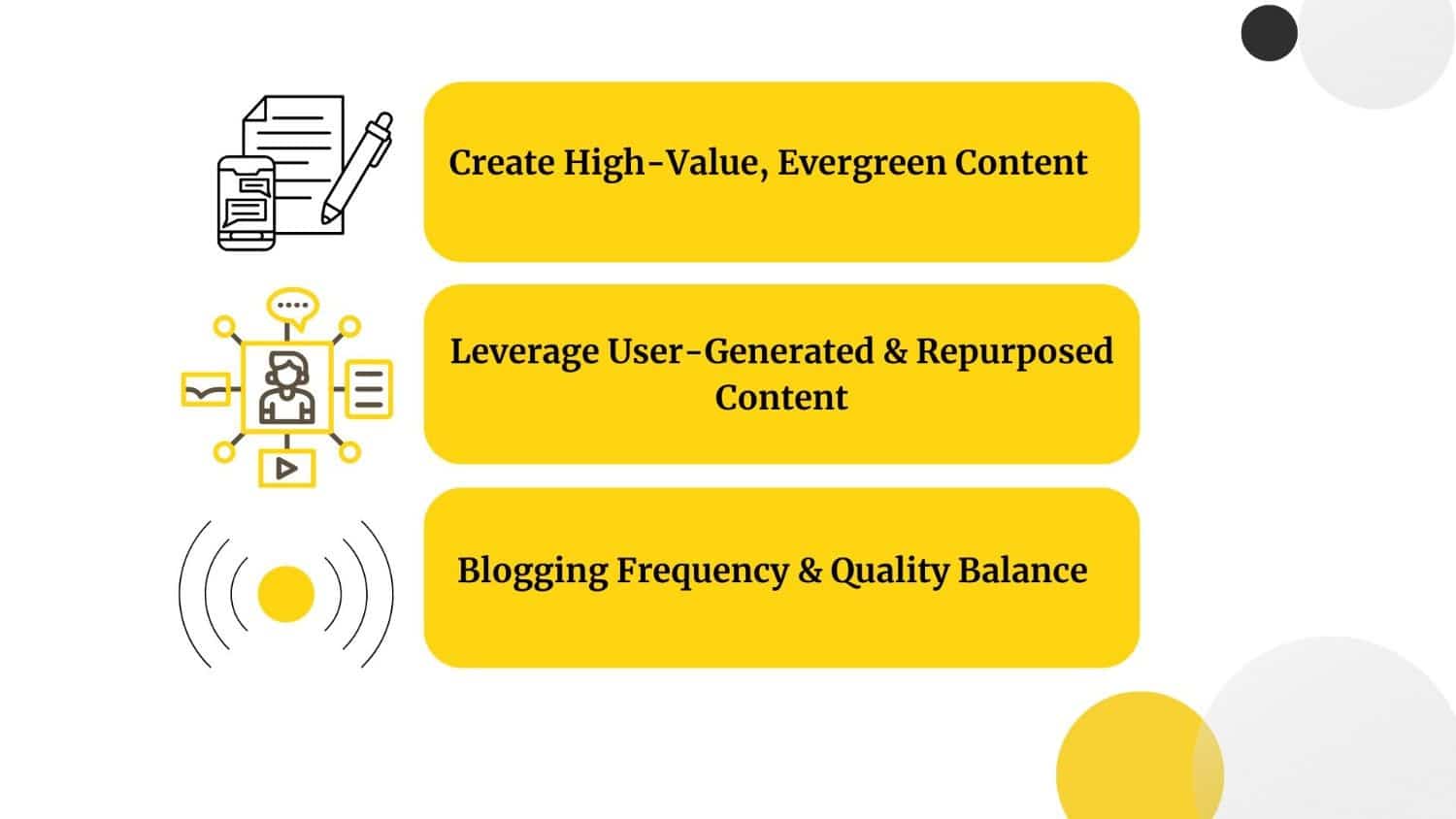
Publish less, but make every piece defend a specific claim your competitors can’t make. Volume without a distinct point of view is the single fastest way to burn a content budget with nothing to show for it.
Check out content that packs a punch: Content marketing service
Create genuinely evergreen resources that solve a real, recurring problem in your space, and put your experience behind them, not aggregated advice you could have written without ever running a campaign. A thorough, opinionated guide beats ten generic 800-word posts every time, both for readers and for how AI systems evaluate which source to trust.
Repurpose what you already have before you write anything new. Customer FAQs, sales call objections, and webinar transcripts are content you’ve already paid for once through the conversation itself. Turning them into a published guide is nearly free the second time.
Hold a consistent publishing cadence over a high volume of mediocre posts. One well-researched piece every two weeks beats five thin ones, because search engines and readers both reward depth and consistency over noise.
Relatable Read: What is SEO Writing? Complete Guide for Creating SEO-Optimized Content
Link Building on a Startup Budget
Set a concrete monthly target, because “build some backlinks” never becomes a plan. A realistic starting goal for a lean team is 8 to 12 quality links per month, sourced from three channels that don’t require ad spend.
Guest posts. Write for publications your actual customers already read, not the highest domain-rating site that will take your submission. A relevant link from a smaller, on-topic site earns more trust with both readers and search engines than an off-topic link from a bigger one.
HARO and journalist requests. Respond fast, with a specific, quotable answer, not a generic pitch. Journalists on a deadline pick the source who answered their exact question in two sentences, not the source who sent a paragraph about their company.
Reciprocal partnerships. Trade guest posts or co-created content with adjacent, non-competing startups targeting a similar buyer. This costs nothing but time and produces links that are genuinely earned instead of purchased.
Local and niche directories. Keep your business name, address, and phone number identical across every listing. An inconsistency here doesn’t just cost you a link; it actively confuses search engines about which listing is authoritative. Prioritize your Google Business Profile first, then relevant industry-specific directories second.
Relatable Read: How to Set Realistic SEO Goals for Your Enterprise Business?
Technical SEO: What a Startup Actually Needs to Get Right
Technical SEO for a startup isn’t a full audit checklist. It’s four things that break rankings if you skip them.
Crawlability comes first. Submit a clean XML sitemap and a correctly configured robots.txt so search engines can find and index your pages without guesswork.
Site speed matters more for a startup than an established brand, because you have no existing trust cushion to survive a bad first impression. A slow page loses both rankings and the visitor before they’ve read a word.
Mobile-first rendering is non-negotiable, since Google indexes the mobile version of your site by default. If your mobile experience is broken, your desktop rankings suffer too, even if your desktop site looks perfect.
HTTPS and basic security round out the baseline. A browser security warning ends the visit before SEO even gets a chance to matter.
Check out MonsterClaw for professional SEO services!
What Technical SEO Involves?

Crawlability and Indexability: Making sure search engine bots can quickly reach and crawl all of the key pages on your website. This is typically accomplished by using files like sitemaps and robots.txt.
Site Performance: Increasing the speed at which pages load to improve user experience and lower bounce rates.
Mobile-friendliness: Mobile-friendliness ensures that the website works properly on all devices.
Site security: Making sure the website is safe for users by utilizing HTTPS and other security measures.
Structured Data: To help search engines comprehend your information more fully and present rich results, use schema markup.
Site Architecture: Organize material in a logical, hierarchical framework to enhance user and search engine navigation.
Check out MonsterClaw for professional SEO services
Start Your Startup SEO Today – What to Prioritize First
Every startup I’ve worked with wants SEO to work faster than SEO actually works. It won’t. What it will do, if you start at the right moment and stay disciplined about where you spend the effort, is become the one growth channel that gets cheaper every quarter instead of more expensive.
If you’re starting today, prioritize in this order. Confirm your positioning is settled before you write a single page. Build your first 90 days of content from long-tail, high-intent keywords under a difficulty score of 10. Fix the four technical basics so nothing you publish gets undermined by a slow or unindexed site. Then set your link-building cadence and hold it. Everything else on this page is detail underneath those four moves.
Ready to build the actual roadmap instead of guessing at it? Talk to MonsterClaw, and let’s map your startup’s SEO strategy around where you are right now, not a generic template.
Final Thoughts on SEO for Startups
In every startup world, every click counts. And every second wasted on slow growth gives your competitors a head start. With the right SEO strategy, you don’t just rank fast. You scale smart and grow big without burning your budget.
Ready to turn your startup into a search engine success story? Partner with MonsterClaw, the ultimate SEO agency for startups that helps you rank higher, grow faster, and outsmart your rivals!
Frequently Asked Questions (FAQs)
Yes, once you have a validated understanding of who your customer is. SEO compounds over 4 to 9 months, so starting before your positioning is settled means rebuilding content later. Starting once you have that clarity, even pre-revenue, gives you a channel that gets cheaper every quarter instead of more expensive.
SEO is important for startups because it boosts online exposure, generates targeted, organic traffic, and offers an affordable marketing channel that establishes brand authority and trust. By increasing their visibility to prospective clients who are actively looking for their goods or services, it helps startups compete with more established firms with bigger expenditures.
Yes, entrepreneurs may thrive with SEO on a tight budget if they prioritize long-term growth over short-term gains, use free tools, and concentrate on high-impact, economical techniques.
Use the following calculation to determine SEO ROI: (Revenue from SEO – Cost of SEO) / Cost of SEO. Prior to entering those figures into the formula, you must ascertain the overall cost of your SEO activities and the total revenue from organic search traffic during a given time period. Multiply the outcome by 100 to express it as a percentage.